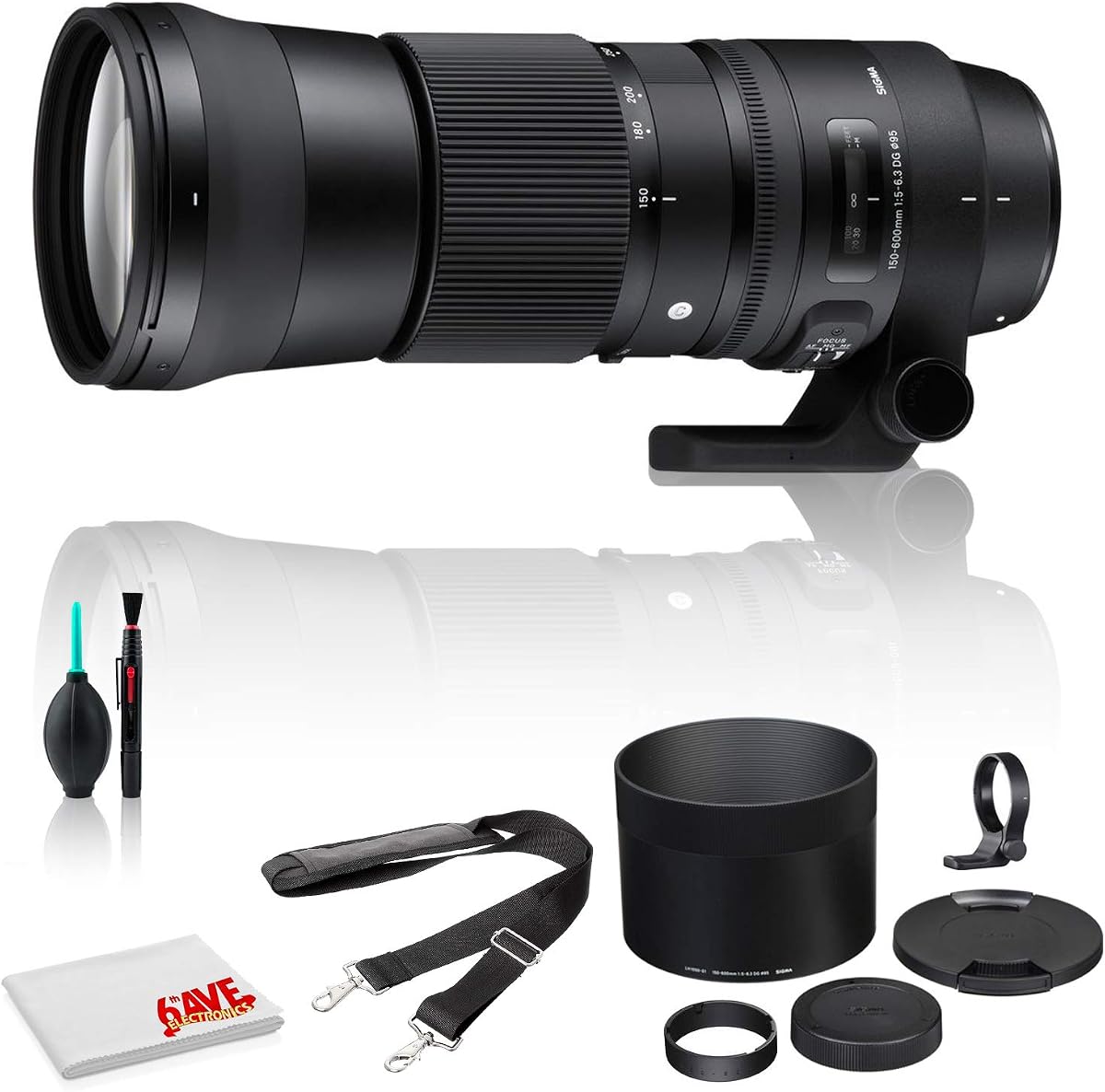
Sigma 150-600mm f/5-6.3 DG OS HSM
4.5Editor score
150-600mm focal range
Constant f/5 maximum aperture
Optical stabilization included
This guide compares the best camera lens for long distance wildlife, covering reach, stabilization, autofocus, portability, and compatibility.
Choosing a camera lens for long distance wildlife means balancing magnification, light-gathering ability, autofocus speed, stabilization, and the weight you can comfortably carry into the field. The right lens helps isolate birds, mammals, and distant landscapes while preserving enough detail for compelling results across changing light and terrain.
This guide compares ten Canon, Nikon, and Sigma telephoto options using the supplied focal ranges, apertures, stabilization systems, autofocus mechanisms, mounting compatibility, and physical characteristics. It includes modern RF-mount zooms, EF-mount DSLR lenses, manual super-telephotos, and one refreshed Canon option for different budgets and shooting priorities.
Each review shows how a product fits into real wildlife workflows, from scanning wide landscapes to locking onto distant birds. The top selections represent distinct approaches: flexible super-telephoto reach, a premium constant-aperture zoom, and a lighter entry point. Availability, bundle contents, and market pricing can change, so confirm the current listing before buying.
4.5Editor score
4.7Editor score

4.7Editor score
The comparison below places all ten lenses side by side, emphasizing focal range, maximum aperture, stabilization, focusing system, and camera compatibility so wildlife photographers can match the lens to their body and field conditions.

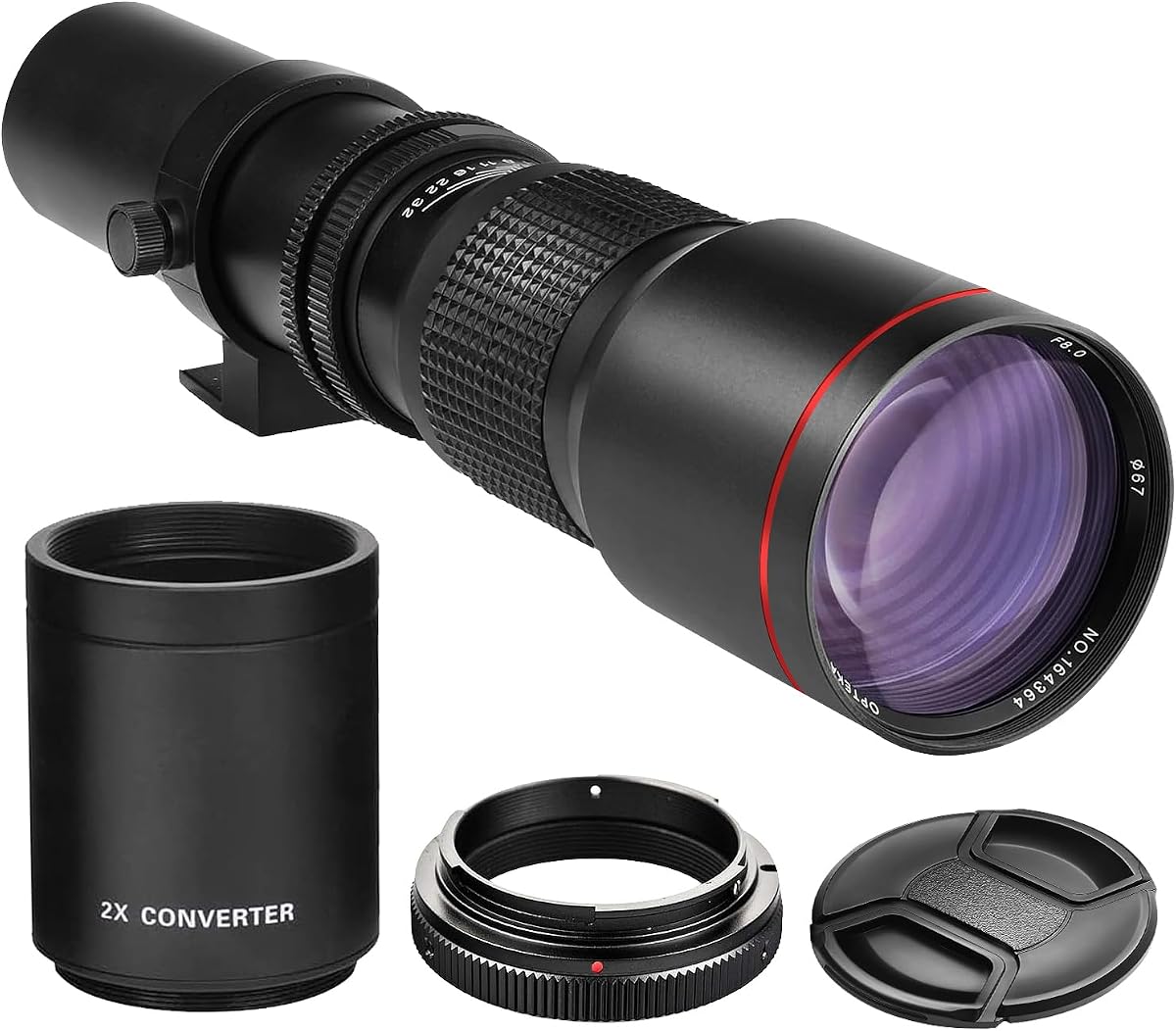


The Canon RF 200-800mm f/6.3-9 IS USM Bundle earns a 4.7 rating and stands out as the most complete option for photographers who need substantial reach without the burden of a 600mm or 800mm prime. Its 200-800mm range covers distant landscapes, birds in flight, and wildlife that initially appears too small to frame tightly.
We may earn a commission when you buy through this link, at no additional cost to you.
The lens directly addresses the central challenge of super-telephoto photography: carrying enough magnification into the field. Canon describes it as lightweight, compact, and field-ready, while its built-in image stabilization supports handheld shooting and tracking. A fast USM autofocus system is designed to acquire moving subjects quickly and quietly, a valuable combination when working near nervous birds or active mammals.
The trade-off is its variable f/6.3-9 aperture, which is not as light-gathering as a constant f/4 or f/5 lens. Photographers may need more shutter speed, more light, or higher ISO to maintain a suitable exposure at the long end. It also requires a compatible Canon RF body, so it does not serve users who already own an EF DSLR system exclusively.
Despite those limitations, this is the strongest general recommendation for long-distance wildlife because it combines reach, stabilization, autofocus, and relatively compact handling. It is particularly suitable for birders who want to reframe rapidly from environmental views to tight portraits without switching lenses.
A 200mm starting point is useful for establishing context, while 400mm handles many conventional wildlife subjects and 600-800mm supports distant birds and small mammals. That range reduces the need to reposition constantly, especially when animals move across open terrain.
Built-in optical stabilization helps suppress camera shake at the long end and during panning with moving subjects. It cannot freeze a moving animal by itself, but it makes handheld framing more controlled when light and shutter speed are limited.
We may earn a commission when you buy through this link, at no additional cost to you.
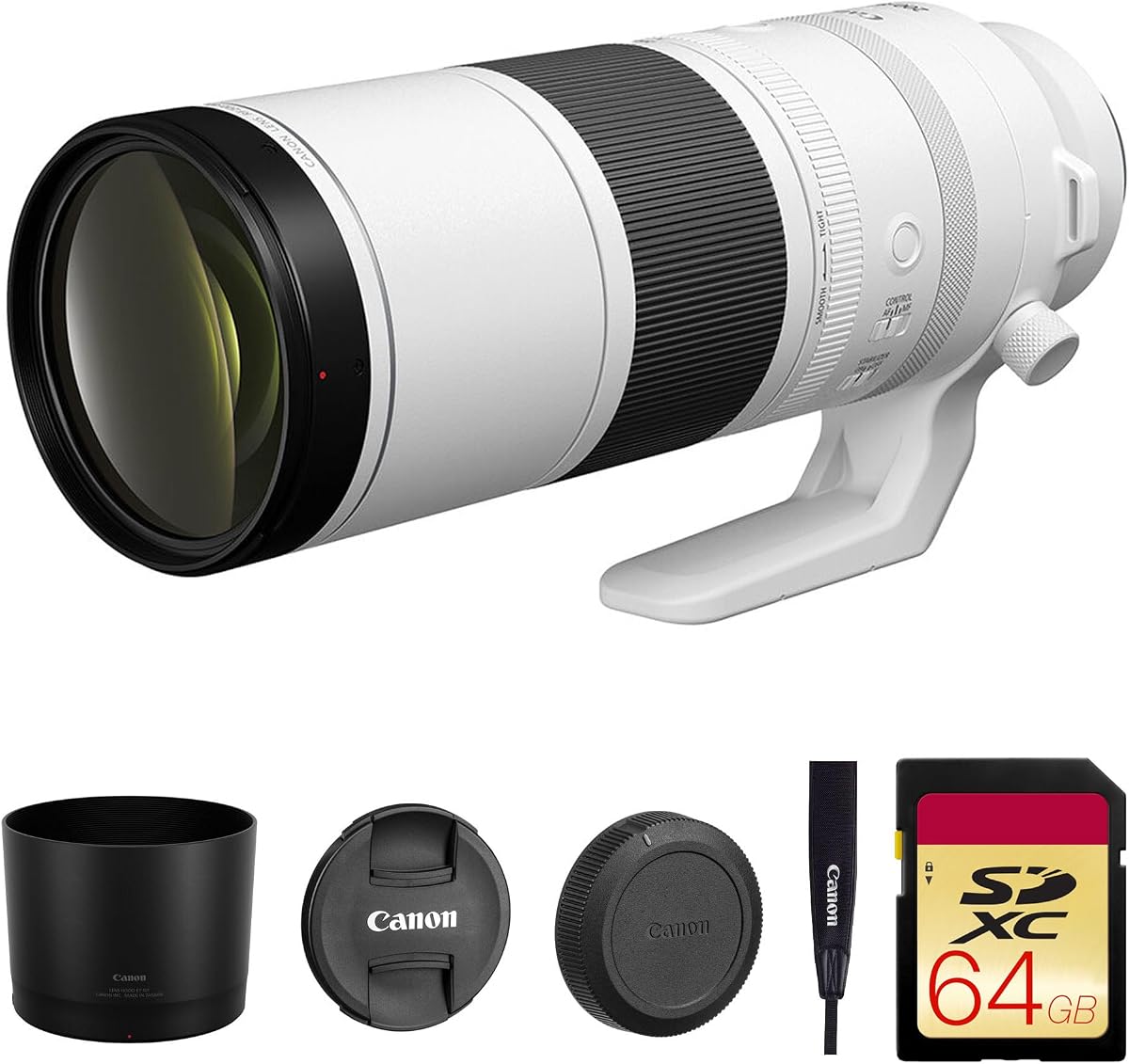
This Canon RF 200-800mm receives a 4.6 rating and delivers a rare combination of 800mm reach and relatively compact handling. The product data identifies it as the world's first AF super-telephoto zoom with an 800mm telephoto end, making it a compelling option for wildlife photographers who routinely work at extreme distances.
We may earn a commission when you buy through this link, at no additional cost to you.
Its four-times zoom range allows rapid movement from a broad environmental composition to a tightly isolated subject. The RF-mount optical design is optimized for image quality throughout the range, while the lightweight, compact construction is intended to support comfortable handheld shooting. USM autofocus provides the speed and quiet operation needed when wildlife moves unpredictably.
Like the first lens in this guide, it uses a variable f/6.3-9 aperture, so it is not the ideal choice for maximum low-light performance. The f/9 end may require a fast shutter speed and elevated ISO, and a monopod or tripod can be useful in low light. Its extendable compatibility with Canon RF 1.4x and 2x teleconverters is a meaningful advantage for even greater reach.
This model is a strong alternative to the bundle listed in first place, particularly for photographers who want the 800mm endpoint and teleconverter expansion without the additional memory card. It is best suited to Canon EOS R-series users who value zoom flexibility and compactness over a constant-aperture design.
Moving from 200mm to 800mm without changing lenses is valuable when a subject flies across the frame or a predator begins a pursuit. The broad range also supports landscapes and environmental portraits between close wildlife encounters.
Compatibility with Canon RF 1.4x and 2x extenders gives photographers a path beyond 800mm. Because light collection falls as magnification rises, extenders are best treated as dedicated tools for well-lit subjects rather than automatic replacements for a fast prime.
We may earn a commission when you buy through this link, at no additional cost to you.
The Sigma 150-600mm f/5-6.3 DG OS HSM Contemporary earns a 4.5 rating and represents the premium choice in this comparison. It brings a useful 150-600mm range together with a constant f/5 aperture at the wide end, giving wildlife photographers more exposure latitude than a lens that begins at f/6.3.
We may earn a commission when you buy through this link, at no additional cost to you.
Sigma's Hyper Sonic Motor autofocus system is designed for rapid acquisition, while the optical Stabilizer with Accelerometer helps control shake and reduce unwanted camera movement. The optical formula includes one FLD and three SLD elements, supporting image quality across the zoom range. Its full-frame Canon EF mounting also makes it relevant to high-resolution DSLR workflows.
Reaching 600mm often requires extending the lens considerably, which can make it less convenient for handheld field use than more compact super-telephoto zooms. The variable f/5-6.3 aperture also becomes less bright toward the long end, and the bundle includes a cleaning kit rather than a memory card. Camera bodies with effective in-body stabilization may add another layer of shake control.
For photographers who prioritize aperture, autofocus, and a proven 600mm-class reach, this Sigma is the strongest premium recommendation. It is especially useful for wildlife that may be moving in softer light, while the cleaning kit adds practical value for keeping exposed front elements clear in dusty or humid environments.
Holding f/5 throughout the zoom range gives this lens a meaningful low-light advantage over super-zooms that begin at f/6.3. That extra light can support faster shutter speeds, lower ISO, and more consistent exposure when animals move near cover.
The combination of one FLD and three SLD glass elements is designed to reduce color fringing and improve image quality. This is particularly valuable when distant subjects are small, edges are compressed, and the camera sensor is asked to resolve fine detail.
We may earn a commission when you buy through this link, at no additional cost to you.
This 500mm/1000mm f/8 manual telephoto receives a 4 rating and offers an accessible route to extreme magnification for compatible Canon DSLR users. Its 500mm base focal length provides substantial isolation, while the included 2x teleconverter expands the potential view to 1000mm.
We may earn a commission when you buy through this link, at no additional cost to you.
The multi-coated, high-index, low-dispersion optical glass is intended to deliver clear images, and the lens provides complete manual control over focus and aperture. That control can suit photographers working from a tripod, positioned at a fixed overlook, or tracking a subject with practiced technique. The supplied compatibility list covers numerous Rebel, EOS, and older Canon DSLR models.
The fixed f/8 aperture is a significant limitation. It demands a great deal of light, and the absence of autofocus makes fast-moving birds or mammals difficult to capture consistently. At 1000mm, vibration and minute focus errors become especially visible, so a sturdy tripod and accurate manual focusing technique are important.
This lens is best for a specific kind of wildlife photographer: someone with a compatible DSLR, patience, and a need for maximum reach without a modern high-end super-telephoto. It is less suitable as an all-purpose birding lens, but it can excel for distant, relatively stationary subjects in suitable light.
The 2x teleconverter more than doubles the 500mm focal length, giving the photographer a distinctly narrow and powerful view. Subjects that seem impossibly small in a standard zoom can fill the frame, though framing and focus become much more demanding.
Manual focus and aperture control can be an advantage for shooters who know exactly where an animal will remain. A tripod, remote release, and careful pre-focusing can produce consistent results when the subject shows little movement.
We may earn a commission when you buy through this link, at no additional cost to you.
The Canon EF 100-400mm f/4.5-5.6L IS USM receives a 4 rating and offers a balanced combination of optical quality, handling, and professional construction. Its 100-400mm range is designed for wildlife, sports, aviation, and distant action, making it a versatile telephoto for Canon EF users.
We may earn a commission when you buy through this link, at no additional cost to you.
The optical design includes one fluorite element, one Super UD element, and four aspherical elements to control chromatic and spherical aberration. A floating element system supports consistent sharpness, contrast, and color through the zoom and focus ranges. The ring-type USM motor provides fast, quiet autofocus with full-time manual override.
Optical stabilization can reduce the appearance of camera shake by up to two shutter speed stops, and a dedicated panning mode assists with moving subjects. The rotating tripod collar improves balance, while adjustable zoom tension and a position lock help maintain control. Optional Canon 1.4x and 2x teleconverters expand the working range, and an eight-blade diaphragm produces smooth background blur.
This is an excellent choice for photographers who want professional features without moving to a 600mm-class zoom. On compatible APS-C Canon cameras, its effective reach extends to 160-640mm, which adds useful distance for birds. The lens remains limited to the EF ecosystem, but it is exceptionally complete for full-frame EOS DSLRs and APS-C cameras.
Fluorite, Super UD, and aspherical elements work together to reduce common optical weaknesses while the floating group helps preserve performance across the range. These features are especially valuable when enlarging small, distant wildlife subjects.
A standard stabilization setting supports general handheld shooting, while panning mode is intended for following moving subjects. The rotating tripod collar also makes the lens easier to balance on a monopod or tripod during long sessions.
We may earn a commission when you buy through this link, at no additional cost to you.
The 420-1600mm f/8.3 HD Manual Telephoto earns a 4 rating and prioritizes magnification over modern shooting conveniences. Its native 420-800mm zoom range is already powerful for wildlife, and the supplied 2x teleconverter can extend the view to 1600mm.
We may earn a commission when you buy through this link, at no additional cost to you.
The f/8.3 aperture and manual focusing system make this lens best suited to daylight and stationary subjects. Its listed compatibility covers many Canon DSLR families, including Rebel, EOS 5D, 6D II, 7D II, 80D, and 90D models. A 62mm filter thread provides a standard attachment point for filters, while the broad zoom lets a photographer avoid changing lenses in the field.
At the extreme end, the narrow field of view makes acquiring a subject difficult, and the lack of autofocus sharply increases the risk of missed focus. The slow aperture also demands fast shutter speeds or high ISO, which can produce either motion blur or visible noise. Long sessions will benefit from solid tripod support.
This product makes the most sense for a photographer who values extreme focal length more than speed or low-light performance. It can isolate tiny animals across broad landscapes, but the skill and preparation required are substantial. For general birding or active wildlife, a stabilized autofocus zoom will usually be more rewarding.
The native range allows working at 420mm for environmental views and up to 800mm for tighter framing. Adding the 2x teleconverter pushes the maximum to 1600mm, where even minor shake and focus changes become obvious.
Using a manual super-telephoto successfully involves positioning before the subject arrives, pre-focusing at a known distance, and supporting the lens on a tripod. A comfortable viewing arrangement and release strategy become more important as focal length increases.
We may earn a commission when you buy through this link, at no additional cost to you.
The Canon RF 100-400mm f/5.6-8 IS USM earns a 4.6 rating and is a strong option for mirrorless wildlife photographers who value portability. The 100-400mm range is less extreme than the 800mm models in this guide, but it remains highly useful for birds, larger mammals, and field sports.
We may earn a commission when you buy through this link, at no additional cost to you.
Canon highlights the lens as compact, lightweight, and capable of high image quality. Its optical stabilizer provides up to 5.5 stops of shake correction, increasing to as much as six stops when paired with an EOS R body featuring in-body stabilization. This layered stabilization is especially helpful for wildlife that remains relatively still at a distance.
The minimum focusing distance is 2.89 feet at 200mm, and maximum magnification reaches 0.41x at 400mm. These figures make it unexpectedly capable for close details as well as distant subjects. A high-speed, smooth, and quiet Nano USM motor supports autofocus, while the f/5.6-8 range introduces a lower-light compromise at the telephoto end.
This lens is best for Canon EOS R users who want a travel-friendly telephoto without giving up stabilization or dependable autofocus. It is less suited to spotting very small, extremely distant birds than an 800mm lens, but it is easier to carry, quicker to deploy, and useful across a wider variety of wildlife distances.
A 100-400mm zoom is easier to carry than a 600mm or 800mm super-telephoto, and its relatively compact design suits hikes, wetlands, and open reserves. Photographers can keep it mounted rather than repeatedly changing lenses between sightings.
The lens's optical stabilization can combine with compatible in-body stabilization for greater overall shake control. That makes framing distant subjects more stable, although moving animals still require an appropriate shutter speed.
We may earn a commission when you buy through this link, at no additional cost to you.
The Canon EF 75-300mm f/4-5.6 III receives a 4.7 rating and is the most accessible way to begin photographing wildlife with a dedicated telephoto zoom. It covers 75-300mm, making it suitable for larger animals, perched birds, outdoor portraits, and distant scenes without reaching into true super-telephoto territory.
We may earn a commission when you buy through this link, at no additional cost to you.
The lens weighs 16.8 ounces and measures 2.8 inches in diameter by 4.8 inches long, making it notably easier to carry than the long professional zooms in this comparison. Its improved zoom mechanism provides smoother operation, while the f/4-5.6 maximum aperture helps collect a reasonable amount of light for wildlife photography.
The most important limitation is the absence of image stabilization. At 300mm, small movements are easier to see, and wildlife may be less likely to remain sharply rendered at slower shutter speeds. The 4.9-foot closest focusing distance also means the lens is not intended for close-up wildlife portraits.
Despite that drawback, this remains a strong budget recommendation for a new Canon EF user, a travel kit, or a photographer testing whether they enjoy long-lens work. It is best for larger wildlife at moderate distances and for learning panning, focus, and framing techniques. Users needing extreme reach should save up for a stabilized super-telephoto.
Its low weight and small dimensions reduce fatigue during long walks and quick location changes. The 75mm wide end is also useful for landscapes and environmental images, making the lens more versatile than a 500mm manual telephoto.
Without optical stabilization, photographers should use a fast enough shutter speed, brace the camera, or support the lens on a monopod. Steady animals are easier to capture with this setup than rapidly moving birds at the 300mm end.
We may earn a commission when you buy through this link, at no additional cost to you.
The Nikon AF-S NIKKOR 200-500mm f/5.6E ED VR earns a 4.2 rating and provides a useful 500mm-class reach for Nikon photographers. It is designed for FX sensors and also works with DX bodies, where its listed equivalent focal range becomes 300-750mm.
We may earn a commission when you buy through this link, at no additional cost to you.
The constant f/5.6 maximum aperture is brighter than many variable-aperture super-zooms, while three extra-low-dispersion elements are intended to reduce color fringing and chromatic aberration. A Silent Wave Motor provides rapid, quiet autofocus with full-time manual override, and internal focusing keeps the lens length more consistent during focusing.
Vibration Reduction stabilization is rated at up to 4.5 stops, while a dedicated Sport Mode supports fast-paced situations. The rotating tripod collar provides balanced support for horizontal or vertical shooting, and the electromagnetic aperture mechanism is designed to provide stable exposure control during high-speed continuous shooting.
This is a sound all-around wildlife lens for Nikon F-mount users, though it does not offer the extreme 800mm reach of the Canon RF options. The supplied bundle includes a three-piece filter kit, lens cap keeper, and cleaning kit. It is well suited to birds, larger mammals, and distant action across a broad range of lighting conditions.
On FX cameras, 200-500mm provides a practical balance between environmental and close wildlife framing. On compatible DX bodies, the 300-750mm equivalent view gives photographers additional reach without changing lenses.
Vibration Reduction, the Sport Mode, and fast Silent Wave Motor autofocus work together to support moving wildlife. Full-time manual override gives photographers an immediate way to fine-tune focus if autofocus hesitates.
We may earn a commission when you buy through this link, at no additional cost to you.
This renewed Canon EF 75-300mm f/4-5.6 III carries a 4.7 rating and gives Canon EF users access to the familiar 75-300mm formula in a refurbished listing. It remains a useful compact telephoto for moderate-distance wildlife, perched birds, outdoor events, and distant landscapes.
We may earn a commission when you buy through this link, at no additional cost to you.
The product data identifies an EF mount, DC autofocus motor, 4.9-foot minimum focusing distance, and a 58mm filter thread. It measures 2.8 inches in diameter and 4.8 inches long, and its listed weight is 16.8 ounces. The improved zoom mechanism allows smoother changes of focal length during observation and composition.
As with the new version of this lens, optical stabilization is not listed, which makes support or a suitably fast shutter speed important. The renewed status also warrants closer attention to cosmetic condition, the condition of the glass and mount, the zoom action, autofocus operation, and the seller's return coverage. A refurbishment can reduce acquisition cost without making it suitable for every photographer.
The renewed lens is most attractive to a budget-conscious Canon user who wants a familiar EF-mount telephoto and does not need extreme magnification. It is less compelling for distant birding than the 600mm-class choices, but it is easier to carry and offers a practical way to add a dedicated telephoto to an existing kit.
Inspect the front and rear elements for haze, scratches, fungus, or separation, and confirm that the aperture blades operate smoothly. Checking focus, zoom, and the electronic contacts can help identify problems before taking the lens into the field.
The 75-300mm range is broad enough for environmental shots and moderate wildlife portraits without the extreme framing restrictions of a manual super-telephoto. Its small size also makes it convenient for travel and spontaneous wildlife encounters.
We may earn a commission when you buy through this link, at no additional cost to you.
The best long-distance wildlife lens is the one that balances reach, light-gathering ability, autofocus, stabilization, and portability in a way that matches your camera and typical subjects. These factors matter more than focal length alone because extreme magnification can be difficult to use without the supporting features.
Focal length determines how tightly you can frame a distant subject. A 75-300mm zoom is versatile for moderate-distance wildlife, while 400-600mm lenses are better for birds and animals surrounded by large landscapes. An 800mm lens offers the greatest isolation and detail potential but demands precise panning, stable support, and exceptional light.
Choose a range that covers your actual subjects. A broader zoom is easier to use when wildlife moves unpredictably, whereas a long prime or manual telephoto rewards preparation and a steady shooting position.
A larger maximum aperture gathers more light and allows faster shutter speeds, which helps freeze motion and keeps ISO lower. Constant-aperture lenses such as the Sigma 150-600mm at f/5 and the Nikon 200-500mm at f/5.6 maintain their stated maximum aperture throughout the zoom range. Variable-aperture designs become slower as focal length increases.
Prioritize aperture when animals are active, light is fading, or you want to avoid grain. A smaller aperture is less restrictive if you work in bright conditions, use a tripod, or photograph relatively stationary subjects.
Optical stabilization reduces camera shake, making distant subjects easier to frame and sharper when shutter speed would otherwise be too slow. Some lenses also offer panning modes or coordinated stabilization with compatible camera bodies. Stabilization does not stop subject movement, so moving birds still need an appropriate shutter speed.
Look for stabilization when handholding at long focal lengths. If you regularly work from a tripod, manual telephotos can still be effective, but you should expect a slower, less convenient focusing workflow.
Fast, quiet autofocus is important when birds take off or mammals move through cover. Ring-type USM, Canon Nano USM, and Nikon's Silent Wave Motor are designed for rapid acquisition with smooth operation. Manual-focus lenses offer complete control but require skill, practice, and careful pre-focusing.
Consider how the subject behaves. An active bird favors dependable autofocus, while a stationary animal in a known location may be handled effectively with manual focus. Always test the focusing system under the conditions in which you plan to shoot.
Mount compatibility is non-negotiable. Canon RF lenses require compatible EOS R-series mirrorless bodies, Canon EF lenses are intended for EF-mount cameras, and the Nikon 200-500mm listed here uses the Nikon F mount. APS-C bodies may provide additional crop reach, but the manufacturer determines whether that behavior is supported.
Confirm the exact camera model and lens mount before purchasing. Do not assume a physical fit means electronic autofocus, aperture control, or stabilization will work. Check the manufacturer's compatibility information and the current product listing.
Long lenses become tiring to carry, especially on uneven trails or during long waits. A 16.8-ounce 75-300mm is easy to move with, while 500mm, 600mm, and 800mm models benefit from a monopod, tripod, or rotating collar. Balance matters: mount the lens so its weight feels centered over your tripod head.
Choose the lightest lens that can frame your subjects acceptably. If you expect to hike long distances, weight and balance may influence the decision more than a small difference in maximum aperture.
Fluorite, Super UD, aspherical, FLD, and SLD elements are included among the optical designs in this guide. These special elements can help reduce chromatic aberration, color fringing, and other distortions, but the overall result also depends on sensor quality, focusing accuracy, and atmospheric conditions.
An eight-blade diaphragm on the Canon 100-400mm can produce smoother background blur than a lens with fewer blades. For distant wildlife, good optics and clean glass are as important as headline specifications, so a supplied cleaning kit can be genuinely useful.
Some listings include a memory card, filter kit, lens cap keeper, or cleaning kit, while others present the lens alone. Accessories can be convenient, but they should not replace verification of the lens's condition, compatibility, warranty coverage, and core features.
For a renewed product, review the return policy and inspect the actual condition when it arrives. For a new lens, confirm the seller, authorized-dealer status where stated, included items, and whether the listed package contents meet your needs.
Start with a camera-body and lens compatibility check, then format the memory card in the camera and learn the lens's focus, zoom, stabilization, and aperture controls before heading into the field. For long focal lengths, set an appropriate shutter speed, use continuous autofocus and subject tracking when available, and choose a drive mode that matches how the animal moves.
Compose with an environmental view first, then zoom or crop mentally to decide the framing you need. At extreme focal lengths, small movements produce large changes in the frame, so support the lens when practical, keep both elbows close, and pan by rotating from the torso rather than twisting the arms alone. Continuous shooting can help when a subject changes direction unexpectedly.
After the shoot, protect the lens from impact and moisture, use a front cap and rear cap, and keep filters covered when the lens is not in use. Clean the optical surfaces with a proper lens cloth and cleaning fluid, inspect the mount for damage, and store the lens in a dry, stable environment. Always follow the instructions supplied with the specific lens and camera.
A 400-600mm range is versatile for many birds and mammals, while 800mm provides the greatest reach for very small subjects. A 75-300mm zoom is more practical for larger wildlife at moderate distances. The best choice depends on how far away your subjects usually are and how much light is available.
Stabilization is highly useful because it makes long focal lengths easier to frame and can improve sharpness when shutter speed is limited. It does not freeze a moving animal, so you still need a fast enough shutter speed. Manual super-telephotos can work without it when a tripod and careful technique are used.
A 500mm lens is often easier to carry and may be sufficient for many bird species, while 600mm fills the frame more tightly with distant subjects. Consider light-gathering ability, autofocus, stabilization, and your ability to track movement along with focal length. A heavier lens is not automatically the better choice.
Some Canon mirrorless bodies can mount EF lenses with an adapter, but compatibility, autofocus, aperture control, and stabilization can vary by model. A Canon RF lens requires a compatible RF body. Confirm the exact camera and lens combination with Canon before purchasing.
A larger aperture provides brighter images, faster shutter speeds, and lower ISO, which helps when wildlife moves quickly. Constant f/5 or f/5.6 lenses offer an advantage in this respect. In bright daylight, a smaller aperture can also be useful for greater depth of field, but environmental conditions should guide the choice.
They can be for stationary animals, landscapes, and carefully planned compositions. Their maximum reach may exceed more expensive autofocus zooms, but manual focus is harder with moving birds and small subjects. A tripod, monopod, remote release, and practiced technique can make these lenses effective in the right hands.
A monopod is often enough to stabilize an 800mm lens while remaining portable, and it is especially useful for panning. A tripod provides stronger support for static subjects, long exposures, and precise framing. The best support system depends on how mobile you need to be and whether your subjects frequently move.
Use a blower to remove loose dust, then a clean lens cloth with a suitable cleaning fluid for the front and rear elements. Avoid touching the glass and do not use household cleaners. If haze, fungus, scratches, or separation appear, seek professional cleaning or service, especially if image quality is affected.
The Canon RF 200-800mm leads the guide for its exceptional reach, compact field design, optical stabilization, and fast USM autofocus. The Sigma 150-600mm is the premium alternative for photographers who want a constant f/5 aperture and 600mm-class reach, while the Canon EF 75-300mm remains the most practical budget starting point.
Prioritize the subjects you actually photograph, the light you work in, and the equipment you can carry comfortably. Stabilized autofocus zooms suit active wildlife, constant-aperture lenses help in lower light, and manual super-telephotos can reward patient photographers who need extreme magnification. Camera mount compatibility should always be confirmed first.
Market conditions and package contents can change, so review the current product listing, seller information, warranty details, and included accessories before ordering. A lens that works well with your body, technique, and field conditions will deliver more useful wildlife images than a more ambitious specification that is inconvenient to use.