
dbx DBX286SV
4.5Editor score
Four integrated signal processors
XLR and TRS inputs
Rack-mountable 1U format
Our Channel Strips for Recording guide compares ten hardware preamps, processors, mixers, and controllers for vocals, instruments, mixing, and studio expansion.
Channel strips for recording combine signal conditioning, amplification, equalization, compression, routing, or control in a focused hardware package. A strong choice can make a microphone or instrument easier to manage, give a session a more intentional sound, or provide a tactile alternative to software-based mixing.
The products in this guide cover several useful interpretations of the category, including rack-mounted preamp processors, premium analogue channel strips, compact mixers, and DAW control surfaces. We compared the supplied specifications, feature sets, formats, and user ratings, with particular attention to workflow fit rather than treating every product as a direct substitute.
Each pick reveals what a particular type of channel strip offers, from compact signal processing to elaborate studio routing and hands-on production control. Ratings and availability can change, and prices fluctuate, so check the current product listing and confirm that the connections and features match your studio before purchasing.
A channel strip is most useful when it solves a real signal-chain or workflow problem. The best choice depends less on a universal specification than on matching the hardware to your sources, monitoring setup, control preferences, and the amount of rack space or mixing flexibility available.
This roundup includes rack units with microphone preamps, dynamics processors, equalizers, stereo pairing, and insert routing. It also includes a small stereo mixer and a DAW-integrated controller because both can be useful in a recording workflow, even though they serve different purposes than traditional single-channel processors.
The guide distinguishes those roles clearly. It does not claim that every option is appropriate for the same person, and it considers whether a simpler format, a broader feature set, or a more specialized signal path better matches the task. Readers should think of the list as a map of available approaches.
4.5Editor score

4.7Editor score

5.0Editor score
This side-by-side comparison organizes the ten products by their core function, physical format, principal processing features, and most appropriate recording use.




The dbx DBX286SV is a full-featured microphone and instrument preamp with a substantial collection of processors built into a single rack unit. Its 4.5 rating reflects a favorable balance of capability, compactness, and utility. It is especially attractive to recordists who want to shape a source before sending it into a console or interface.
We may earn a commission when you buy through this link, at no additional cost to you.
Compression, a de-esser, an enhancer, and an expander or gate provide several ways to address common problems in one place. The floating balanced XLR input accepts microphones, while the 1/4-inch TRS line input supports instruments or prerecorded tracks. An insert connection allows additional processing to be inserted between the preamp and internal processors, expanding the unit beyond a fixed signal chain.
The trade-off is that the feature set creates a deeper control hierarchy than a simple straight preamp. Users must become familiar with the processor selection and menu structure. The single 1/4-inch TRS output and one-rack-unit format also make the DBX286SV better suited to focused single-channel processing than a complete multichannel mixing system.
It is a strong recommendation for home studios, project rooms, and engineers who want a dependable central processing block. Choose it when the priority is a broad toolbox in limited rack space rather than premium components, elaborate stereo routing, or DAW integration.
The four internal effects let a recordist establish a usable vocal or instrument signal before it reaches the next stage. Compression can control dynamics, the de-esser can address harsh highs, the enhancer affects perceived detail, and the expander or gate can help manage unwanted low-level energy.
The insert loop-out is a notable advantage over a basic one-knob channel strip. It creates an opportunity to add external processing while retaining the unit's preamp and built-in effects, making it easier to expand a signal chain without replacing the entire channel.
We may earn a commission when you buy through this link, at no additional cost to you.
The PreSonus STUDIOCHANNEL is a one-rack-unit channel strip centered on a high-voltage Class A 12AX7 vacuum-tube microphone and instrument preamplifier. It combines tube character, flexible equalization, and compression in a familiar recording format. Its 4.1 rating makes it a versatile option for users who value hands-on tonal shaping over an extensive processor menu.
We may earn a commission when you buy through this link, at no additional cost to you.
Gain, tube drive, high-pass filtering, a pad, phantom power, and polarity reversal provide the essential front-end controls. The three-band EQ includes a variable-Q parametric middle band and switchable peak or shelving behavior on the outer bands. That combination allows the user to place a targeted correction in the center of the spectrum while shaping broad areas at the low and high ends.
Its VCA compressor includes automatic attack and release behavior plus selectable soft or hard knee settings, allowing the dynamics stage to serve different sources and mixing priorities. The rugged steel chassis and rack-mountable format suit a permanent studio installation. However, the supplied rating is lower than several alternatives, so prospective buyers should consider their comfort with tube-oriented controls and settings.
This channel strip makes the most sense for musicians and producers who want expressive preamp and EQ tools in a single 1U unit. It is especially relevant when a vocal, guitar, or other source needs a deliberate gain structure and a compressor that can move from gentle control to firmer dynamics shaping.
A dedicated tube-drive control gives the preamp a variable harmonic dimension rather than presenting a fixed signal path. It can complement a clean vocal recording or bring more pronounced coloration to an instrument chain, depending on how the surrounding gain and processing controls are set.
The parametric middle band is the standout equalizer feature. Its variable Q allows narrow corrective work or a broader tonal adjustment, while the low and high bands can change between peak and shelf shapes for greater flexibility.
We may earn a commission when you buy through this link, at no additional cost to you.
The Solid State Logic Super 9000 is an advanced analogue channel strip built for users who want several preamp and processing options within a single module. Its perfect 5 rating is supported by a feature set that extends beyond the usual preamp, EQ, and compressor arrangement. The unit is designed for serious channel-strip workflows and more complex studio routing.
We may earn a commission when you buy through this link, at no additional cost to you.
Two microphone preamp choices allow the user to select between the SuperAnalogue 9000 and VHD paths. The input flip function can move the VHD preamp from the microphone path to the line input, where it can be used for saturation or distortion at the mix stage. This gives the module two distinct ways to add harmonic character rather than treating every input identically.
A high-performance THAT 2181A VCA compressor, four-band EQ with fully parametric middle bands, and sidechain linking complete the signal-processing architecture. Linking two units allows their compressors to work as a stereo pair, an important feature for coordinated ensemble or mix processing. The depth may also create a learning curve for anyone accustomed to simpler channel strips.
The Super 9000 is best suited to engineers building a high-end console-style front end or anyone who wants flexible preamp selection and sophisticated analogue processing. It is less compelling for a simple single-source setup where only basic gain, EQ, and compression are needed, but it is exceptionally well suited to demanding routing and tone decisions.
The ability to choose between SuperAnalogue and VHD microphone paths adds meaningful versatility. Moving the VHD circuit to the line path also turns it into a source of saturation or distortion, giving the module a role in both clean recording and mix-stage coloration.
The sidechain pairing option allows two Super 9000 units to operate their compressors as a stereo pair. That is useful when a pair of signals must react together, and it reflects the unit's emphasis on professional console-style channel-strip design.
We may earn a commission when you buy through this link, at no additional cost to you.
The Solid State Logic SiX Channel Strip 500 Series delivers a focused SSL-style processing path without the menu-heavy complexity of a full console channel. Its 4.7 rating makes it one of the strongest choices in the roundup. The design is aimed at recordists who want a quick, repeatable front end for vocals, instruments, and small sessions.
We may earn a commission when you buy through this link, at no additional cost to you.
Phantom power and a switchable 12 dB-per-octave high-pass filter at 75 Hz cover two common microphone needs. The equalizer can switch from a shelf to a bell curve, allowing quick adaptation to different source characteristics. A single-knob compressor with variable threshold makes dynamics control direct and approachable, while the front-panel TRS line input includes a one-megaohm Hi-Z switch for high-impedance sources.
The streamlined design is also its main limitation. Compared with the Super 9000 or the dbx DBX286SV, it offers fewer distinct processors and less elaborate routing. It does not have the same deep menu structure, though that is not necessarily a drawback for users who value immediate control and a small learning curve.
Choose the SiX when you want an efficient, approachable channel strip with the character and control style associated with SSL. It is a particularly compelling option for a compact recording setup where quick decisions, simple operation, and a focused set of recording tools matter more than extensive signal-chain customization.
The one-knob compressor and switchable high-pass filter make common front-end decisions quick. This is useful in a live tracking environment or when a producer needs to move quickly between several sources without navigating a deep processing hierarchy.
The front-panel TRS input and one-megaohm Hi-Z switch make it easier to accommodate high-impedance sources. That makes the channel more versatile than one designed solely around microphone and conventional line-level capture.
We may earn a commission when you buy through this link, at no additional cost to you.
The ART Pro Channel III is a mono tube channel strip with a compact set of traditional recording functions. Its 2 rating is notably lower than the other rated products in the list, so it should be approached with particular care and compared against current customer feedback. The hardware itself offers a potentially attractive combination of tonal and dynamic options.
We may earn a commission when you buy through this link, at no additional cost to you.
Switchable microphone impedance gives the operator some flexibility when matching the preamp to different microphones. Compression can be set with opto or FET voicings, letting the user choose between two distinct dynamic behaviors. A four-band semi-parametric equalizer provides additional tonal shaping, making this a conventional all-in-one channel for microphones and instruments.
Its limitations are not fully described in the supplied specifications, and the low rating may reflect buyer experience, listing considerations, or another issue. With only one mono channel, it also does not solve a complete recording or mixing chain. Users should evaluate the full current product details and compatibility requirements before deciding.
The ART Pro Channel III may appeal to someone specifically seeking selectable opto and FET compression in a tube-based mono strip. For a broader recording system or a purchase requiring more confidence, the higher-rated alternatives in this guide provide more extensive specifications and better established user feedback in the data provided.
The ability to select opto or FET voicing is the defining feature of this channel. Those choices can offer different responses to peaks and sustained levels, allowing the user to match the dynamics section to the character of the source.
Switchable microphone impedance provides an additional level of front-end flexibility. It can be useful when comparing a microphone against different input conditions, although the best setting depends on the microphone, cable, and overall gain structure.
We may earn a commission when you buy through this link, at no additional cost to you.
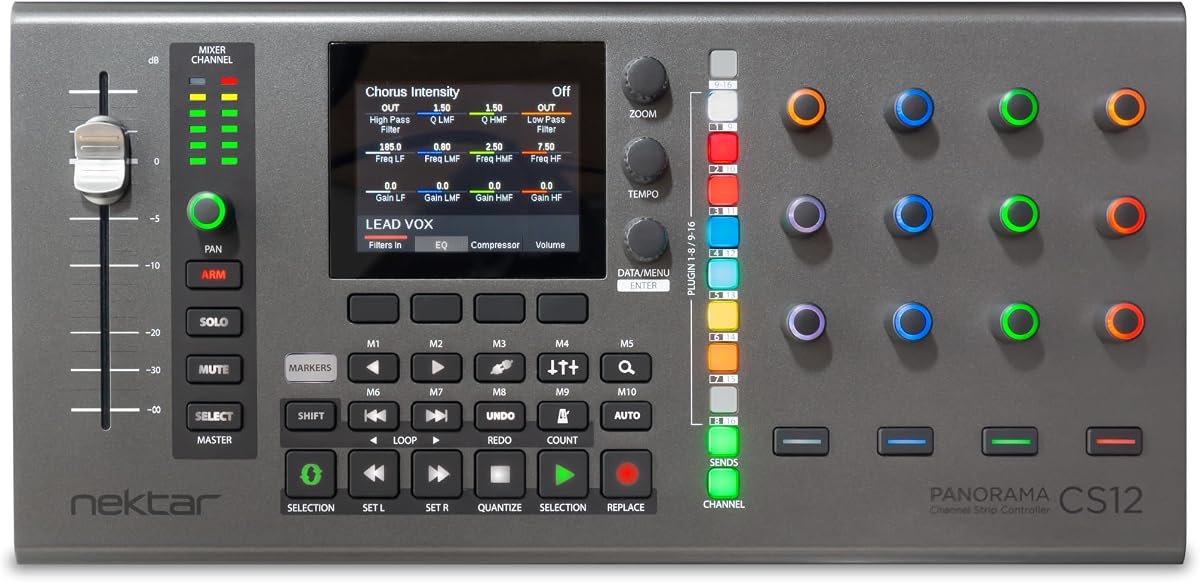
The Nektar Panorama CS12 is a channel-strip controller rather than an audio-processing device. It brings a motorized fader, rotary encoders, a 3.5-inch TFT display, transport buttons, and DAW integration into a tactile control surface. Its 3.9 rating places it in the middle of this roundup, with the best fit among users who want more direct manipulation of software mixing.
We may earn a commission when you buy through this link, at no additional cost to you.
A motorized fader provides more precise control than a generic knob-based surface, while the display can present contextual information. Transport buttons and rotary encoders round out the workflow, allowing the user to navigate and adjust a virtual channel without relying entirely on mouse movement. The control surface is most useful when it is supported by a compatible DAW and workflow.
It is important not to confuse this product with a rack-mounted preamp or dynamics processor. The CS12 does not amplify microphones, apply compression, or process an analogue signal. Its value lies in workflow integration and hands-on control, so it belongs in a different part of the buying decision from the other nine products.
Choose the Panorama CS12 if a DAW-based producer wants a dedicated physical control surface for channel management. It is a strong companion to a software mixing setup, but it should be paired with an audio interface that supplies the actual preamps, converters, and signal routing required for recording.
A motorized fader gives tactile movement and a physical position for a software level. That can make level balancing and automation adjustments feel more direct when working repeatedly on a detailed mix.
The TFT display provides visual context while the rotary encoders support parameter changes. Together, they can shorten the path between selecting a channel and adjusting the most relevant controls in a compatible DAW.
We may earn a commission when you buy through this link, at no additional cost to you.
The YAMAHA MG10XU is a compact ten-input stereo mixer with USB connectivity and built-in SPX digital effects. It is not a conventional single-channel rack strip, but it offers an approachable way to combine microphones, instruments, preamps, equalization, and compression in one small desktop unit. Its 4.6 rating indicates strong user reception.
We may earn a commission when you buy through this link, at no additional cost to you.
The mixer uses discrete class A D PRE amplifiers with an inverted Darlington circuit, along with three-band equalizers, high-pass filters, and one-knob compressors. Those features make it practical for a small ensemble, rehearsal room, podcast, or compact home studio where the operator wants several sources connected at once. The supplied dimensions also emphasize its space-saving format.
Its limitations come from its mixer architecture. Each channel does not offer the deep processor selection or insert-style routing found on dedicated rack channel strips, and the integrated workflow is less suited to building a larger console around individual modules. Built-in effects are convenient, although a producer with a software-based workflow may not need them.
The MG10XU is the most practical pick for someone who needs a self-contained small mixing and recording system rather than one high-end processor. It should be considered alongside the dedicated channel strips when the deciding factor is the number of simultaneous inputs and overall desktop convenience.
Ten inputs provide room to connect several sources without assembling separate preamp boxes and a small mixer. The combination of preamps, EQ, filters, compressors, and effects makes it especially convenient for rehearsing, recording, and producing in a compact room.
One-knob compressors and straightforward three-band EQ make the mixer approachable. A new user can establish a workable balance, while more experienced producers still have the core controls required for basic source shaping.
We may earn a commission when you buy through this link, at no additional cost to you.
The Solid State Logic Revival 4000 is an all-analogue microphone channel strip inspired by the SSL 4000 Series and packaged in a compact 1U format. Its 1 rating is the lowest supplied score in this guide, and the available product information is limited to the design concept. That combination warrants careful research before purchase.
We may earn a commission when you buy through this link, at no additional cost to you.
The appeal is straightforward: a focused analogue channel with a recognizable connection to SSL's classic console design. A single microphone-oriented format can be attractive for a studio that values straightforward signal flow and a compact physical footprint. It is also easier to integrate with other studio hardware than a large console when only one additional channel is needed.
The rating is the critical issue. A low customer score may indicate problems with the product, its fulfillment, its expectations, or another factor not visible in the supplied description. Since detailed specifications are not provided here, it would be irresponsible to claim that the unit has particular compressor or equalizer characteristics. Buyers should inspect the complete current listing and recent customer feedback.
The Revival 4000 is best considered a specialist option for someone specifically seeking an SSL 4000-inspired analogue channel in 1U. For a purchase where reliability and customer confidence are decisive, the higher-rated rack units in this guide offer more detailed feature information and stronger supplied ratings.
The stated inspiration from the 4000 Series positions the unit around SSL's classic channel-strip identity. That focus may be more meaningful to a producer familiar with that console family than to someone comparing measured processor specifications.
The 1 rating and limited specification summary make current reviews especially important. Check the present listing for connector details, operating requirements, warranty terms, and experiences from recent owners before relying on the design lineage alone.
We may earn a commission when you buy through this link, at no additional cost to you.
The Universal Audio LA-610 Mk II is a premium tube channel strip with a vacuum-tube microphone, instrument, and line preamp plus equalization and optical compression. Its perfect 5 rating makes it one of the standout picks in the guide. The combination of a tube input path and optical dynamics is aimed at users who want a classic hardware processing approach in a focused module.
We may earn a commission when you buy through this link, at no additional cost to you.
The preamp accepts microphones, instruments, and line-level sources, allowing the channel to handle more than one kind of recording task. The equalizer provides another stage of tonal correction, while the optical compressor offers a distinct dynamics option within the same unit. This combination reduces the need for several separate processors when a track needs a complete front end.
As with other tube devices, the exact operation depends on gain structure, source characteristics, and the user's goals. The included information does not enumerate every control, so the current manual and full listing should be consulted for detailed settings. A premium hardware purchase also warrants careful consideration of rack space, studio integration, and budget.
The LA-610 Mk II is the premium recommendation for a serious recording room that values a tube preamp, optical compressor, EQ, and multiple input sources in one channel. It is especially compelling for vocalists and producers who deliberately want to build character in hardware rather than relying entirely on a software channel strip.
The vacuum-tube preamp provides a distinctly different starting point from a solid-state front end. It gives the recordist a hardware-based tonal option for microphones, instruments, and line sources within the same unit.
The optical compressor is a defining part of the channel strip's appeal. Paired with the EQ and tube preamp, it creates a cohesive processing chain designed for hands-on recording decisions rather than a collection of unrelated controls.
We may earn a commission when you buy through this link, at no additional cost to you.
The Neve 1073SPX-D combines a channel-strip-style preamp and equalizer with a USB audio interface, insert routing, headphone monitoring, and ADAT input and output. Because the supplied rating is not available, this review does not assign a numeric customer score. The product is notable for consolidating several studio functions into one specialized desktop or rack-oriented system.
We may earn a commission when you buy through this link, at no additional cost to you.
Its USB interface supports 24-bit audio conversion up to 192 kHz. Class A preamp circuitry, a preamp and EQ section, insert send and return, a headphone amplifier, and ADAT I/O give the user a broad connection platform. ADAT is especially relevant for expanding the system with additional converters, while the insert points permit external processing.
This is a more integrated solution than a conventional one-rack-unit strip. It may be attractive to a producer who wants a recognizable preamp character and direct computer connectivity without assembling every part separately. The trade-off is that the broad feature set and premium format may be unnecessary for a project requiring only one basic channel.
The Neve 1073SPX-D is a strong recommendation for a home or project studio that wants a channel-strip-inspired front end and capable USB interface in one package. It is particularly useful for musicians who want flexible digital recording, external inserts, and ADAT expansion from a single central component.
Combining the preamp, EQ, USB conversion, headphone amplifier, and insert routing reduces the number of separate components required for a focused recording setup. This can simplify signal flow while leaving room for external processing.
ADAT I/O allows the system to grow through compatible conversion hardware. That makes it more adaptable than a basic interface with only computer and analog connections, particularly for sessions that need additional channels.
We may earn a commission when you buy through this link, at no additional cost to you.
The right channel strip depends on the source, signal-chain role, control style, and studio format. Start with the job the hardware must perform, then narrow the options by connectivity, processing depth, and rack or desk requirements.
A channel strip can serve as a preamp and processor for one source, a compact mixer for several inputs, or a controller for a software mixer. These roles should be separated before comparing features. A rack strip may excel at a vocal front end, while a small mixer can make a rehearsal session easier, and a DAW controller improves software navigation without processing any audio itself.
Check whether you need XLR microphone inputs, conventional line-level TRS connections, instrument-level inputs, or high-impedance Hi-Z access. The dbx DBX286SV, PreSonus STUDIOCHANNEL, and YAMAHA MG10XU all provide multiple input types, while the SSL SiX includes a front-panel TRS line input with a Hi-Z switch. Consider the sources and cables already in your studio.
Look for the processors you will actually use. A high-pass filter, usable equalizer, and straightforward compressor cover many recording needs. The SSL SiX favors fast one-knob operation, the PreSonus offers a detailed EQ and tube drive, and the dbx combines four distinct processors. Advanced products add more routing and tonal choices at the cost of a steeper learning curve.
The unit may sit between a microphone or instrument and an interface, console, or preamp elsewhere. Insert points, loop-outs, and send or return connections determine whether external processing can be added. The dbx loop-out, Neve insert send and return, and SSL Super 9000 input routing all support more flexible chains than a simple one-input, one-output strip.
Rack-mounted strips are built for a 19-inch studio cabinet, while the YAMAHA MG10XU suits a desktop or rehearsal environment and the Nektar CS12 belongs beside a computer. Check rack height, depth, operating voltage, ventilation, and available controls. A 1U format can save space, but it may also place many functions behind menus or a compact control layout.
Traditional channel strips process analog signals, whereas a DAW controller only manipulates software. The Neve bridges hardware processing and digital recording with USB, and the Nektar integrates directly with compatible DAWs. Confirm operating-system support, required software, control mapping, sample rates, and digital converter behavior before treating either as a complete recording path.
A processor should remain understandable after the first session. Clear metering, accessible knobs, predictable menus, and concise labeling make regular use easier. Status LEDs help on the dbx DBX286SV, while the SSL SiX and YAMAHA MG10XU emphasize direct controls. Sophisticated menus can be valuable for specialists but frustrating when a new signal arrives mid-session.
Ratings can be a useful initial filter, but they should be considered alongside the supplied feature information and current customer feedback. Products with a 5 rating, such as the SSL Super 9000 and Universal Audio LA-610 Mk II, show strong supplied satisfaction. A 1 or 2 rating calls for extra investigation, especially when the product description is brief or the release is recent.
Begin by confirming that every input, output, and control matches the intended signal path. Connect the source to the appropriate input, route the output toward the next device, and verify phantom power only for microphones that require it. Start with EQ and compression adjustments modest, then use metering and careful listening to establish the channel's role.
Build a repeatable gain structure. Begin with preamp gain, add only the amount of processing the source needs, and leave enough headroom for downstream conversion. If the hardware offers multiple microphone or line paths, compare them at matched levels. Bypass processors when evaluating a new source so that tonal changes remain understandable rather than confusing.
For tube-based units, allow the documented warm-up period and use conservative settings while judging the sound. For compressor and equalizer controls, make modest changes and record comparisons at consistent playback levels. Keep ventilation clear, avoid placing equipment in an enclosed or heat-retaining space, and follow the manufacturer's instructions for cleaning, power, and rack installation.
A recording channel strip combines several parts of a signal chain, commonly a preamp, equalizer, compressor, and output routing, in one hardware unit. Its purpose is to capture and shape a source consistently before it reaches an interface, console, or recorder. Some channel strips also include inserts, phantom power, filters, or digital connectivity.
It depends on the role you need. An audio interface is essential for converting digital audio to and from a computer, while a channel strip can add dedicated signal processing and routing. A studio may use both, with the interface handling conversion and the channel strip providing higher-end preamp, EQ, and compression.
Not necessarily. A compact mixer, desktop interface, or software mixer can cover many home-recording needs. A rack strip becomes more useful when you want repeatable hardware processing, a modular signal path, external inserts, or a growing collection of studio modules.
A compressor is one component that controls signal dynamics. A channel strip is a broader package that may combine a compressor with preamplification, equalization, filtering, routing, and other controls. The SSL SiX, for example, includes a compressor alongside EQ, phantom power, a high-pass filter, and multiple inputs.
They are not automatically better; they simply offer a different hardware character and a different set of control decisions. The PreSonus STUDIOCHANNEL and Universal Audio LA-610 Mk II provide tube-based options, but microphone choice, source, room acoustics, gain structure, and mixing context all influence the final result.
Most can, provided the input specifications match the source. XLR inputs suit microphones, while TRS or other line inputs can accept instruments or line-level material. High-impedance sources may require a Hi-Z setting, as offered by the SSL SiX, and instrument outputs should be checked for compatibility before connection.
Look for a meter that shows enough detail to identify clipping, excessive compression, and sustained level changes. The dbx DBX286SV includes status LEDs for audio and processor monitoring. If your interface or converter also provides reliable metering, use both sources to confirm that the complete chain is operating correctly.
No. A DAW controller such as the Nektar Panorama CS12 provides physical control over software parameters, but it does not include an analog preamp, compressor, equalizer, or signal converter. It is best used alongside an audio interface and recording software.
The dbx DBX286SV is the best overall value for its broad set of integrated processors, flexible inputs, and useful insert loop. The SSL SiX stands out as the editor's choice for a streamlined workflow with direct controls and a 4.7 rating, while the Universal Audio LA-610 Mk II takes the premium position for its tube preamp, EQ, optical compressor, and perfect rating.
Your priority should determine the path. Choose a focused SSL-style unit for quick operation, a detailed tube strip for hands-on tone shaping, a multichannel mixer for compact sessions, or a DAW controller for software navigation. The SSL Super 9000, ART Pro Channel III, and Neve 1073SPX-D make more sense when specialized routing, compression voicings, or integrated digital recording justifies their more specialized designs.
Finally, check current ratings, availability, connector details, and pricing before ordering. Product information and customer experiences can change, and a channel strip should be selected for the signal chain you have now as well as the expansions you realistically plan to make.
