
Samsung ViewFinity S7
4.6Editor score
27-inch 4K UHD display
High-density document rendering
HDR10 color support
Legal work demands sustained attention, rapid document comparison, extensive research, and comfortable long sessions at the desk. A monitor for lawyers should provide enough resolution and screen area to keep citations, contracts, case files, and notes visible without making the workspace feel crowded or visually tiring.
The ten products in this guide range from conventional desktop displays to portable and multi-screen systems for mobile practices. We compared resolution, panel type, refresh rate, color capabilities, connectivity, adjustability, eye-comfort features, portability, and practical workspace flexibility using the supplied product information.
Each review explains how a particular display could support legal workflows, from reading dense pleadings to comparing electronic discovery or joining remote client meetings. Ratings reflect the published customer feedback supplied with each product, while specifications and availability can change as manufacturers update models and retailers revise listings.
4.6Editor score

4.4Editor score

4.7Editor score
As an Amazon Associate we earn from qualifying purchases.
This side-by-side overview compares screen size, resolution, refresh rate, core strengths, and intended workspace roles for all ten monitors featured in the guide.



The Dell 24 Plus S2425HSM combines a 23.8-inch Full HD panel, a high 144Hz refresh rate, a 1ms moving picture response time, and integrated 3W speakers. Its supplied 4.7 rating is the highest among the ten products, giving it a strong foundation for a dependable legal workstation.
We may earn a commission when you buy through this link, at no additional cost to you.
Resolution is the main consideration for lawyers. At 1920 by 1080 pixels, the display can show a draft, research results, and a calendar at the same time, while the elevated contrast and high refresh rate keep scrolling and cursor movement visually smooth. The two built-in speakers are also useful for reviewing recorded depositions or joining calls without adding separate desktop speakers.
Physical adjustability is unusually useful in document-heavy offices. Height, tilt, pivot, and swivel adjustment make it easier to align the screen with a laptop, external keyboard, or preferred eye level. The 4-star TÜV-certified eye-comfort design and reduced blue-light output are valuable during long drafting, review, and discovery sessions. The limitation is resolution: Full HD is comfortable for general legal work, but a 4K model offers visibly more detail for dense originals.
This is the most balanced recommendation for a law office that wants a polished, flexible display without moving to a specialized multi-screen system. Choose it for smooth everyday performance, integrated audio, and excellent adjustment. If a large volume of scanned exhibits or extremely small type is the norm, consider the ViewFinity S7 instead.
The 144Hz refresh rate, low moving response time, and TÜV-certified eye comfort help sustain smooth interaction during lengthy reading and drafting sessions. Adjustable positioning also reduces the need to hunch toward a fixed-height display.
Integrated dual 3W speakers make the S2425HSM useful for hearing case-related media directly from the display. It is a practical way to create a more complete workstation without relying on separate computer audio equipment.
We may earn a commission when you buy through this link, at no additional cost to you.
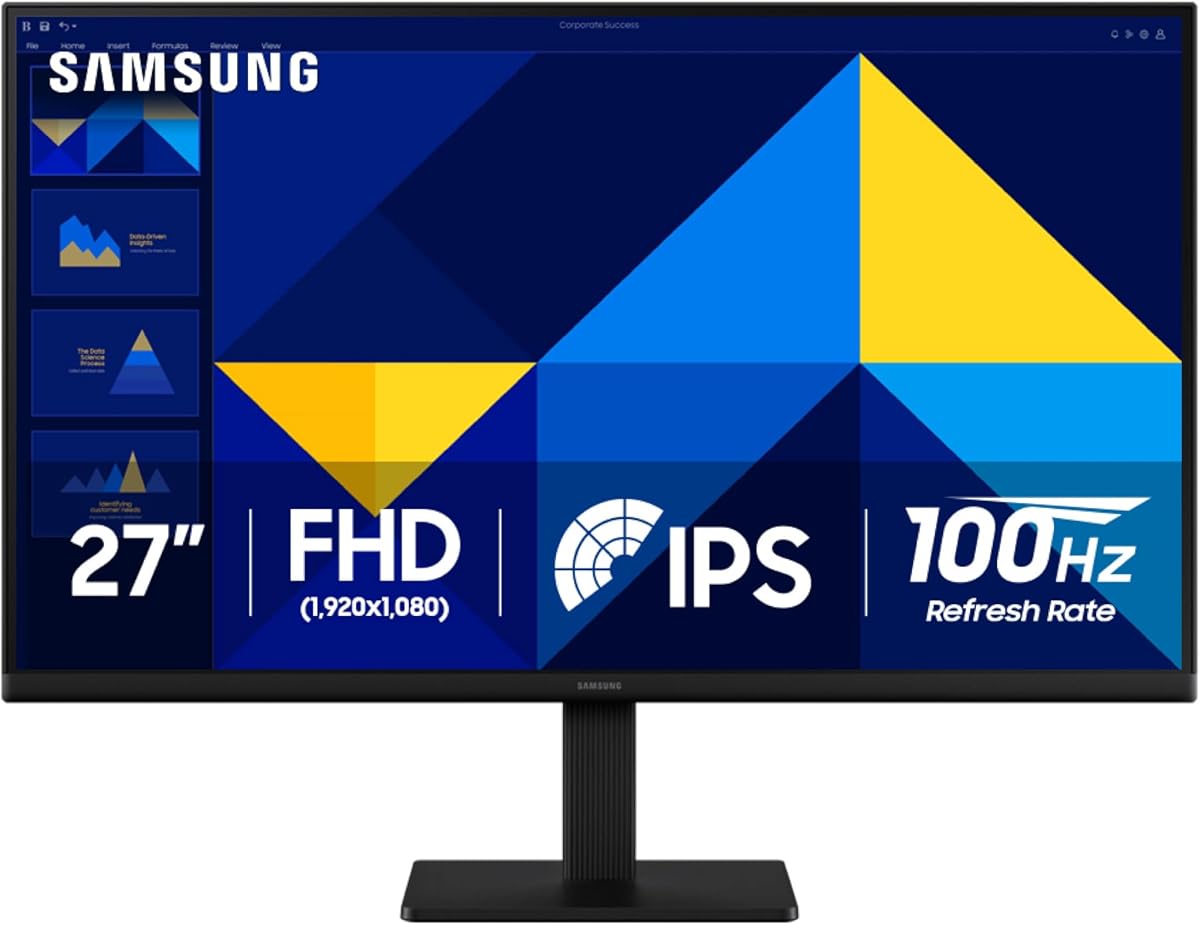
The Samsung Essential S30GD is a 27-inch IPS monitor designed around clear, consistent viewing and a 100Hz refresh rate. It carries a 4.5 rating and offers a useful balance of screen size, slim styling, eye-comfort features, and general-purpose performance for professional offices.
We may earn a commission when you buy through this link, at no additional cost to you.
An IPS panel is a sensible choice when a lawyer may view the screen from different angles or when a second person occasionally joins a desk-side review. The supplied feature set emphasizes bright, clear colors without significant color washing as the viewing angle changes. Its 100Hz refresh rate also helps make scrolling through long case files and moving between windows feel more fluid than a conventional 60Hz display.
The ultra-thin border bezels give the S30GD a clean appearance and conserve visual space compared with a thick-framed model. Samsung also includes reduced-blue-light and flicker-reduction features for longer sessions. However, the product information does not highlight detailed stand adjustment, so buyers who need a precise height, pivot, or swivel should check the current physical specifications before ordering.
This monitor suits attorneys, paralegals, and legal support staff who want a conventional 27-inch display with strong viewing-angle performance. It works particularly well for general research, email, drafting, call preparation, and a separate client-facing screen. It is less compelling than a 4K option when the goal is to display many pages simultaneously at small type.
The IPS panel is well suited to collaborative work because colors remain consistent when viewed from an offset position. That makes it easier to turn the display toward a colleague without a major visual shift in documents or reference images.
The slim bezel design leaves more room for adjacent displays. A lawyer can pair it with a laptop screen for a dedicated research or communication view without losing as much desk area to borders.
We may earn a commission when you buy through this link, at no additional cost to you.
The MNN 15.6-inch portable monitor is aimed at lawyers who work away from a conventional office, attend client meetings, or need a second screen without carrying a full-size display. It offers Full HD resolution, an IPS glossy screen, a 60Hz refresh rate, and a 4.3 customer rating.
We may earn a commission when you buy through this link, at no additional cost to you.
Its most important feature is the pair of full-featured USB-C ports. With a compatible device, one USB-C cable can carry both display signal and power, reducing cable clutter. The listed compatibility includes laptops, phones, MacBooks, and several game systems, provided the source supports the required USB-C display or Thunderbolt 3.0 and USB 3.1 DP Alt Mode.
For legal work, the available copy, extended, second-screen, and portrait modes are genuinely useful. A lawyer can keep a matter calendar or reference material beside a laptop while presenting, or rotate the screen for a narrow document column. The smart cover adds protection and can serve as a stand, while the slim, lightweight construction makes the unit easier to pack than a desktop monitor.
This is the most practical option in the guide for mobile practices, court appearances, temporary offices, and hybrid client meetings. It is not the strongest choice for prolonged color-sensitive work or extremely dense page layouts, and its 60Hz rate is less fluid than the premium desktop alternatives. Its strength is convenient, portable workspace expansion.
Compatible USB-C sources can transmit both picture and power through a single cable. This is particularly valuable in conference rooms where lawyers need to present documents quickly and avoid managing several adapters.
Portrait mode can make long, narrow passages easier to read, while extended mode creates a separate area for research or notes. The included smart cover protects the display and provides a simple support when traveling.
We may earn a commission when you buy through this link, at no additional cost to you.
The Xebec Tri-Screen 3 turns a compatible laptop into a three-screen workstation by adding two 13.3-inch displays. It carries a 4.4 rating and is the clearest productivity-oriented choice in the guide for lawyers who regularly move between research, drafting, case management, and communication applications.
We may earn a commission when you buy through this link, at no additional cost to you.
The patented tension-fit design holds the screens without magnets or adhesive attachments to the laptop. A single embedded USB-C cable connects the system, drives both displays, and provides 60W pass-through charging. That combination could reduce the number of cables and adapters needed at a courthouse, client site, or temporary workspace.
Legal work often involves several distinct information streams: a word-processing document, an evidence or discovery platform, court rules, calendar entries, and a communication channel. Two extra panels allow those resources to remain visible, reducing the need to open and close overlapping windows. The manufacturer specifically identifies lawyers reviewing case files among the professional groups that can benefit from the additional screen area.
The trade-offs are size and complexity compared with a conventional monitor. The complete system weighs 3.6 pounds and includes two screens, so it is not as compact as a single portable panel. Buyers should also verify that their computer supports the required USB-C video, power, and operating-system behavior. For lawyers who travel frequently but need a serious mobile command center, this is the standout option.
One display can hold the active draft, a second can present discovery or evidence, and the laptop screen can remain available for communication or reference. The result is a more structured workflow than repeatedly switching among overlapping windows.
The aluminum construction, 3.6-pound weight, and included travel case make the system easier to move between offices and client sites. Single-cable operation further reduces setup time when the user needs to begin working quickly.
We may earn a commission when you buy through this link, at no additional cost to you.
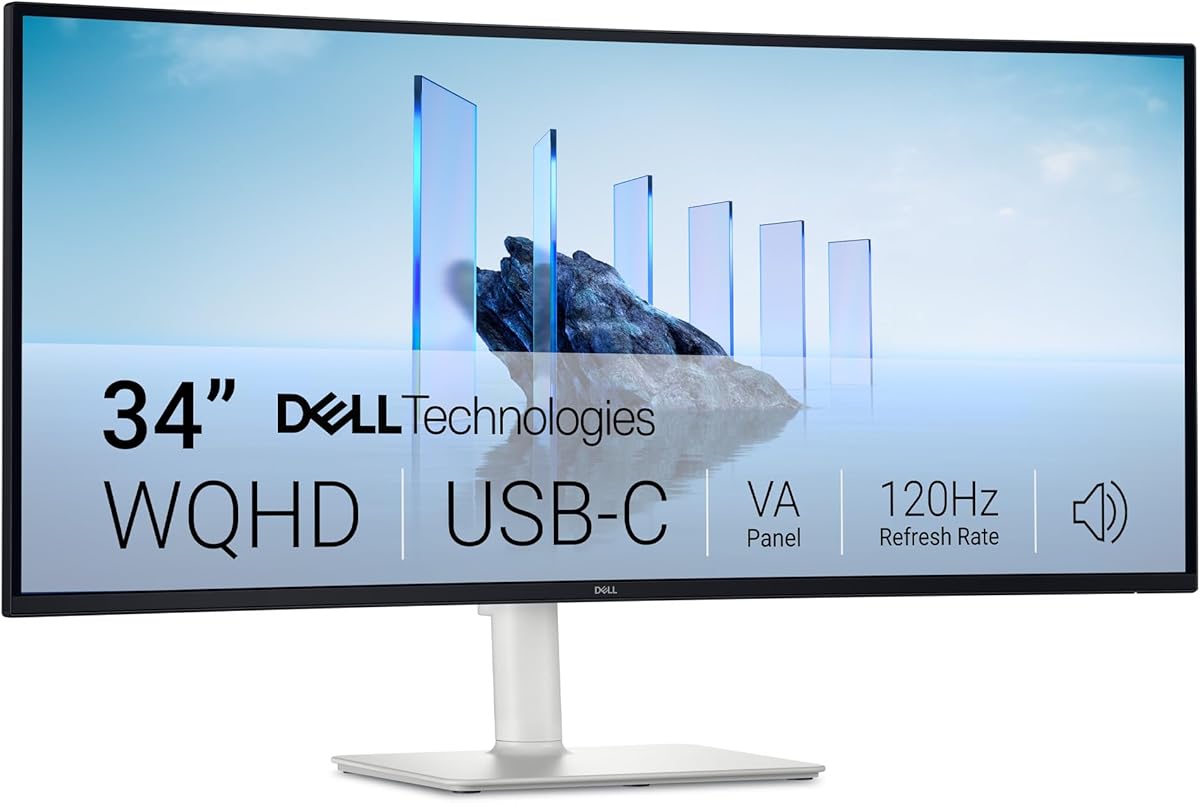
The Dell 34 S3425DW combines a large 34-inch WQHD display with a VA panel, 120Hz refresh rate, AMD FreeSync Premium, and 99% sRGB color coverage. Its 4.4 rating and feature set make it a premium desk option for legal professionals who want more room than a standard 27-inch monitor.
We may earn a commission when you buy through this link, at no additional cost to you.
The 2560-by-1449-class WQHD format gives a legal user enough space to divide the display into useful regions. A contract could remain open beside case notes, while a separate section shows a cited authority or client message. The 3000:1 contrast ratio and HDR readiness can make dense text and dark interface elements feel more defined, although actual results depend on software, room lighting, and source content.
Connectivity is especially convenient. A single USB-C cable can handle display and up to 65W of power delivery, reducing the need to connect power and video separately. The 120Hz refresh rate and 0.03ms response time are particularly useful for smooth cursor movement and scrolling through lengthy electronic documents.
This display is best for a dedicated office where desk depth can accommodate a 34-inch panel. Its extra width is valuable for split-screen work, but it may be unnecessarily large for a small home office or a minimal travel kit. Choose the S3425DW when legal productivity and a clean single-cable setup outweigh the space required by a very wide monitor.
A 34-inch WQHD screen can host multiple full applications rather than relying on a small central workspace. That makes it well suited to comparing a draft against revisions while keeping research or case-management material in view.
The VA panel's 3000:1 contrast ratio, 99% sRGB coverage, and 95% DCI-P3 coverage provide richer color and deeper blacks than many general-purpose IPS alternatives. These characteristics are useful when reviewing visual evidence alongside conventional text.
We may earn a commission when you buy through this link, at no additional cost to you.
The Samsung Essential S3 S36GD uses a 1800R curve to create a more immersive 27-inch viewing experience. It supports a 100Hz refresh rate, includes TÜV-certified eye-comfort technology, and has a 4.5 rating, placing it among the stronger general-purpose choices in this roundup.
We may earn a commission when you buy through this link, at no additional cost to you.
The curved form wraps the display around the user's field of vision and can reduce the feeling that peripheral areas compete for attention. For a lawyer working through email, court notices, a case timeline, and reference material, this could make a single screen feel more cohesive. A 100Hz refresh rate helps keep scrolling and game-based interface movement fluid.
Samsung includes settings for color and image contrast, plus a Game Mode that can change how content fills the display. Although some of these features are gaming-oriented, adjustable contrast and image presentation are also relevant to reviewing scans, comparing exhibits, or changing the visual density of a document.
The S36GD is best for users who prefer a curved, focused workspace and want a larger-than-average 27-inch screen without moving to premium 4K resolution. Flat technical drawings and extensive side-by-side grids may not benefit from the curve, and Full HD cannot match the text detail of a QHD or 4K display. It remains a comfortable, polished option for everyday legal work.
The 1800R curve places the edges of the display closer to the viewer. That shape can make a single-screen workflow feel more enveloping and keep less visual emphasis on unused desktop space.
TÜV-certified eye-comfort technology minimizes blue light and screen flicker. Those features are useful when attorneys spend long stretches reading filings, preparing correspondence, or reviewing electronic documents.
We may earn a commission when you buy through this link, at no additional cost to you.
The Fagomfer S6 is a 15.6-inch Full HD portable triple-screen extender designed to create several workstation layouts from compatible laptops and computers. It has a 4.1 rating, along with features such as expansion and mirroring modes, landscape and portrait orientations, and a magnetic assembly design.
We may earn a commission when you buy through this link, at no additional cost to you.
The detachable structure distinguishes it from a simple dual-screen laptop attachment. The package includes a standalone portable monitor, folding stand, sleeve, and single-screen stands, allowing the user to assemble different arrangements for a home office, hotel room, courthouse, or client meeting. The manufacturer also states that the system can increase productivity by up to 300% when used in its expanded configuration.
Compatibility is broad but not universal. The listed systems include Windows, macOS, ChromeOS, Linux, desktop computers, mini PCs, and consoles. A custom hub cable converts a regular USB-A or USB-C connection into a display connection, which can help users whose devices cannot natively extend multiple screens. For legal professionals, the three-panel format could separate drafting, research, and communication into distinct views.
This product is most useful for users who value physical arrangement flexibility more than premium image characteristics. Its 86% NTSC gamut is narrower than the color coverage advertised by several conventional monitors, and its 300-nit brightness is more modest. It also has the lowest rating in the group, so buyers should carefully review recent customer feedback and verify their computer's ports before purchasing.
The included stands and magnetic assembly allow the S6 to shift between a compact single-screen arrangement and a wider multi-display workstation. This flexibility is useful in temporary offices where the available desk shape changes from one location to another.
The included custom hub cable addresses some display-output limitations by adapting USB-A or USB-C connections. The system is intended for Windows, Mac, Chrome, Linux, desktop, and mini-PC environments, making it a broad portable option when the correct source ports are available.
We may earn a commission when you buy through this link, at no additional cost to you.
The Samsung ViewFinity S7 S71H is a 27-inch 4K UHD IPS monitor offering 3840 by 2160 pixels, HDR10, and a 4.6 rating. Its high pixel density makes it one of the strongest choices for lawyers who routinely work with dense documents, scanned records, detailed spreadsheets, or multiple software windows.
We may earn a commission when you buy through this link, at no additional cost to you.
The central advantage is detail. A 4K UHD panel can render fine text more sharply than Full HD and offers enough resolution to divide the screen into multiple productive regions. This is especially useful for reviewing tightly formatted pleadings, comparing versions of a contract, reading footnotes, or examining a document beside a video conference.
HDR10 adds darker blacks and brighter highlights, while the IPS panel provides consistent viewing across the screen. Samsung specifies HDMI and DisplayPort connections, and the monitor's Eye Saver Mode is certified by TÜV to reduce blue light and prevent screen flickering. Game Mode can also adjust color and contrast to reveal additional detail, although legal users will most often adjust settings for documents rather than games.
This is the best conventional display for a high-resolution legal workstation. The specification should be considered together with desk depth, operating-system scaling, and viewing distance: a 27-inch 4K screen offers a compact footprint but requires suitable scaling to keep text comfortable. For users who routinely handle extensive documents, that density can provide a more precise and productive experience than a standard Full HD panel.
The 3840-by-2160 resolution provides substantially more pixel detail than Full HD. That can improve the readability of fine print, scanned exhibits, spreadsheets, and side-by-side document comparisons when applications support the available resolution.
The IPS panel supports consistent viewing angles, while HDR10 creates a wider contrast range for supported content. TÜV-certified Eye Saver Mode reduces blue light and flicker, helping the display remain comfortable during extended document review.
We may earn a commission when you buy through this link, at no additional cost to you.
The Samsung ViewFinity S6 S61F combines a 27-inch QHD panel with a 100Hz refresh rate, multiple ports, and an adjustable stand. Its 4.3 rating and 2560-by-1440 resolution position it as a practical middle ground between compact Full HD screens and high-density 4K models.
We may earn a commission when you buy through this link, at no additional cost to you.
QHD offers enough room for a multi-window legal workflow without requiring a very large physical panel. A lawyer might keep a draft, a case-management application, and a research browser visible at once. The higher pixel count can also make small on-screen text appear more defined than on a standard 1920-by-1080 display, provided the software and operating system are configured appropriately.
Practical ergonomics strengthen the case for this model. The stand supports tilt, pivot, and height adjustment, allowing the display to be positioned for long documents or a side-by-side arrangement. Samsung includes TÜV-certified eye-comfort features, while HDMI and DisplayPort provide straightforward connection options for a desktop or laptop.
The ViewFinity S6 is a strong all-purpose choice for a fixed legal office. It does not offer the extreme text detail of the 4K S7, but its combination of resolution, size, refresh rate, and adjustability can be more practical in a confined workspace. It is particularly attractive for users who regularly divide their screen and want a professional display without moving to an ultrawide format.
QHD offers a useful middle ground for split-screen work. Users can keep more visible information than on a Full HD monitor while retaining a conventional 27-inch footprint that fits many office desks.
Tilt, pivot, and height adjustment make it easier to align the display with a keyboard, laptop, or preferred eye level. That flexibility is particularly useful when alternating between drafting, reading, and video calls.
We may earn a commission when you buy through this link, at no additional cost to you.
The Philips 241V8LB is a 23.8-inch Full HD monitor with a VA panel, 100Hz refresh rate, wide viewing angles, and a 4.6 rating. It combines modern visual features with a document-focused EasyRead mode, making it a strong value-oriented option for independent lawyers and smaller offices.
We may earn a commission when you buy through this link, at no additional cost to you.
Full HD resolution is suitable for email, case management, legal research, drafting, and video meetings. The VA panel produces brighter whites and deeper blacks than many standard office panels, while 16.7 million colors support clear differentiation in reports and reference material. Its 100Hz refresh rate also helps keep menus, windows, and scrolling responsive.
EasyRead mode is the feature most directly tied to legal work. It creates a more paper-like presentation for lengthy documents, potentially reducing visual fatigue when reading contracts, policies, or filings. The three-sided virtually bezel-free design is also useful for a multi-monitor arrangement, allowing a second display to sit neatly beside the primary screen.
This monitor is best for users who want a dependable, uncluttered display with document comfort and a slim appearance. Its limitation is text density: 1920 by 1080 cannot show the same amount of fine detail as the QHD or 4K alternatives. Even so, the strong rating and focus on readable documents make the 241V8LB a compelling choice for a home office, litigation associate, or cost-conscious legal practice.
EasyRead mode adjusts the viewing presentation for lengthy written material. It is a straightforward way to create a calmer document environment for contracts, research papers, policies, and case notes.
The nearly borderless design on three sides makes this 23.8-inch display easy to pair with another screen. That helps legal users dedicate one display to communication and another to active document work without losing too much room to thick borders.
We may earn a commission when you buy through this link, at no additional cost to you.
The right legal display balances readability, usable screen area, connectivity, comfort, and portability. These factors matter more than gaming-oriented specifications when the monitor will be used for hours of drafting, research, document review, and communication.
Resolution determines how much text and interface detail can fit on the screen. Full HD models such as the Dell S2425HSM, Samsung S30GD, and Philips 241V8LB are suitable for standard office work, while QHD models offer more room for side-by-side applications. The Samsung ViewFinity S7 advances to 4K UHD, giving 3840 by 2160 pixels and exceptionally fine detail for scanned documents, spreadsheets, and dense legal texts.
Choose Full HD for a compact or budget-conscious desk, QHD for a balanced multi-window office, and 4K when fine text and high pixel density are central to the workflow.
A 23.8-inch monitor offers a familiar footprint and is easy to pair with a laptop. A 27-inch panel offers more room without the footprint of a very wide display, while the Dell S3425DW gives legal users a large 34-inch workspace for concurrent applications. Portable systems provide a different balance because their value comes from transporting additional screens rather than filling a permanent desk.
Measure the available desk depth and consider how much room remains for a keyboard, notebook, and papers before choosing a larger monitor.
Height, tilt, pivot, and swivel adjustment can place a monitor at a more natural height and reduce the need to lean forward. The Dell S2425HSM and Samsung ViewFinity S6 provide particularly useful adjustment options. Eye-comfort features are also important: TÜV certification, reduced blue light, and flicker reduction are highlighted across several models in this guide.
Prioritize an adjustable stand and certified eye comfort if legal work involves eight or more hours of screen time in a single day.
IPS panels are associated with consistent color and broad viewing angles, which makes the Samsung S30GD and ViewFinity S7 useful for shared desks or occasional side-by-side review. VA panels can provide stronger contrast and deeper blacks, as seen in the Dell S3425DW and Philips 241V8LB. The portable Fagomfer S6 offers 86% NTSC coverage, so it may be less attractive when accurate visual evaluation matters.
For contracts and ordinary research, panel differences are subtle. For visual evidence, design work, or color review, prioritize stronger gamut and color specifications.
Connection choices determine how easily a monitor fits into a daily legal workstation. HDMI and DisplayPort are standard professional options, while USB-C can combine video and power on selected displays. The Dell S3425DW supports up to 65W of USB-C power delivery, and the MNN portable monitor can use one full-featured USB-C cable for compatible devices. The Xebec Tri-Screen 3 similarly combines display and 60W charging through one embedded cable.
Check the ports on your computer before buying, especially for portable models. Compatibility is more important than the number of connectors advertised.
Legal work often benefits from several visible applications: a word processor, legal research, a case calendar, email, and a communication platform. Large conventional screens, narrow bezels, and QHD resolution make splitting one display easier. Portable triple-screen products go further, providing dedicated areas for drafting, evidence, and communication while traveling. These systems are compelling for high-mobility lawyers but require more setup and carry weight.
Choose a single large display for a fixed office or a multi-screen extender for frequent travel and mobile client service.
A lawyer who appears in court, visits clients, or works from temporary offices needs a display that is easy to pack and connect. The MNN 15.6-inch model is the lightest portable-style option by design, with a folding smart cover and USB-C convenience. The Fagomfer S6 offers more possible screen arrangements, while the Xebec Tri-Screen 3 provides two displays in a larger but still travel-oriented package.
Consider weight, included carrying protection, power requirements, and whether the source device supports the required video mode before building a mobile kit.
Although legal work is not centered on gaming, refresh rate affects cursor movement, scrolling, and window transitions. A 100Hz monitor provides a noticeable improvement over a 60Hz model, while the Dell S2425HSM reaches 144Hz and the Dell S3425DW reaches 120Hz. The higher rates can make long electronic-document sessions feel smoother, especially when rapidly moving between tabs.
Treat refresh rate as a comfort and responsiveness feature rather than the main basis for selection; resolution, screen area, and ergonomics usually have a greater effect on legal productivity.
Begin by positioning the display directly in front of the primary workspace, with its upper edge near eye level and the viewing distance close enough to read small type comfortably. Adjust the stand before changing software settings. For a single display, center the most active document; for multiple screens, place the drafting window in the center and place communication or reference material to one side to reduce repeated head movement.
Use the appropriate display scaling recommended by your operating system, especially with QHD and 4K models. A scale that presents too much information may make dense legal text difficult to read, while a scale that is too large can reduce visible context. Keep brightness and contrast at levels that remain comfortable without turning the display into a bright source in a dim room, and use the included eye-comfort modes when they improve document readability.
Clean the screen with a soft microfiber cloth and avoid spraying liquid directly onto the panel. Keep vents unobstructed, route cables so they do not pull the display forward, and use the included protective case for portable systems. Before a court appearance or client meeting, test the complete connection, power the laptop and monitors, confirm the display arrangement, and verify that confidential documents are not visible to bystanders.
Full HD is adequate for standard drafting, email, research, and case-management tasks. QHD provides a useful balance by fitting more windows and rendering smaller text with greater detail. A 4K monitor is best for dense documents, scanned exhibits, spreadsheets, or side-by-side comparison because its higher pixel density preserves fine details.
A curved monitor can provide a more immersive and comfortable viewing experience for general reading and communications. The Samsung Essential S3 S36GD also includes TÜV-certified eye-comfort features. However, professionals who need perfectly flat geometry for technical drawings, grids, or precise alignment may prefer a conventional flat display.
Portable monitors are particularly useful for court appearances, client visits, and temporary offices where a second display is desirable. Models such as the MNN 15.6-inch screen and Fagomfer S6 support extended or mirrored workflows, but source-device compatibility must be confirmed. Check whether the laptop supports USB-C video, DisplayPort Alt Mode, or the required adapter.
A triple-screen extender can be valuable when drafting, research, evidence review, and communication all need to remain visible. It is especially compelling for mobile practices, where carrying separate monitors is inconvenient. Fixed-office lawyers may achieve a similar benefit with one large or high-resolution display and incur less setup complexity.
Reduced blue light, flicker reduction, adjustable brightness, and comfortable viewing geometry can help reduce perceived strain. Several products here include TÜV-certified eye-comfort features, while ergonomic height, tilt, pivot, and swivel adjustments make it easier to position the screen naturally. These features should complement regular breaks rather than be treated as a substitute for them.
A higher refresh rate is not essential for reading documents, but it can make cursor movement, scrolling, and application transitions feel smoother. The 100Hz to 144Hz options in this guide provide that refinement. Resolution, screen area, text clarity, and stand adjustment usually matter more for sustained legal productivity.
A 27-inch QHD or 4K display can support many workflows by dividing the screen into several application zones. A 34-inch model offers even more horizontal room, while a triple-screen system is better when separate physical displays, travel portability, or a laptop-centered setup are important. The right choice depends on desk space, mobility, and the number of applications used simultaneously.
Start by checking which video outputs the computer supports and whether power delivery is needed. HDMI and DisplayPort are straightforward for dedicated desktop setups, while USB-C is especially convenient when one cable can carry both video and power. Portable systems may also require USB-C DisplayPort Alt Mode, Thunderbolt 3.0, or a specific included adapter.
The Xebec Tri-Screen 3 is the leading choice for legal professionals who need multiple views in a mobile workstation, while the Samsung ViewFinity S7 offers the strongest conventional option for fine document detail. For a balanced fixed-office setup, the Dell 24 Plus S2425HSM combines smooth performance, integrated speakers, eye comfort, and excellent physical adjustment.
Prioritize the display that matches the actual workflow. Choose QHD or 4K when fine text and multiple windows are central, a large screen when a dedicated office has the space, a portable panel for travel, and a multi-screen system when reducing tab switching matters more than simplicity. Eye-comfort features and an adjustable stand deserve attention because legal professionals often work in long, uninterrupted sessions.
Before purchasing, verify current specifications, port compatibility, stand adjustment, and the latest customer feedback. Prices and retailer listings change over time, so compare the current offer against the features that will improve daily work rather than selecting solely by model name or headline specification.