
Selens Diffusion Paper
5.0Editor score
Large 59-foot roll
Translucent waterproof PET
Stable color temperature
Protective inner paper tube
Our light diffuser sheets for photography guide compares ten options for size, material, diffusion strength, light loss, versatility, and ease of use.
Light diffuser sheets help photographers turn harsh, concentrated light into a softer and more even source. The right material can tame reflections, reduce hard shadows, broaden a beam, and improve the appearance of reflective products without requiring a large studio.
We compared the ten products in this guide by examining their dimensions, construction, diffusion characteristics, light loss, cutting method, and useful shooting applications. The list includes rigid polyester and PET films, long rolls, multi-sheet kits, and large fabric modifiers.
Each pick reveals which lighting problems it addresses best, from portable product photography to full-size studio diffusion. Product ratings reflect the supplied customer feedback, while retail listings, availability, and current terms can change after publication.
5.0Editor score

5.0Editor score

4.3Editor score
The comparison below highlights each diffuser's format, size, material, and practical role so photographers can quickly identify the right option for portable kits, reflective product work, or larger studio lighting setups.





The Diffusion Film Filter Sheet 6 Packs Kit is a compact set of six white polyester sheets measuring 15.7 by 19.6 inches, or 40 by 50 centimeters. With a 4.3 rating, it offers a practical combination of portability, useful dimensions, and a modest light loss. The sheets are designed to soften light while preserving a steady color temperature.
We may earn a commission when you buy through this link, at no additional cost to you.
Their principal strength is flexibility across different shooting environments. Each 0.1 mm sheet can be cut to fit a flash, LED light, or strobe, allowing photographers to adapt the material to different modifiers. The product is especially useful for portraits, still lifes, video production, and product subjects such as clothing, bags, and shoes, where an even source can improve texture and reduce distracting contrast.
The main limitation is that the kit provides one general diffusion level. It lacks the multiple softness options found in graded gel sets, so photographers who need precise control over highlight spread may prefer a kit with Tough Silk, Tough Frost, and Light Frost sheets. These smaller panels also need clamps, tape, or another support rather than standing on their own.
Despite those trade-offs, this is a well-rounded choice for photographers who want several ready-to-cut sheets without carrying a very large roll. It is especially appropriate for mobile kits, tabletop sessions, and location work where moderate softening and reliable color rendition matter more than extensive size customization.
The six-sheet format is easy to divide among different modifiers or keep as a stack in a lighting bag. That makes the kit useful when a photographer needs to soften more than one light during a single portrait, still-life, or video setup.
The polyester construction is described as heat-resistant, tear-resistant, and durable, with low light loss and stable color temperature. Those qualities make it a practical general-purpose diffusion material rather than a specialty effect filter.
We may earn a commission when you buy through this link, at no additional cost to you.
This 10 Pack Diffusion Film Filter Sheet includes ten white sheets, each measuring approximately 15.7 by 19.6 inches and about 0.1 mm thick. Its 4.1 rating is the lowest among the featured options, but the bundle remains attractive for photographers who prioritize quantity, replacement stock, and the ability to create several custom-sized panels.
We may earn a commission when you buy through this link, at no additional cost to you.
The material is described as waterproof, heat-resistant, flexible, and resistant to creasing. It can be cut with scissors for softboxes, small fixtures, and other modifiers, and it is positioned for still-life, portrait, film, stage, and theater applications. Product photography involving clothing, bags, shoes, and reflective merchandise is another strong use case.
Compared with smaller bundles, ten sheets provide greater flexibility for a busy studio or for users who expect regular cutting and replacement. The drawback is that a larger stack takes more room than a single roll or fabric panel, and the material cannot be torn by hand, so scissors are essential. The uniform white diffusion also offers less control than a graded set.
This pack is best for photographers who want a ready supply of standard 40-by-50-centimeter sheets and regularly work across multiple lighting positions. It is less compelling for someone needing one exceptionally broad diffusion surface, but it offers a practical combination of usable dimensions and replacement quantity.
Ten sheets make it possible to soften a key light, fill light, and background fixture with separate pieces. This is useful for portrait and product sessions where controlling contrast around more than one subject area is important.
The film's flexibility allows it to conform to different DIY diffusion-panel arrangements. Its waterproof construction and resistance to creasing also support repeated use and straightforward maintenance.
We may earn a commission when you buy through this link, at no additional cost to you.
The Nezyo Light Diffuser Sheet is an extra-long white roll measuring 15.75 by 984 inches, equivalent to a width of 40 centimeters and a total length of 25 meters. Its 5.0 rating and exceptional length make it the most versatile option here for photographers who regularly cut custom diffusion panels.
We may earn a commission when you buy through this link, at no additional cost to you.
The heat-resistant, tear-resistant PET polymer has a matte, waterproof, anti-corrosion surface that is described as flexible, easy to clean, and resistant to wrinkles. Uniform light transmission and stable color temperature are particularly valuable when photographing jewelry, stainless steel, glass, cutlery, and other reflective subjects where obvious hotspots can spoil the image.
Because the film is supplied as one long roll rather than a collection of small panels, users can create pieces appropriate for large softboxes, smaller LED and flash modifiers, or travel kits. Its 40-centimeter width is narrower than the large fabric options but still offers substantial coverage. The material cannot be torn by hand, so clean scissor cuts remain important.
This is the strongest all-around recommendation for a photographer seeking one adaptable material across many assignments. It suits studio owners, product photographers, and traveling creators who want the freedom to make different sizes without buying separate diffusion sheets.
The 25-meter length supports repeated cuts for flashes, LED fixtures, strobes, and improvised panels. This makes the roll a practical workshop material for photographers who regularly experiment with diffusion placement.
A matte surface and uniform transmission can reduce the harsh appearance of specular highlights. That makes the material especially useful for jewelry, metal, glass, and polished product surfaces that are difficult to light conventionally.
We may earn a commission when you buy through this link, at no additional cost to you.
The Barydat 12 Pcs Diffusion Film includes twelve white sheets in an approximately 16-by-20-inch format, with each sheet measuring 15.7 by 19.6 inches and having a thickness of about 0.075 mm. Its 4.0 rating reflects solid practical utility, while the 12-piece count offers generous stock for custom sizes and replacement.
We may earn a commission when you buy through this link, at no additional cost to you.
Its matte PET surface is described as heat-resistant, tear-resistant, waterproof, flexible, and unlikely to wrinkle. The material is intended to produce uniform transmission, stable color temperature, and low light loss. Photographers can cut it with scissors for use with studio flashes, LED lights, stage lighting, party environments, and video production.
The thinner 0.075 mm construction is the main point to consider. It should be handled carefully and mounted without excessive tension, although its flexibility helps it sit over different modifier shapes. As with other uniform white options here, it does not provide graded control over beam spread or a central hot spot, so users needing subtle highlight shaping should choose accordingly.
This product is a good fit for studio photographers who want a large reserve of standard-size sheets, especially those working with clothes, bags, shoes, glasses, and reflective cutlery. The high quantity and consistent material make it a straightforward addition to a practical diffusion inventory.
Twelve sheets provide room for experimentation, repeated cutting, and replacement after accidental creasing. This makes the set useful for photographers who do not want to measure a large roll every time a custom panel is needed.
The waterproof, easy-to-clean construction is useful in working studios where the material may be handled frequently. Its matte finish supports even transmission and a more subdued reflection on glossy subjects.
We may earn a commission when you buy through this link, at no additional cost to you.
The Neewer White Seamless Diffusion Fabric provides a single 60-by-72-inch panel made from translucent, non-yellowing white nylon textile. Its 4.7 rating is the highest among the conventional fabric choices in the list, making it an appealing option for photographers who want a broad, soft source rather than a collection of small film panels.
We may earn a commission when you buy through this link, at no additional cost to you.
The seamless design avoids visible joins that might create distracting lines across a subject. According to the product data, it reduces light by approximately 1.0 f-stop, softens the light, and helps eliminate reflections and shadows. Its lightweight, durable construction also makes it convenient to carry between a home studio, a location shoot, and an outdoor session.
Unlike thin PET diffusion film, this textile is intended to be mounted across a larger structure, potentially a softbox, light tent, or DIY frame. It will not provide the same hard control as a tight grid or small gel panel, and its larger dimensions may require a support frame. The approximately one-stop reduction should also be considered when setting exposure and fill balance.
The Neewer fabric is a strong choice for portraits, tabletop work, and product photography where broad, flattering light matters. It is especially attractive for creators who prefer to cover a large source with one simple sheet rather than assemble several narrow panels.
A single 60-by-72-inch panel can cover a generous area without intersecting seams. That makes it easier to create an even source across a subject without visible transitions in brightness.
The stated reduction of about 1.0 f-stop gives photographers a useful guide when balancing diffusion against exposure. It can simplify the move from a bare fixture to a substantially softer source.
We may earn a commission when you buy through this link, at no additional cost to you.
The Fotoconic Light Diffuser Fabric is a single seamless roll of white nylon silk measuring 2 yards by 67 inches, or approximately 54 by 67 inches. With a 4.3 rating, it offers a versatile textile format for softboxes, LED strip lightboxes, umbrellas, shooting tents, windows, and handmade diffusion panels.
We may earn a commission when you buy through this link, at no additional cost to you.
Its stated light reduction is approximately 1.0 f-stop, while the soft translucent material is designed to spread the source and reduce hard reflections and shadows. The absence of a seam helps produce an even appearance over the fabric. Photographers can cut it with scissors, making it easy to adapt to a compact softbox or a larger custom support.
One consideration is that only the softlight fabric is included; the product does not supply a frame or support. The textile also differs from PET film in handling, offering a softer, larger surface but less precise beam shaping. Photographers needing very small patches may find it more practical to cut sections than to rely on the full width for every setup.
This fabric is well suited to portraits, video, tabletop work, and general studio diffusion where a broad, gentle source is desired. It is a flexible middle ground between compact film sheets and the largest seamless textile panel in the comparison.
The fabric can cover a softbox, umbrella, window, light tent, or LED strip fixture. This range of uses makes it a practical supporting tool for photographers who build different lighting arrangements from the same material.
The seamless nylon silk construction helps avoid concentration around an overlapping seam. Its translucent finish creates a broader source and reduces the appearance of sharp shadows and reflections.
We may earn a commission when you buy through this link, at no additional cost to you.
The Meking Light Diffuser Diffusion Fabric provides 2 yards by 67 inches of soft white fabric, with the material itself being 60 inches wide and 67 inches long. Its 4.3 rating and large usable area make it a budget-minded option for photographers who want more coverage than a small film sheet can provide.
We may earn a commission when you buy through this link, at no additional cost to you.
The single-piece construction is seamless, which helps the diffuser produce a more uniform glow when mounted over a light. It can be cut with scissors and used with studio lights, LED strip lightboxes, umbrellas, softboxes, shooting tents, diffusion panels, and windows. The stated reduction is about 1.0 f-stop, along with softer reflections and shadows.
The key trade-off is clearly described in the product information: the side edges are not finished, and only the softlight fabric is included. Photographers should plan how to secure or hem the material if a neat edge is important. Like other textiles, it is best suited to broad diffusion rather than precise shaping of a small beam.
Despite that limitation, it offers a useful combination of size, low light loss, and straightforward customization. It is a sensible pick for budget-conscious portrait, video, and product photographers who already have a frame or can secure the fabric over a suitable modifier.
A 60-inch width is substantial enough to cover a meaningful portion of a light source. It can create a softer working area for portraits and products without the small-sheet dimensions that sometimes leave hotspots.
The roll format allows the user to cut a piece for an umbrella, softbox, window, or smaller fixture. That flexibility makes one roll useful across several configurations, although the unfinished edges should be handled carefully.
We may earn a commission when you buy through this link, at no additional cost to you.
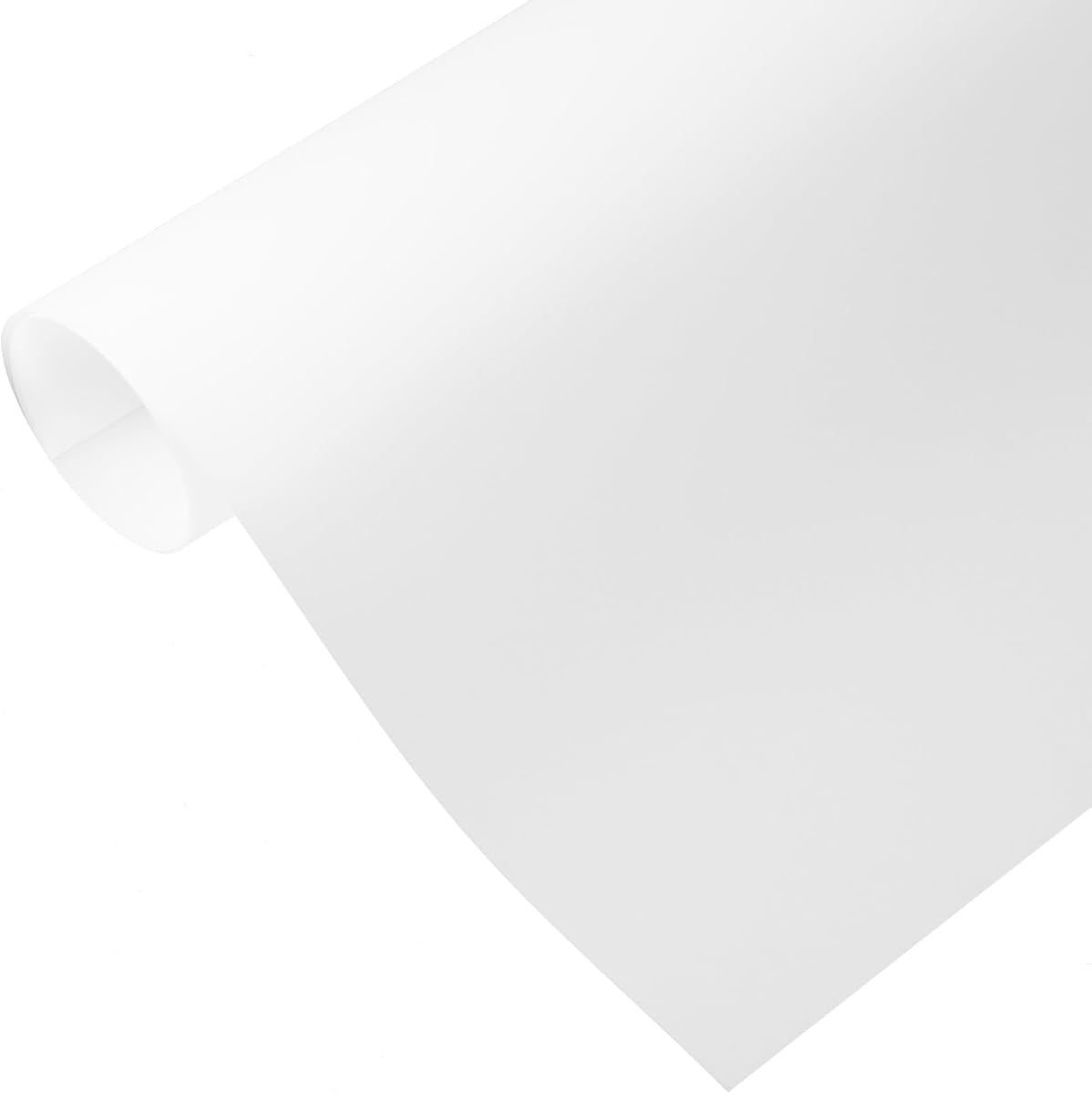
The Selens Diffusion Paper Roll is the largest-format option here, measuring 47.2 inches wide by 59 feet long. Its 5.0 rating reflects a strong combination of scale, translucent PET construction, and careful packaging. It is aimed at photographers who want to build large diffusion surfaces or maintain a substantial studio supply.
We may earn a commission when you buy through this link, at no additional cost to you.
The roll is described as waterproof, tear-resistant, and easy to clean, with the ability to diffuse light while allowing it to pass through. It does not significantly alter the color of transmitted light according to the supplied information, supporting more accurate representation in still images and recorded video. Its size is particularly useful for creating a professional look in product shots, including jewelry and metal items.
For portraits, the material can soften harsh flash or direct sunlight and reduce sharp shadows. The trade-off is storage and installation: a 59-foot roll needs careful handling, secure support, and a plan for cutting or mounting. It is overkill for a single small light or a compact travel kit where a 15-inch sheet would be more convenient.
The Selens roll is a premium-scale choice for dedicated studios, product photographers, and production teams that repeatedly need large diffusion panels. The interior and exterior packaging protect the film, and the inner paper tube provides structural support and a convenient way to hang or dispense the material.
The 59-foot length is useful when a studio routinely needs broad windows, ceiling scrims, hanging panels, or multiple product-light modifiers. It removes the need to join many separate sheets when one continuous surface is desirable.
The material is described as preserving the color of light passing through it. That quality is important for commercial products, skin tones, and video work where a noticeable shift would require additional correction.
We may earn a commission when you buy through this link, at no additional cost to you.
The Lighting Diffusion Film 6 Packs includes six sheets with a listed size of 15 by 19 inches and 40 by 50 centimeters. Its 4.3 rating indicates a solid general-purpose product, and the relatively thick 0.12 mm polyester construction gives it a substantial feel compared with thinner diffusion films.
We may earn a commission when you buy through this link, at no additional cost to you.
Its job is straightforward: reduce the harsh quality of a beam, spread the light, and lower the contrast between highlights and shadows. The material is described as heat-resistant, tear-resistant, and durable, while maintaining a steady color temperature with low light loss. It can be used with LED lights, flashes, and strobes for portraits, still lifes, product work, and video.
The dimensions deserve a note because the listing lists both 15 by 19 inches and 40 by 50 centimeters, which are not identical measurements. Buyers should check the dimensions they need and confirm the actual sheet size before cutting. The kit also lacks graded diffusion levels, so it is better for general softening than for nuanced beam control.
This six-pack is well suited to photographers who value a thicker, durable film and already know their fixture dimensions. It is a straightforward addition for product, portrait, and video kits where moderate diffusion and low light loss are the principal goals.
The stated 0.12 mm thickness is the greatest among the conventional sheet options in this comparison. That can make the film feel more substantial during handling, cutting, and mounting.
Placed in the beam path, the material disperses direct light and reduces the contrast between illuminated and shadowed areas. It is a practical option when the goal is smoother light without a complex graded system.
We may earn a commission when you buy through this link, at no additional cost to you.
The Diffusion Gels Filter Sheet Kit is distinctive because it includes six sheets across three diffusion grades: two Tough Silk, two Tough Frost, and two Light Frost. Its 4.1 rating is lower than many of the single-grade alternatives, but the broader control makes it valuable for photographers who want to choose how strongly their beam is softened.
We may earn a commission when you buy through this link, at no additional cost to you.
Tough Silk is described as delivering heavy to medium diffusion while offering directional control of the beam. Tough Frost provides medium diffusion, spreads the beam, and retains a slight central hot spot. Light Frost supplies the lightest level in the set, allowing a photographer to move gradually from stronger diffusion toward a subtler effect.
All pieces measure 15.7 by 19.6 inches and can be cut to different sizes. The polyester material is described as smooth and flat, with steady color temperature and low light loss. A critical safety point is that the filters should not be attached directly to the lighting source, or they may melt; they should be positioned in the beam path instead.
This kit is the most versatile choice when nuance matters. It works with flash, LED, and strobe lighting for film, video, portraits, and products, while the three grades help photographers compare different levels of shadow control. Its small sheets and direct-source warning mean it is best used as a beam-path modifier rather than a heat-facing cover.
Tough Silk, Tough Frost, and Light Frost let a photographer adjust the result instead of committing to one level. This is useful when a product needs broad softness while a portrait background benefits from a lighter touch.
The Tough Silk sheets are intended for heavy to medium diffusion and directional control, while Tough Frost retains a slight central hot spot. These distinctions provide more creative flexibility than uniform white panels.
We may earn a commission when you buy through this link, at no additional cost to you.
The most useful diffuser is one that matches the light source, subject, and shooting environment. Consider coverage, diffusion behavior, material handling, portability, and heat-related placement before choosing a sheet.
Coverage should match the size of the light or the area you intend to soften. Standard 15-by-19-inch and 15.7-by-19.6-inch sheets suit portable fixtures, tabletop lights, flashes, and small-to-medium modifiers. A wider fabric panel is more appropriate for softboxes, windows, light tents, and broad studio sources. The 40-centimeter-wide Nezyo roll sits between a small sheet and a large textile, while the 47.2-inch Selens roll supports extensive custom installations.
Uniform white diffusion produces a soft, even output but may not provide the subtle control needed for every subject. Graded kits with Tough Silk, Tough Frost, and Light Frost allow the photographer to move among strong diffusion, medium diffusion, and a lighter effect. Tough Silk also offers more directional control, while Tough Frost can preserve a slight central hot spot. This makes graded sheets preferable when the look must be tuned rather than simply softened.
Polyester and PET films are thin, rigid enough to cut cleanly, and useful for compact DIY modifiers. They generally resist creasing and are easy to wipe clean. Textiles provide a broader, softer diffusion surface and can be mounted over larger frames, but they wrinkle more readily and may need careful tensioning. The large seamless fabrics are better for a continuous, even panel, while film sheets are more convenient for travel and small fixtures.
Diffusion spreads and redirects light, so it can reduce output and alter the look of a fixture. The two explicit fabric options state an approximately 1.0 f-stop reduction, giving users a useful reference for exposure changes. The film products are described as having low light loss, but the actual result depends on the source, distance, and how the material is mounted. Compare key and fill lights after adding diffusion rather than assuming identical output.
Heat management is essential because some lights become hot enough to damage film or melt attached gels. The graded Diffusion Gels Filter Sheet Kit explicitly warns against attaching its sheets directly to a lighting source. For any option, use a safe stand-off distance, secure the sheet without blocking ventilation, and follow the light manufacturer's guidance. Cooler LED fixtures generally present a different setup from hot continuous strobes or tungsten-style lamps.
Small sheet packs are simple to stack, divide, and carry in a camera bag. A fabric roll is convenient but requires folding and a support structure. The 25-meter Nezyo roll and 59-foot Selens roll provide abundant material but need dedicated storage and careful handling. The Selens roll benefits from its protective paper tube, while a fabric panel can be rolled loosely to prevent persistent creases.
All featured options are intended for repeat use when handled correctly. Waterproof, easy-to-clean PET films are convenient for product studios and locations where surfaces may collect dust or fingerprints. Washable or cleanable fabrics may be more comfortable to work with on larger frames, but users should follow any supplied care guidance. Keep diffusion surfaces dry and dust-free because marks directly beneath a light become visible in the softened output.
Reflective jewelry, metal, glass, and polished products need broad, controlled diffusion to reduce hard hotspots. Portraits benefit from a source that softens facial shadows, while video and stage work may require consistency across multiple fixtures. Fashion, clothing, bags, and shoes also benefit from even illumination that reveals shape and texture. A large seamless fabric favors broad coverage, whereas small film sheets work well when a photographer needs to soften a compact flash quickly.
Begin by identifying the brightest and most direct source in the setup. Turn off the fixture while fitting the sheet, then secure it across the front of the modifier with a dedicated clamp, fabric grip, or frame. Avoid tape that can leave adhesive residue, and do not obstruct cooling vents. For a small film sheet, cut a slightly oversized piece with sharp scissors so it can be adjusted without stretching the material.
After mounting the diffusion, compare the subject with a test exposure made before the sheet was added. Raise shutter speed, aperture, or ISO as needed to preserve the intended depth of field and motion control, then check whether highlights have become smooth rather than simply brighter. For multiple lights, balance them after diffusion and watch for a central hot spot when using one of the graded frost sheets.
For care, roll large fabrics loosely or fold them along clean lines without sharp creases. Wipe PET film gently and allow it to dry fully before storing it. Keep all material away from hot fixtures, inspect clips for sharp edges, and replace damaged sections rather than reusing wrinkled or creased pieces. Proper storage helps maintain a smooth surface and consistent diffusion.
A light diffuser sheet spreads direct light so it appears softer, broader, and more even across a subject. Photographers use it to reduce harsh shadows, control reflections on glossy products, and improve the appearance of skin. It can be placed over a flash, LED light, strobe, softbox, or other suitable source.
Yes, most of the film options in this guide are intended to be cut with scissors or similar tools. They should not normally be torn by hand because an uneven edge can affect the light pattern. The larger fabric rolls can also be cut, although they may be easier to use as broad panels over frames.
No. Diffusion material should generally be placed in the beam path with a safe gap from the source. The Diffusion Gels Filter Sheet Kit specifically warns that attaching its gels directly to a lighting source may cause them to melt. Secure the sheet on a separate frame or modifier and follow the manufacturer's heat guidance.
Diffusion film is thinner, more rigid, and easy to cut into compact custom panels for flashes and LEDs. Diffusion fabric is larger and more flexible, making it useful for covering broad sources such as softboxes, windows, and light tents. Film offers convenient custom sizing, while seamless fabric can provide broader, continuous coverage.
Yes. White diffusion can create a more even reflection and reduce harsh, distracting highlights on jewelry, stainless steel, glass, and polished surfaces. A large seamless panel or long film roll can provide the most uniform coverage. Even diffusion does not eliminate reflections, so photographers should still shape the lighting and position the subject carefully.
The amount depends on the material, source, and distance from the light. The Neewer, Fotoconic, and Meking fabrics each state an approximately 1.0 f-stop reduction, while the film products are described as having low light loss. A test exposure after mounting is the most reliable way to determine the actual change.
Yes. The graded Diffusion Gels Filter Sheet Kit includes three levels: Tough Silk for heavy to medium diffusion and directional control, Tough Frost for medium diffusion with a slight central hot spot, and Light Frost for the lightest effect. These variations give photographers more control than a kit containing only uniform white sheets.
Keep PET film flat, loosely rolled, or in a protective sleeve away from heat and sharp objects. Store fabric loosely rolled rather than tightly folded, and allow it to relax before mounting. Clean and completely dry both film and fabric before storage so trapped moisture does not stain or deform the material.
The Nezyo Light Diffuser Sheet stands out as the most adaptable all-around option because its 25-meter PET roll can produce custom panels for many fixtures and subjects. The Selens Diffusion Paper Roll is the premium choice for large studio coverage, while the Meking fabric offers an economical way to soften a broad source. For users who need finer control, the three-grade Diffusion Gels kit is the most versatile.
Prioritize the source you already own, the coverage it requires, and the way you work. Small 15-inch sheets suit portable kits, seamless fabrics suit larger modifiers, and long rolls suit frequent customization. Always prioritize clean surfaces, safe heat clearance, and enough material to cover the intended light without creating unnecessary bulk.
Before purchasing, confirm the current dimensions, material details, included quantity, and latest customer feedback. Retail availability and terms can change, so compare the final listing with the setup and subjects you photograph most often.