
10-Inch Vacuum Suction Cup
4.7Editor score
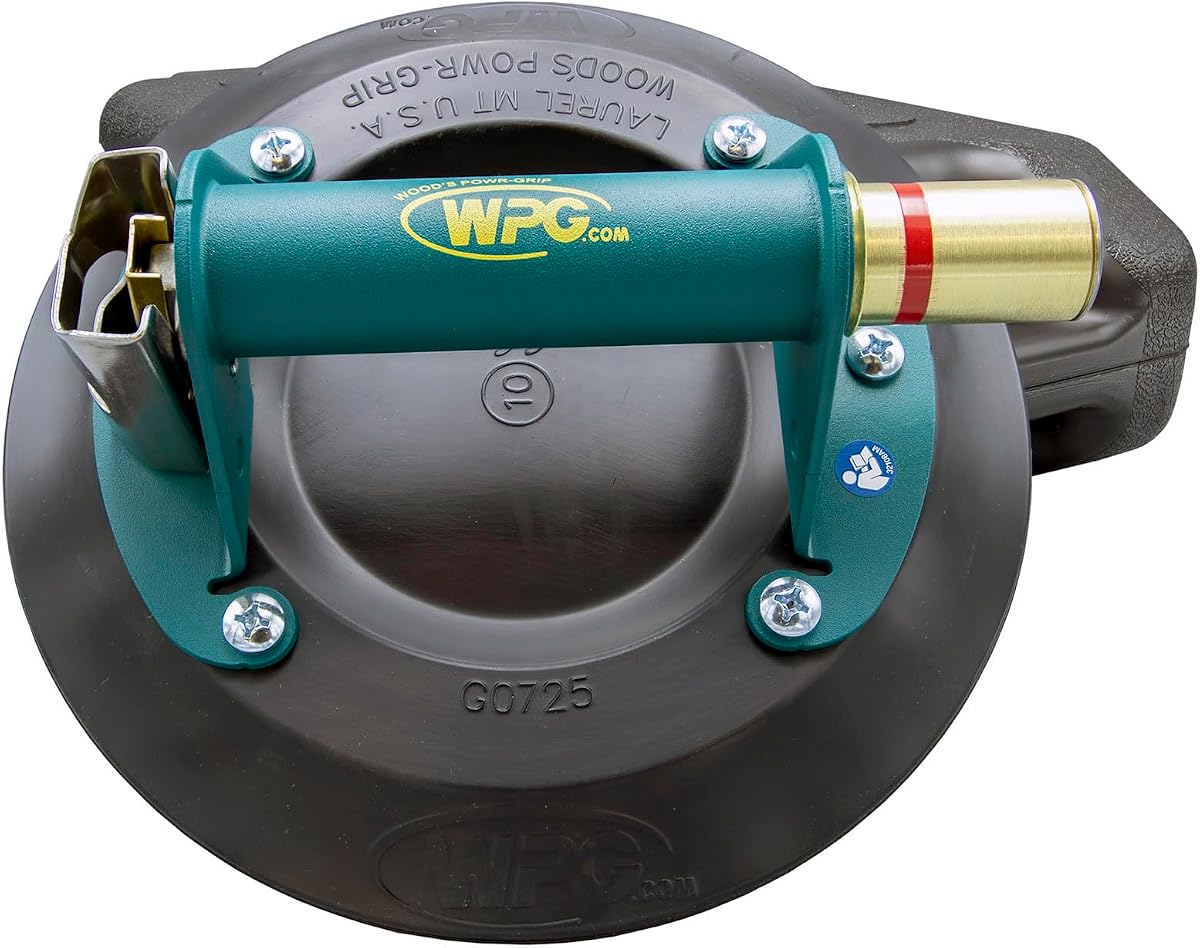
Brass pump with metal handle
Red-line vacuum loss indicator
Team lifting handle holes
Industrial suction cups for glass handling make large, smooth panels easier to lift, position, install, and transport. The right tool depends on surface conditions, panel dimensions, load weight, grip style, vacuum monitoring, and how often the equipment will be used on the job.
We compared all ten options by examining their stated capacities, diameters, handle and pad materials, attachment methods, safety indicators, compatible surfaces, intended applications, and storage guidance. The list covers compact 4.66-inch and 4.7-inch tools as well as larger 8-inch and 10-inch lifting systems.
Each review explains the strongest use case, construction, operating method, and important limitations. Ratings reflect the supplied customer feedback, while product availability and pricing can change, so readers should confirm current specifications and deal details before purchasing.
4.7Editor score

4.8Editor score

4.6Editor score
As an Amazon Associate we earn from qualifying purchases.
This side-by-side comparison covers cup diameter, stated load capacity, handle construction, monitoring features, and the surfaces each tool is designed to grip. The specifications are useful for shortlisting equipment, but safe capacity still depends on condition, technique, angle, and proper seal formation.



Wood's Powr-Grip N4950 is an 8-inch hand-held suction cup designed for fast attachment to smooth, nonporous flat surfaces. Its 4.8 rating places it among the strongest-reviewed products in this guide, while the metal handle and carrying case give it a practical, job-ready presentation.
We may earn a commission when you buy through this link, at no additional cost to you.
The large cup diameter offers a broad contact area for handling glass panels, metal sheets, and other smooth materials. Its straightforward attachment approach reduces the learning curve, and the included case helps protect the tool during transport between work locations. Eligibility for the Powr-Grip Exchange Program may also appeal to users who value a longer service-oriented ownership experience.
The product information does not provide a specific maximum load figure, so buyers should not substitute its customer rating for a documented safe working load. As with every vacuum lifter, actual performance depends on a clean surface, complete seal formation, load distribution, lifting angle, and careful handling. Its 8-inch format may also be unnecessary for narrow or small pieces.
This is the strongest general recommendation for installers, glass handlers, and tradespeople who want a large, straightforward suction cup with a durable handle and a way to protect it during transport. It suits users who regularly move broad, flat panels and value an established tool over a small, lightweight alternative.
The 8-inch cup is best suited to broad, smooth, flat panels where a wide contact area can help maintain control. It is more appropriate for moving a large glass sheet than for gripping a narrow trim piece or an object with a strongly curved face.
The supplied protective carrying case makes this option convenient for contractors who move between sites. Keeping the tool covered during storage can help shield it from impacts, dust, and accidental contact with other equipment.
We may earn a commission when you buy through this link, at no additional cost to you.
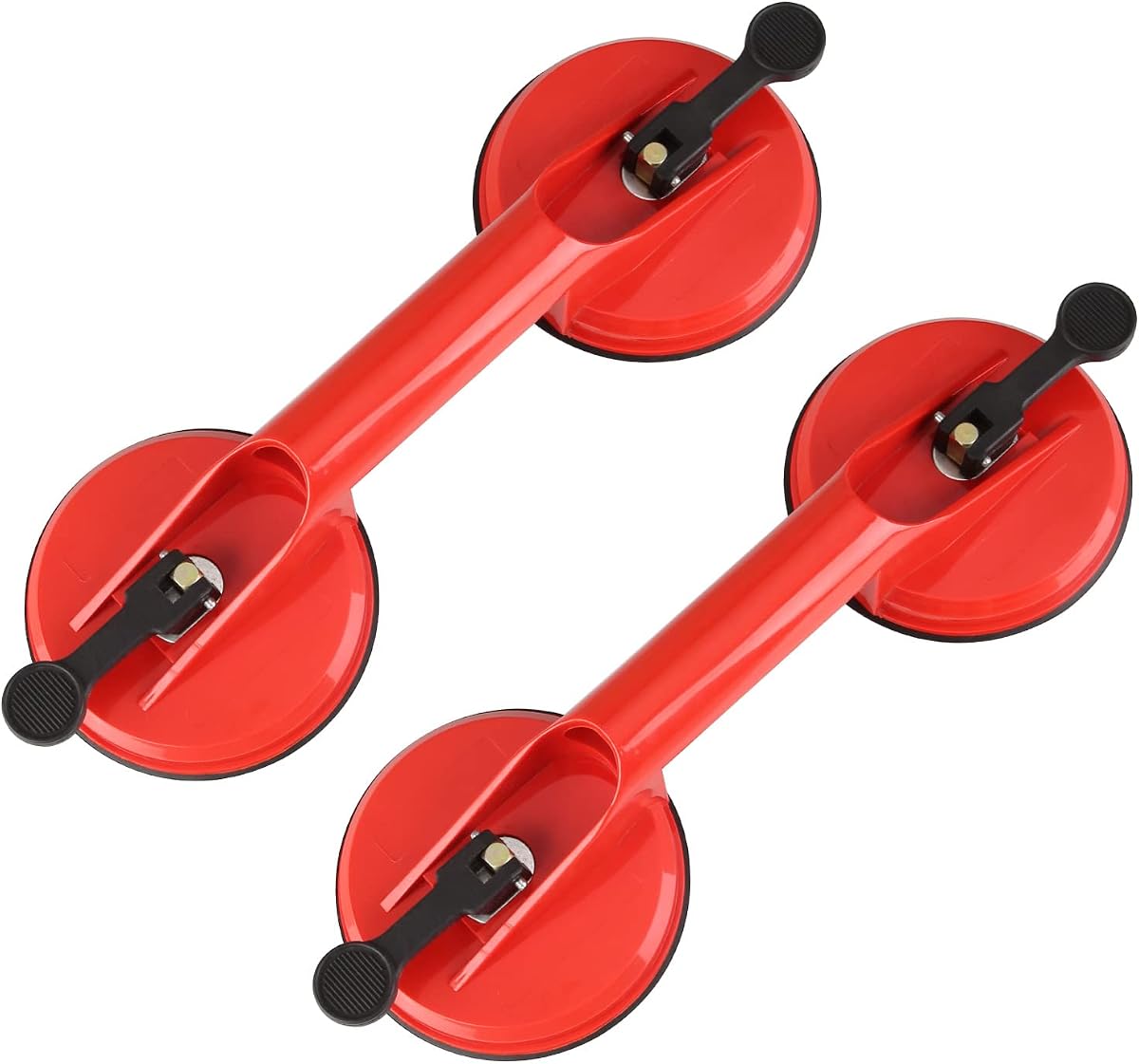
The Bluebow set includes two 8-inch suction cups, one for each hand, and carries a 4.6 customer rating. Its most prominent specification is a stated holding capacity of 440 pounds per cup, or 880 pounds for a pair under the manufacturer's stated conditions.
We may earn a commission when you buy through this link, at no additional cost to you.
Operation is based on aligning the cup over a clean, smooth area and pressing the top exhaust valve to expel air. The sealing rubber is designed to conform to glass, tile, marble, stainless steel, and polished metal. A triple leak-resistant structure and broad 8-inch footprint are useful for applications requiring stable attachment to large, flat materials.
The 880-pound paired figure is a maximum theoretical capacity, not a guarantee for every object or working condition. A secure seal can be impaired by dust, moisture, coatings, texture, an uneven panel, or poor alignment. Two cups also create a system that must remain balanced, and the stated capacity should never be approached without confirming actual conditions and applicable safety guidance.
This set is well suited to installers who regularly handle large glass, stone, tile, or metal surfaces and want a matched pair for two-handed control. It is less attractive for a user needing a lightweight, compact lifter or a system with an external manual vacuum pump and a visible pressure-loss indicator.
Using one cup in each hand can improve control over wide panels and distribute the task more naturally. The operator must place both cups evenly and keep the panel balanced while moving it.
The sealing pad is designed for glass, ceramic tile, marble, stainless steel, and polished metal. These smooth, nonporous surfaces provide the most credible conditions for maintaining an airtight seal.
We may earn a commission when you buy through this link, at no additional cost to you.
This 10-inch vacuum suction cup system combines a large cup diameter, an all-metal handle, and a brass manual pump. It received a 4.7 rating and is designed for demanding glass, granite, tile, aquarium, furniture, plastic, metal, stone, and appliance-handling tasks.
We may earn a commission when you buy through this link, at no additional cost to you.
The red-line indicator gives the operator an immediate visual warning if vacuum is lost. Because the line can be monitored while the cup remains attached, the user can pump the plunger without removing it from the panel. The handle also has two holes intended to facilitate team lifting with ropes, while a release lever provides a controlled way to detach the cup.
Its stated maximum capacity of 760 pounds applies to the two-piece system and should be treated as a limit under ideal conditions rather than a routine target. The system is also large, so it may be cumbersome around narrow panels or in confined workspaces. Temperature and time claims vary with the seal and environment, and users should still inspect the rubber and complete a controlled test before moving valuable material.
This is the premium choice for professional teams handling large stone, glass, and other flat loads who value a metal handle, a brass pump, and a visible vacuum indicator. It offers the most substantial construction in the group, although compact jobs and users seeking the lightest equipment should consider a smaller model.
The red-line indicator helps distinguish a maintained vacuum from a developing leak. If the warning appears, the operator can restore pressure with the brass pump while the cups remain attached to the work surface.
The handle holes are intended to support ropes or coordinated lifting arrangements. Team lifts still require clear communication, balanced positioning, and control of the entire panel rather than independent lifting by each person.
We may earn a commission when you buy through this link, at no additional cost to you.
The VEVOR set is a compact two-pack with 4.7-inch cups, aluminum alloy handles, and natural nitrile rubber pads. Its 4.4 rating reflects generally favorable feedback, and the listed applications include glass, granite, tile, metal, doors, windows, aquariums, and gapped laminate flooring.
We may earn a commission when you buy through this link, at no additional cost to you.
The cup measures 4.7 inches in diameter with a 7mm pad thickness. Manufacturer figures distinguish a recommended safe load of 187 pounds, a maximum vertical suction force of 297 pounds, and a maximum horizontal force of 330 pounds. These separate values make it important to understand the intended orientation rather than treating every number as interchangeable.
The small cup diameter is both its main advantage and its main limitation. It can maneuver more easily around smaller pieces, but it offers less contact area than 8-inch or 10-inch systems. The product is explicitly unsuitable for rough surfaces, and the absence of a visible pressure indicator may make periodic manual checks more important during extended lifts.
This option fits installers, aquarium handlers, renovators, and DIY users who need a maneuverable two-cup set for smooth medium-sized panels. It is less suitable for very large sheets where a broad cup footprint, stronger monitoring, or professional manual-pump system would be preferable.
The listed vertical, horizontal, and recommended values offer a more nuanced capacity profile than a single headline number. Users should identify the dominant load direction and select a comfortable margin for the actual material and setup.
Beyond lifting panels, the cups are listed for shower-door installation, floor-gap repair, aquarium handling, and other temporary holding tasks. The surface must remain smooth and suitable for an airtight seal.
We may earn a commission when you buy through this link, at no additional cost to you.
GRENPRO's two-pack pairs an aircraft-grade aluminum alloy body with thickened natural rubber pads. It has the highest customer rating in the supplied data at 4.9 and is positioned for lifting glass, tile, large panels, appliances, and other objects with a smooth, nonporous surface.
We may earn a commission when you buy through this link, at no additional cost to you.
The stated 330-pound capacity applies to each cup. One cup in each hand is presented as a way to handle bulky items with better control and reduced physical strain, which makes the set relevant to movers, installers, and renovation crews working with awkward flat panels.
The product is not recommended for curved surfaces or unfinished wood, and its performance depends on obtaining a complete seal. It should be stored in a cool, dry location away from direct sunlight. When used below freezing, the instructions call for the cups to reach room temperature for about 30 minutes before relying on their full suction strength.
This set is attractive for users who want metal handles and a strong customer rating without moving to the largest vacuum-lifting systems. It is well matched to windows, tile, marble, painted wood, metal, and appliances, but users should respect the smooth-surface limitation and the temperature guidance.
A matched pair allows the user to place one cup on each side of a panel, improving balance and reducing awkward twisting. The load should still be lifted evenly and kept close to a stable body position.
Rubber suction performance can diminish in cold conditions. Warming the cups to room temperature for the stated period helps restore the intended sealing behavior before a lift begins.
We may earn a commission when you buy through this link, at no additional cost to you.
This two-pack of 8-inch heavy-duty suction cups is designed for large, smooth, flat materials such as glass panels, ceramic tile, polished marble, granite, windows, and smooth appliances. It carries a 4.4 rating and combines a broad rubber pad with a reinforced handle and visible vacuum indicator.
We may earn a commission when you buy through this link, at no additional cost to you.
The manufacturer states up to 440 pounds of holding force for one cup and up to 800 pounds when two are used together. The instructions explicitly state that actual performance depends on proper use, surface cleanliness, lifting angle, weight distribution, and seal quality. A red line becomes visible if vacuum pressure is lost, allowing the user to repump the plunger while keeping the cup attached.
Before each use, the target and pad should be clean, dry, smooth, and free of dust or debris. The tool is unsuitable for unfinished MDF, plywood, rough stone, textured tile, concrete, and other porous or uneven materials. The high maximum figures should not be treated as a substitute for verifying the actual object and installation conditions.
This set is well suited to contractors working with large flat panels who want a broad footprint and an at-a-glance vacuum warning. It is less appropriate for small objects, curved surfaces, and unfinished materials, all of which fall outside the design assumptions stated for the product.
The red-line indicator makes vacuum loss visible while the tool remains attached. This is useful for monitoring during movement, although the user should still stop and safely reposition the load if the seal cannot be restored.
Dust and debris can interrupt the seal even on a visually smooth panel. Cleaning and drying both the cup and target surface is a simple but essential part of getting the advertised holding performance.
We may earn a commission when you buy through this link, at no additional cost to you.
Wood's Powr-Grip N5450, also identified as model 91700, is a 9-inch vacuum suction cup with a metal handle, manual hand pump, and protective carrying case. Its 4.8 rating places it alongside the best-reviewed products in the guide, and it is made for industrial construction, manufacturing, and automotive work.
We may earn a commission when you buy through this link, at no additional cost to you.
The manual pump creates a vacuum seal, while the red-line indicator visually confirms whether vacuum is being maintained. A textured, no-slip handle supports a secure grip during pumping and carrying. Compatible applications include glass, metal, plastic, and other smooth, nonporous materials, making it a versatile single-cup lifter for shops and job sites.
The product information emphasizes that its capacity exceeds the lifting capability of even very strong individuals, but it does not provide a specific maximum load in the supplied description. Users still need to consider the object, surface, orientation, and seal. Because only one cup is included, a very large panel may benefit from a matched two-cup arrangement or another support method.
This is an excellent choice for professional users who value a manual pump, clear vacuum feedback, a rugged metal handle, and a case for transport. It is less suitable for small components or users seeking the lightest and most compact option in the guide.
The red-line indicator gives the user a direct way to check the vacuum state before and during a lift. A visible warning means the operator should stop, secure the load, and restore the seal before continuing.
Glass, metal, and plastic applications make this tool useful beyond glazing contractors. The metal body and textured handle suit repeated work in construction, manufacturing, and automotive environments.
We may earn a commission when you buy through this link, at no additional cost to you.
The SEESII set includes two 4.6-inch cups with 7mm natural rubber pads and reinforced aluminum alloy handles. It carries a 4.6 rating and states a 200-pound holding power, positioning it as a versatile compact option for glass, tile, stone, metal, and other smooth panels.
We may earn a commission when you buy through this link, at no additional cost to you.
The cups are presented for large-glass lifting and positioning, tile handling, laminate-floor gap adjustment, bathroom safety applications, aquarium handling, glass-wall movement, and heavy furniture panels. Aluminum handles provide a rigid connection to the flexible pad, while the rubber is intended to grip without scratching delicate surfaces.
The 200-pound holding figure should be treated as a maximum product specification rather than a promise for every condition. Seal quality, angle, surface cleanliness, and the panel's stability all influence real performance. The relatively small diameter also provides less contact area than 8-inch or 10-inch systems, making it more appropriate for medium-sized pieces than extremely large panels.
This set is a strong fit for installers, renovators, aquarium handlers, and careful DIY users who need two compact cups for positioning medium-sized smooth materials. It is less suited to oversized slabs or loads that require the broadest possible footprint.
Beyond carrying a panel, the cups can assist with alignment and temporary positioning tasks. Users should avoid treating a temporary hold as a permanent structural support or a safety restraint.
Natural rubber pads are intended to provide stable contact with smooth surfaces while helping reduce scratching. The cup and material should still be checked for grit that could abrade the panel.
We may earn a commission when you buy through this link, at no additional cost to you.
The FCHO set is a compact two-pack with 4.66-inch cups, 7mm natural rubber pads, and aluminum alloy handles. Its 4.6 rating indicates favorable customer feedback, and the 200-pound maximum lifting weight makes it suitable for many medium-sized glass and tile handling tasks.
We may earn a commission when you buy through this link, at no additional cost to you.
Potential applications include lifting glass and tile, assisting with gapped laminate floors, aquarium handling, temporary bathroom support, and other positioning tasks. The aluminum handle offers a more substantial handhold than an all-plastic design, while the two cups allow balanced handling of a broad panel when both attach cleanly.
The 200-pound figure is a stated maximum and should not be reached without a proper seal and controlled test. Surface texture, moisture, dust, uneven weight, and lifting angle can reduce performance. Before use in cold conditions, the instructions recommend bringing the cups to room temperature for at least 30 minutes to help restore suction strength.
This is the budget recommendation for users who need a dependable matched pair for smaller jobs, household projects, or occasional tile and glass handling. It offers an appealing balance of metal handles, compact size, and customer feedback, while large professional slabs are better served by wider vacuum-lifting systems.
The two-cup format supports balanced handling without requiring the larger footprint of an 8-inch or 10-inch system. It is a practical choice for medium-sized objects that fit fully within the 4.66-inch contact area.
The instructions recognize that cold conditions can weaken rubber suction performance. Warming the cups before use gives the sealing material a better chance of conforming to the target surface.
We may earn a commission when you buy through this link, at no additional cost to you.
The Olympia Tools set uses 4.66-inch PVC suction pads attached to lightweight ABS handles. It received a 4.4 rating and includes two cups, offering a straightforward way to handle smooth glass and tile without the bulk of a large vacuum lifter.
We may earn a commission when you buy through this link, at no additional cost to you.
The listed maximum lifting weight is 132 pounds per cup. The tools are marketed for moving glass, lifting tile, assisting with laminate-floor gaps, handling aquariums, and providing temporary support or positioning in bathrooms and other household situations. Their light construction may appeal to users who need portable tools for occasional tasks.
This is the least capable option in the guide by stated maximum load, and its ABS handle is less rigid than the aluminum or all-metal constructions used by several alternatives. The compact cup must also fit fully on the intended contact area. Users should avoid rough, porous, or sharply curved surfaces and should not use temporary suction holding as a substitute for proper support.
This set makes sense for light, occasional handling of smaller glass or tile pieces where portability and low weight matter more than maximum capacity. Professional users moving large panels should consider a larger cup, a more substantial handle, and a vacuum indicator to reduce risk during critical lifts.
The light ABS construction makes these cups easier to carry and store than larger metal systems. They are best reserved for lighter objects and modest handling tasks that do not require maximum working capacity.
The listed household and installation applications are temporary tasks. A suction cup should not be relied upon as a permanent fastener or as the sole support for an object whose failure could cause injury or property damage.
We may earn a commission when you buy through this link, at no additional cost to you.
Selecting an industrial suction cup requires balancing panel size, actual weight, surface condition, handle strength, monitoring features, and operator control. The headline capacity is useful for comparison, but a safe choice also depends on maintaining a complete vacuum seal throughout the move.
Cup diameter determines how much surface area can participate in the seal. Larger 8-inch and 10-inch cups generally offer broader contact for large glass or stone panels, while compact 4.6-inch and 4.7-inch models are easier to position around smaller pieces. The full pad should sit flat within the target surface, with enough clear area around the perimeter to form an uninterrupted seal.
Choose the smallest cup that fully covers a sound, flat contact area, or the larger cup when the panel dimensions permit it. A cup that is too small can concentrate the load and leave less margin for slight positioning errors.
Published maximum capacities describe the tool under specified or ideal conditions, not every real-world lift. Consider the panel's complete weight, the direction of the pull, any attachments, the balance between two cups, and the possibility of an uneven or cracked sheet. Professional operators should retain a sensible safety margin and never treat a maximum figure as a target.
Check the listed vertical, horizontal, single-cup, and paired figures where available. Those values are not interchangeable, so select a model whose documented limit comfortably exceeds the anticipated load under the intended orientation.
Vacuum lifting depends on a smooth, clean, nonporous surface. Glass, glazed ceramic tile, polished stone, stainless steel, polished metal, and smooth appliances are among the compatible materials identified across these products. Rough concrete, unfinished wood, porous MDF, plywood, textured tile, and dusty or uneven panels are unsuitable.
Inspect the target for dust, moisture, oil, loose particles, and damage. Clean and dry both the panel and the cup before attachment so the flexible pad can conform without an obstruction breaking the seal.
Aluminum alloy and all-metal handles offer a rigid connection between the operator's hand and the flexible suction pad. ABS and PVC constructions can be lighter and easier to carry, but they may be less appropriate for repeated heavy-duty work or large loads. The handle also influences pumping leverage, comfort, and control during a lift.
Prioritize a handle that feels secure, has enough clearance from the panel, and provides a comfortable pumping motion. For frequent professional use, metal handles and reinforced connections deserve closer attention than weight savings alone.
A red-line indicator provides a visual indication that the tool is losing vacuum. This is especially valuable during a lift because the operator can stop, restore pressure with the pump, or safely lower the object without removing the cup from a moving panel. Models without an indicator still require careful attention to seal changes and movement.
An indicator is not a substitute for testing. Confirm that the warning line behaves as described before moving a valuable object, and maintain the pump and release mechanism so vacuum can be restored or removed promptly.
Some systems use a manual hand or brass plunger to create vacuum, while others use an exhaust valve that expels air when pressed. Manual pumps can offer clear, incremental pressure control and are easy to monitor. Exhaust-valve tools may be exceptionally simple to operate but may offer less visible feedback about the pressure inside the cup.
Choose the operating style that matches the work environment and operator training. A quick-release lever is useful for controlled removal, while a pump that can be operated without taking the cup off the panel is valuable when a seal needs to be restored.
Natural rubber, nitrile rubber, and PVC are used as pad materials in this category. A flexible, adequately thick pad helps conform to the panel, while features such as multi-layer or anti-slip construction are intended to reduce leakage. Pad thickness, edge condition, and material compatibility all influence consistency.
Inspect pads for cuts, embedded grit, hardening, creases, and deformation. Replace a damaged pad rather than expecting the pump to overcome a compromised seal. Store the cups clean and dry, and protect them from direct sunlight and prolonged moisture.
A carrying case adds protection for contractors who transport tools between sites. Two-cup sets are generally more practical for balanced handling, while single-cup models can be useful for smaller tasks or as part of a multi-tool setup. Large handles also need room in the vehicle or storage cabinet.
For team lifts, establish a clear procedure for placement, communication, movement, and emergency lowering. The 10-inch model's handle holes are specifically intended to support rope-assisted team lifting, but holes alone do not create a safe rigging system without proper training and compatible equipment.
Start by confirming that the panel is intact, the intended contact area is smooth and nonporous, and the material is within the tool's documented load range. Clean and dry both the suction pad and the surface. Remove dust, oil, moisture, and loose debris, because even a small obstruction can create a leak and allow a glass sheet to shift or fall.
Place the cup fully on the flat area, keep the handle clear of the edge, and create the vacuum according to the model's instructions. For a manual-pump tool, pump until the red-line warning disappears. For an exhaust-valve design, align the cup and press the valve firmly to expel air. Check the seal and the indicator before taking any weight, then perform a controlled test in a safe position while keeping the load supported.
Move the material slowly, maintain balanced placement, and avoid pulling at an angle that could peel the cup away from the surface. If a vacuum-loss warning appears, stop and lower or secure the load before restoring pressure. Release the cup with its designed lever or valve, store it clean and dry away from sunlight, and inspect the pad and pump regularly for wear, damage, and contamination.
Smooth, clean, nonporous surfaces work best, including flat glass, glazed ceramic tile, polished marble, granite, stainless steel, and smooth metal panels. The surface must be free of dust, moisture, oil, loose debris, and texture. A suction cup should not be used on rough concrete, unfinished wood, porous MDF, plywood, or textured tile because these materials cannot maintain a reliable seal.
A single cup can lift a suitable panel only when the surface, seal, orientation, and load meet the manufacturer's conditions. Large panels generally benefit from two cups placed evenly to improve stability, but even a two-cup system should be tested carefully. Never assume that the published maximum capacity applies to every panel or use the tool on cracked, edge-damaged, or unsupported glass.
The red line is a visual warning that the vacuum may be weakening or that the warning threshold has become visible. On pumps that can operate while attached, the user can restore vacuum without removing the cup. If the line remains visible or the load begins to move, stop and safely lower or secure the object before troubleshooting.
Larger cups usually provide a broader sealing area and can be more appropriate for large, flat panels, but they are not automatically safer or suitable for every object. Small cups are easier to maneuver on medium-sized pieces. The best choice depends on the panel dimensions, available clear surface area, weight, lifting direction, and the tool's documented capacity.
Store the cups clean and dry, away from direct sunlight, excessive heat, and prolonged moisture. Keep the pads away from sharp tools and dirty surfaces that could cause cuts or embedded grit. Before each use, inspect the rubber for damage and confirm that the pump, indicator, and release mechanism work as intended.
Cold temperatures can reduce the flexibility and sealing effectiveness of rubber pads. The GRENPRO instructions recommend warming the cups to room temperature for about 30 minutes when used below 32°F, while FCHO recommends at least 30 minutes in a room-temperature environment below freezing. Follow the specific product guidance and allow the pad to reach a workable temperature before testing.
No. They are temporary lifting and positioning tools for suitable smooth surfaces, not permanent fasteners or universal safety restraints. A load should never remain suspended solely on suction cups when an approved clamp, support, or restraint is required. The same caution applies to bathroom, aquarium, automotive, and renovation tasks where the load could shift or fall.
Place the cup on the intended contact area, create the vacuum, and visually confirm that the warning indicator shows a maintained seal. Test the actual load in a safe position while keeping it supported until you are confident that the attachment is secure. Stop if the pad moves, the surface shifts, or the indicator shows a problem, and never exceed the documented load.
The Wood's Powr-Grip 8-inch is the strongest all-around recommendation because it combines a broad cup, metal handle, protective case, and a 4.8 customer rating. The 10-inch two-pack stands out for heavy-duty construction, a brass pump, a red-line indicator, and team-lifting features, while the FCHO two-pack offers the most budget-conscious route to compact, metal-handled glass lifting.
Prioritize the actual working conditions over the largest headline number. Choose a cup that fits the contact area, create a complete seal, understand the load direction, and use two cups when a broad panel benefits from balanced control. A visible pressure indicator, rigid handle, and straightforward release can add meaningful safety and convenience, especially during repeated professional work.
Current product availability, seller information, and pricing can change, so readers should verify the latest listing and specifications before buying. Also check the included components, manufacturer guidance, warranty information, and applicable workplace rules. A carefully selected and properly operated suction cup can make smooth-panel handling safer and more controlled.