
Swish S1 Medical Insurance Card Scanner
4.5Editor score
Non-contact drop-and-scan design
Compact five-inch desk footprint
Scan-ID LITE included
Four common image formats
Id Card Scanners for Computers are compared for ID capture, software, compatibility, speed, security, and everyday usability in this expert guide.
Id Card Scanners for Computers help organizations capture identification and insurance cards quickly, consistently, and with less desk clutter than flatbed scanners. A useful model should fit the intended workflow, support required operating systems, produce readable images, and include software suited to the level of data extraction required.
The products in this guide were compared using their stated specifications, platform support, scanning methods, included applications, output formats, security features, and supplied customer ratings. The list covers optical card scanners, duplex and simplex models, age-verification systems, workflow-automation tools, and one smart-card reader included for context.
Each review explains what distinguishes the scanner, where it fits best, and which trade-offs deserve attention. Ratings reflect the information provided for each product, while software compatibility and barcode-reading support remain especially important. As with all buying guides, product availability and pricing can change over time.
4.5Editor score

4.9Editor score

4.3Editor score
The comparison below highlights the most important differences among these products, including scanning side, operating-system support, bundled software, data-extraction capabilities, and intended workflow. The final selection should reflect a computer's operating system, the cards being scanned, and the level of automation required.


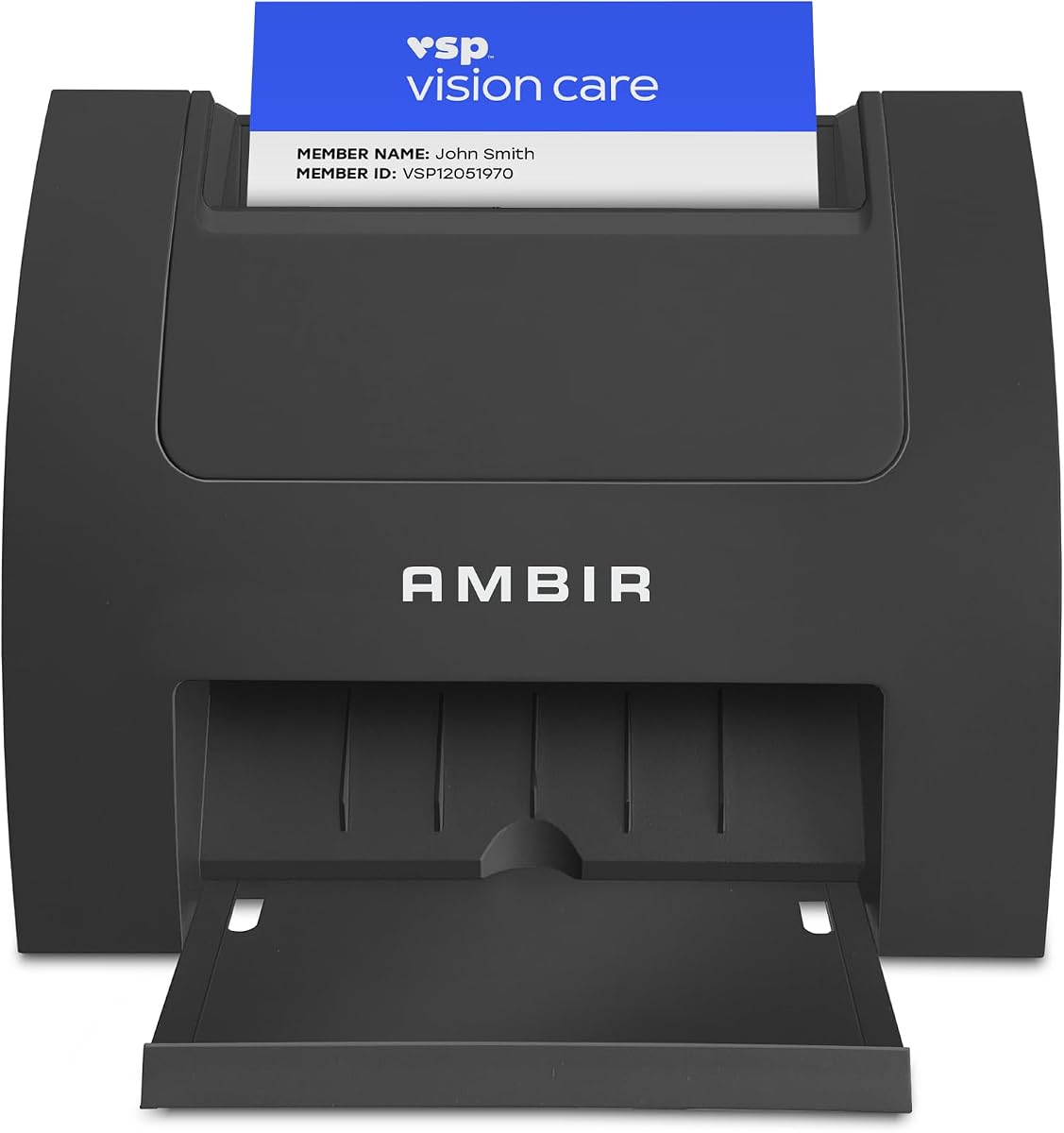


The Swish S1 is a compact optical scanner designed primarily for medical insurance cards, photo IDs, driver licenses, and other identification documents. It carries a supplied rating of 4.5, making it one of the stronger-rated choices in this group. Its most distinctive feature is the drop-and-scan approach: instead of pulling a card through a narrow mechanism, the S1 uses a camera to capture the card placed within its scanning area.
We may earn a commission when you buy through this link, at no additional cost to you.
That design has practical advantages. There are no moving rollers or narrow passages to scrape, crease, or damage a thin card. The scanner accepts paper, plastic, laminated, thick, and rigid materials, while the small 5.2-by-4.5-inch body should fit comfortably into a compact reception desk or mobile workstation. USB power also means there is no separate power adapter to organize, although a compatible computer and USB connection are still required.
The included ScanToFile application can save images directly as PDF, JPEG, TIF, or BMP files in designated local or network folders. Scan-ID LITE adds card-image management and searchable database functions, but it does not automatically read driver licenses; card information must be entered manually. The scanner is also TWAIN compliant, allowing compatible applications to use its dual-side composite capability, although the physical process remains simplex, meaning each side is scanned separately.
The S1 is a sensible choice for a Windows user who wants a small, forgiving scanner for insurance cards, membership cards, badges, and identity documents. It may not suit a Mac-based office, and buyers who need automatic barcode population of every card type should choose a package with fuller data-extraction software. Even so, for straightforward image capture and manual record entry, it provides a focused feature set in a highly space-efficient design.
Because the camera captures a card without dragging it across sensors, the S1 is particularly useful for fragile insurance cards, thin plastic IDs, and documents that could crease in a roller-based scanner.
ScanToFile handles direct saving in four common formats, while Scan-ID LITE organizes card images and searchable records. Users should remember that the Lite package requires manual data entry and does not read driver licenses.
We may earn a commission when you buy through this link, at no additional cost to you.
The Ambir nScan 690gt-AS is a high-speed vertical card scanner for Windows and Mac users. Its supplied rating is 3.5, the lowest among the ten products, but the underlying feature set is competitive for offices that want compact duplex capture. It is designed for ID, insurance, vaccine, and similar cards, with a vertical feed path that helps conserve valuable desk space.
We may earn a commission when you buy through this link, at no additional cost to you.
Cards are dropped into the front slot and automatically fed and ejected in under two seconds. Its duplex mechanism captures both sides of a card in a single pass, which is a major time advantage over simplex devices that must be turned and rescanned. The compact body is a notable benefit in crowded registration areas, hospital reception desks, and other workspaces where a flatbed scanner would be impractical.
Software support is broad. A TWAIN driver provides access to thousands of compatible applications, while the included AmbirScan capture software saves files as PDF, TIF, or JPG. Local folders and cloud destinations including Box, Dropbox, Evernote, Microsoft OneDrive, and Google Drive are supported. The optional Zapier connection can send document metadata to workflows involving tools such as QuickBooks, DocuSign, and Slack, although using that integration requires a Zapier Professional subscription.
This scanner is most attractive to a business that values quick duplex operation, automatic ejection, and cross-platform support. The main reservation is its comparatively modest supplied rating, which may encourage cautious buyers to verify their required applications in advance. It is also more mechanically focused than the S1 and less oriented toward automatic identity-field extraction. For automated two-sided capture, however, the 690gt-AS is a capable and compact choice.
The front-facing feed and automatic ejection minimize handling, while the narrow vertical design makes the unit practical for registration counters and other areas with limited free space.
AmbirScan covers routine saving and cloud destinations, while the Zapier webhook feature can connect scanned-document metadata to broader business workflows. That broader automation requires an appropriate paid Zapier plan.
We may earn a commission when you buy through this link, at no additional cost to you.
The BCR901 is a simplex USB optical scanner aimed at medical insurance cards, laminated cards, identification documents, and photographs. With a supplied rating of 4.2, it offers a balanced mix of compact design, image output, and record-management software. It can be mounted or positioned horizontally or vertically, offering more flexibility than a scanner with a fixed feed orientation.
We may earn a commission when you buy through this link, at no additional cost to you.
The unit scans one side of a card at a time, so users must flip the document for a second capture when both sides are needed. The included Scan-ID LITE application can scan, create, and manage a searchable database of card images. Information is entered manually, and this version does not read driver licenses, an important limitation for workplaces seeking automated identity data.
For routine file output, ScanToFile can save directly to PDF, JPEG, or TIF and automatically place each scan into a specified folder. TWAIN compliance broadens the set of compatible bank, medical, healthcare, and imaging applications. That makes the BCR901 potentially useful in an existing environment where documents need to move into a specialized application rather than remain in the included utility.
Buyers should choose this model when they use Windows, need a small physical scanner, and want both a direct-saving utility and a searchable image database. It is less suitable for organizations requiring duplex capture, automatic barcode extraction, or macOS support. Its simple, focused software bundle and flexible placement make it a practical option for small practices, service desks, and administrative teams that primarily need reliable card images and manual indexing.
The scanner is built around common healthcare and administrative cards, and its direct file output makes it straightforward to create a consistent archive of scanned documents.
Scan-ID LITE can organize card images into a searchable database, which is useful for retrieval. It does not populate driver-license fields, so its data-entry savings are less substantial than those of dedicated extraction systems.
We may earn a commission when you buy through this link, at no additional cost to you.
The AMBIR DS687 is a turnkey identity-scanning package combining hardware and software without subscription fees or ongoing costs. Its supplied rating is 4.3, and it stands apart from basic image-capture scanners through automatic data extraction. The software reads 2D barcodes on valid US and state-government-issued IDs to populate identifying information, reducing repetitive data entry.
We may earn a commission when you buy through this link, at no additional cost to you.
The hardware scans both sides in one pass and draws power over USB, so installation does not require an external supply. It supports Windows and Mac, which is useful for mixed-computer environments. The bundled software adds age verification with configurable restrictions, expired-ID detection, anti-passback controls, password-protected access, backup and restore tools, and local data storage. Because information remains on the local system, routine operation does not depend on cloud storage or an internet connection.
The software is not a universal card-understanding system. Its automatic extraction is specifically described for 2D barcodes found on valid US and state-issued identification. A business handling other employee badges, insurance cards, or proprietary credentials may still need to enter fields manually. The advanced verification, customer-control, and anti-passback features also require thoughtful configuration so the database behavior matches the organization's policies.
The DS687 is a strong fit for age-restricted retail, regulated intake, security desks, and any Windows or Mac operation that wants automated identity fields from government IDs. Its duplex capture, local storage, and no-subscription structure make it a premium all-in-one package. Organizations whose cards are not government-issued should confirm barcode formats and field-mapping requirements before committing.
Reading 2D barcodes can populate a name, address, date of birth, and other key fields much faster than manual transcription. The feature is specifically intended for valid US and state-issued identification.
Local storage, password protection, backup and restore, age restrictions, expiry detection, and anti-passback tools give administrators meaningful control without requiring an internet-connected cloud service.
We may earn a commission when you buy through this link, at no additional cost to you.
The Ambir PS667, also described as the ImageScan Pro 667, is a rugged simplex scanner designed for sustained professional use. Its supplied rating is 3.7. It weighs just under one pound, measures about eight inches long, and is powered by USB, making it convenient for registration areas, mobile carts, and crowded desks where a larger machine would be inconvenient.
We may earn a commission when you buy through this link, at no additional cost to you.
The scanner can capture identification, insurance, and credit cards with raised characters in roughly three seconds. It is simplex, however, so a card must be scanned twice if both sides are required. That limitation makes it less suitable than a duplex model for driver's licenses, insurance cards, or badges with essential information on the reverse. The rugged shell and professional imaging hardware are more relevant to users who need dependable daily operation than one-time convenience.
AmbirScan provides PDF, TIF, and JPG output to a local computer or cloud services including Box, Dropbox, Evernote, and Google Drive. The scanner is TWAIN compliant and Citrix Ready, supporting use in specialized managed environments. A Zapier webhook integration can also send metadata to connected applications, though this advanced workflow option requires Zapier Professional.
The PS667 makes sense for a business that primarily needs one-sided image capture, values physical durability, and wants cloud-saving options without moving to a full identity-management platform. It is less attractive when fast duplex scanning or automatic barcode population is central to the workflow. For many intake operations, its simple output formats and compact, USB-powered construction are enough to handle routine card imaging efficiently.
A durable shell and dedicated imaging hardware make the PS667 more purpose-built for continuous card handling than a general-purpose flatbed scanner, particularly in mobile or shared workspaces.
AmbirScan handles standard PDF, TIF, and JPG files, offers popular cloud destinations, and can connect document metadata to Zapier workflows for organizations that need to route scans after capture.
We may earn a commission when you buy through this link, at no additional cost to you.
The Ambir ImageScan Pro 687-AS combines a supplied rating of 4.9 with fast duplex capture, making it the strongest overall choice in this guide for many professional workflows. It is built for patient IDs, insurance cards, driver's licenses, vaccine cards, and other documents, including cards with raised characters. Both sides can be captured in one pass, reducing the handling and reorientation required by simplex devices.
We may earn a commission when you buy through this link, at no additional cost to you.
The scanner completes the process in about three seconds, according to the supplied information. That speed is valuable during check-in, registration, intake, or identity verification, where individual card handling can otherwise become a bottleneck. Its support for Windows and Mac also makes it adaptable to mixed environments. The title specifies Windows PC and Mac compatibility, and the product's included driver and capture suite support routine desktop workflows.
TWAIN compatibility gives the scanner broad reach across applications that communicate with TWAIN devices, while Citrix Ready certification supports use in compatible Citrix environments. AmbirScan can save scans as PDF, TIF, or JPG to the local PC or to Box, Dropbox, Evernote, and Google Drive. Zapier workflow automation can route document metadata into systems such as QuickBooks, DocuSign, and Slack, although that integration requires a professional Zapier subscription.
This is a compelling choice for a user who prioritizes speed, duplex operation, and application flexibility rather than automatic population of identity fields. It does not include the barcode-based data extraction and age-verification tools found in the DS687 and PS687 ID Scanner packages. Even so, the 687-AS delivers an unusually balanced set of capabilities, earning the Editor's Choice designation for users who want a dependable general-purpose card scanner.
Duplex capture is the defining benefit of the 687-AS. Front and back images are gathered in one pass, which saves time and reduces the chance that a card will be forgotten or scanned out of sequence.
TWAIN support, Windows and Mac compatibility, Citrix Ready status, cloud destinations, and optional Zapier workflows make the scanner adaptable to both ordinary offices and more structured managed environments.
We may earn a commission when you buy through this link, at no additional cost to you.
The AMBIR PS670ST-AS is a high-speed, single-sided card and business-card scanner with a supplied rating of 3.6. Its design emphasizes rapid throughput, compact placement, and 600-dpi color or grayscale images. Cards are fed through a vertical path, and the scanner can produce an image in under two seconds when used as intended.
We may earn a commission when you buy through this link, at no additional cost to you.
The title lists Windows PC and Mac compatibility, while the detailed product information specifically states full support for Windows 10 and 11 in both 32-bit and 64-bit environments. Buyers should therefore confirm the current behavior of their required Mac applications and drivers before purchase. AmbirScan is included and provides automatic scanning, file formatting, and cloud-saving features, while its continuous imaging mode lets operators keep feeding cards without repeatedly restarting the process.
At 600 dpi, the PS670ST-AS offers sufficient resolution for IDs, business cards, and similar documents. It is simplex, so users need separate passes for the front and back. That is the clearest trade-off against duplex models such as the 690gt-AS and 687-AS. The scanner also lacks the automatic barcode extraction and age-verification features of the dedicated identity-management packages.
This product best suits a Windows-heavy office or service counter that handles a large volume of one-sided cards and values speed over comprehensive identity automation. The vertical footprint helps preserve desk space, and continuous scanning can improve throughput. It is less suitable for a Mac-only facility, for workflows requiring duplex capture in one pass, or for organizations that need government-ID fields to be extracted automatically.
Sub-two-second capture and continuous scanning allow operators to process a steady stream of cards without repeatedly waiting for prompts, which is valuable at busy counters.
The stated true 600-dpi output produces detailed color or grayscale files, supporting clear records and compatibility with third-party software that sets image-quality expectations.
We may earn a commission when you buy through this link, at no additional cost to you.
The AMBIR PS667 ID Scanner package has a supplied rating of 5.0 and combines a card scanner with software for automatic data extraction. It reads 2D barcodes on valid US and state-government-issued IDs to populate information such as name, address, and date of birth. The package is presented as a turnkey system with no subscription fees or ongoing charges.
We may earn a commission when you buy through this link, at no additional cost to you.
Its most distinctive administrative features include age verification, expired-ID detection, customer visit tracking, ban lists, database export, anti-passback detection, password-protected access, and backup and restore. These tools are intended for businesses that repeatedly verify identity, including age-restricted transactions or controlled intake. All scanned information is stored locally, so the system does not require cloud storage or an internet connection for normal operation.
The scanner connects by USB and is listed as compatible with Windows and Mac. Its supplied information does not identify the unit as duplex, so buyers requiring guaranteed one-pass front-and-back capture should verify that detail before choosing it. Automatic data extraction is similarly specific: it is intended for the 2D barcodes found on valid US and state-issued identification, not every possible insurance, membership, or employee card.
Despite that limitation, the PS667 ID Scanner package is a strong choice for a small business or organization that wants local identity management without a recurring subscription. It offers the highest supplied rating in the guide and a more complete operational toolkit than ordinary image-capture scanners. It is best for government-ID workflows where barcode support and age controls matter more than universal card compatibility.
Local storage gives administrators direct control over customer and identity data, while offline operation avoids making routine scanning depend on a cloud connection.
Visit history, ban lists, duplicate detection, and database export support organizations that need to recognize returning customers, enforce age policies, or investigate repeated document use.
We may earn a commission when you buy through this link, at no additional cost to you.
The DX1210 is a duplex USB optical scanner focused on driver licenses and other identification cards. Its supplied rating is 4.0. It captures the front and back of a card in a single pass, and Scan-ID Full Version adds database management, automatic age verification, and 2D barcode reading for most US and Canadian driver licenses.
We may earn a commission when you buy through this link, at no additional cost to you.
The extraction capability is narrower than the product name alone might suggest. It automatically reads driver licenses only; information from other identification cards must be entered manually. Within its supported license category, the software can read data from the 2D barcode printed on most state licenses and flag records that fail a configured minimum-age requirement. That makes it especially relevant to registration counters and businesses whose primary identity document is a driver's license.
Scans can be saved directly as PDF, JPEG, or TIF files. TWAIN compatibility allows use with many banking, medical, healthcare, and imaging applications. The scanner supports cards up to four by nine inches and produces full-color images at resolutions up to 600 dpi. Quad-powered rollers are designed to handle thick and laminated cards reliably through the duplex path.
The DX1210 is a practical choice for a Windows-based organization that needs both sides of a driver's license and automatic age checks. It is less flexible for mixed-platform offices, and the requirement to enter data manually for non-license IDs may slow workflows built around badges or insurance cards. For its narrower specialty, however, it combines compact duplex imaging with useful license-focused automation.
Scan-ID Full Version reads 2D barcode data from most US and Canadian driver licenses and can flag a person who does not meet a configured minimum-age requirement.
The duplex mechanism captures both card faces together, while quad-powered rollers are intended to move thick or laminated licenses through the scanner reliably.
We may earn a commission when you buy through this link, at no additional cost to you.
The Identiv SCR3310V2 is a USB smart-card reader and writer rather than a conventional visual ID-card scanner. It is included in the list because many organizations use the term ID scanner for hardware that reads electronic credentials. Its supplied rating is 4.6, and its principal purpose is communicating with contact chip cards rather than capturing a photograph of a plastic or paper card.
We may earn a commission when you buy through this link, at no additional cost to you.
The device supports major smart-card technologies and industry standards, including ISO/IEC 7816, USB CCID, PC/SC, Microsoft WHQL, EMV 2011 Version 4.3 Level 1, and GSA FIPS 201. Identiv's Smart OS provides support for major contact smart-card integrated circuits. It is also compatible with the functionality of the SCM SCR33xx reader family, which can simplify software-driver selection in established environments.
The reader is designed for broad operating-system compatibility, including Windows, macOS, Linux, and Android. Its compact, rugged form is suitable for mobile operation, while in-field firmware upgrades for the SCR3310 help keep deployed hardware current. It is not a scanner in the visual-imaging sense, so it cannot create a front-of-card image, PDF, TIFF, or JPEG for a records system.
This product is appropriate for CAC, PIV, access-control, authentication, banking, or other workflows that rely on a contact smart card's embedded chip. It is not appropriate for someone who wants to scan a driver's license into an image file, verify its printed expiry date, or capture both sides of an identification card. Choosing it requires a clear understanding that its purpose is chip communication, not visual document acquisition.
Compliance with PC/SC, CCID, ISO/IEC 7816, EMV, and relevant government standards allows the reader to participate in established smart-card and authentication environments.
The SCR3310V2 reads and writes information on electronic contact chips but does not photograph cards. Buyers needing ID images, visible barcode data, or printed-document capture should select one of the optical scanners instead.
We may earn a commission when you buy through this link, at no additional cost to you.
The right card scanner depends on the cards, computer operating systems, application environment, and degree of automation required. Compare capture methods, software capabilities, data handling, and physical setup before making a purchase.
A simplex scanner captures one face at a time and usually offers a lower-cost, simpler setup. It works well when users need only a front image or can tolerate flipping cards and running a second scan. A duplex scanner captures both sides in one pass, reducing handling and making it a better choice for driver licenses, insurance cards, and badges that carry information on the reverse. The Swish S1 and BCR901 are simplex, while the nScan 690gt-AS, DS687, and 687-AS are explicitly duplex. The PS670ST-AS is also simplex, and the PS667 ID Scanner package does not clearly specify duplex capture.
In short, choose duplex for two-sided throughput and simplex when one-sided images are sufficient.
Operating-system support must match the actual computer in the deployment environment. The Swish S1 and BCR901 are explicitly Windows-only, and the DX1210 is also Windows-only. The nScan 690gt-AS and 687-AS list Windows and Mac support, while the DS687 and PS667 ID Scanner packages state cross-platform compatibility. The PS670ST-AS title mentions Windows PC and Mac, although the detailed information specifically calls out Windows 10 and 11 support in 32-bit and 64-bit formats.
Check both the computer operating system and the applications into which scans must be imported before buying.
Image capture and data extraction are different features. Scan-ID LITE packages can organize card images but require manual field entry and do not read driver licenses. The DX1210 automatically reads 2D barcode data from US and Canadian driver licenses, while the DS687 and PS667 ID Scanner packages target valid US and state-government-issued IDs. None of the supplied information indicates automatic extraction from every insurance, employee, membership, or proprietary card.
Choose a scanner for readable images, or select an extraction model when verified government-ID data is central to the task.
Bundled software can shape the entire workflow. AmbirScan handles automatic capture, file formatting, local saving, popular cloud destinations, and, on supported models, Zapier metadata routing. ScanToFile saves images directly to folders in PDF, JPEG, TIF, or BMP formats. The premium AMBIR identity packages add age restrictions, expired-ID detection, customer history, ban lists, anti-passback controls, password protection, and backup and restore. These advanced controls require more setup than a basic capture utility.
Match the software to operational complexity: simple saving is easiest, while regulated or high-volume workflows benefit from verification and database features.
Throughput depends on more than the advertised scan speed. Duplex models reduce the need to rotate a card, continuous-scan modes reduce repeated prompts, and automatic ejection limits physical contact. The PS670ST-AS claims capture in under two seconds, the nScan 690gt-AS describes feed and ejection in under two seconds, and the PS667 and 687-AS are described as handling cards in about three seconds. Physical design also matters: the Swish S1 measures 5.2 by 4.5 inches, while the PS667 weighs just under one pound and is approximately eight inches long.
For a busy counter, prioritize one-pass duplex capture and continuous workflow; for a constrained or mobile station, compare footprint, weight, and orientation.
The output format must be accepted by the receiving application. PDF is useful for visual records, while JPEG and TIF are common image formats for imaging systems. The Swish S1 offers PDF, JPEG, TIF, and BMP; the BCR901 and DX1210 offer PDF, JPEG, and TIF; and the Ambir models use PDF, TIF, and JPG. TWAIN compatibility is also important because it allows the scanner to work with numerous third-party banking, medical, healthcare, and document applications. The DX1210 includes a TWAIN driver, and the nScan 690gt-AS and 687-AS are also TWAIN-oriented.
Verify both the required file type and the scanner-driver support of the destination software before installation.
Different mechanisms treat cards differently. The Swish S1 uses a camera-based drop-and-scan design without moving rollers, reducing the chance of creasing fragile cards. Roller-based Ambir and DX models use powered feeds designed for repeated handling, with the DX1210 specifically noting quad-powered rollers for thick and laminated cards. Privacy requirements also matter: the DS687 and PS667 ID Scanner packages store data locally and do not require cloud storage or internet connectivity for routine operation. Organizations should also establish retention, access, backup, and deletion rules for identity information.
Choose a gentle mechanism for fragile cards and define local security, retention, and access procedures before collecting sensitive identification.
A visual ID-card scanner captures an image of a plastic, laminated, or paper card, while a smart-card reader communicates with an embedded electronic chip. The Identiv SCR3310V2 is a contact smart-card reader and writer with support for standards such as PC/SC, CCID, EMV, and ISO/IEC 7816. It does not create a visible image of a driver's license or insurance card. Such a device can be ideal for authentication, access control, banking, CAC, and PIV tasks, but it cannot replace an optical scanner when the requirement is a front or back image.
Confirm that the desired outcome is visible document capture before choosing a chip reader, and choose a chip reader only for electronic-card communication.
Begin by installing the manufacturer's current driver and bundled application on the target computer, then confirm that the operating system and destination imaging software are supported. Connect the scanner by USB, power it on if required, and test it with a non-sensitive sample card. Verify the paper or card size, feed orientation, output folder, file format, and whether the application expects a simplex image or duplex composite before processing real identification.
For each card, inspect both faces for dirt, adhesive residue, or raised damage. Place the card in the indicated direction without forcing it, and allow automatic feed or camera capture to complete. In an extraction-enabled system, confirm that the card type is supported before accepting the populated fields. Review the front image, reverse image, name, date of birth, expiration date, and age-verification result, correcting errors before saving or sending the record onward.
Keep the scanner clean and dry, and follow the manual's cleaning method because harsh liquids can damage plastic surfaces, rollers, or imaging components. Remove cards after scanning, avoid leaving documents in the feed path, and protect stored identity files with appropriate access controls and backups. Periodically test the application, inspect image quality, update software when instructed, and verify that retention and deletion practices follow organizational and legal requirements.
A simplex scanner captures one side of a card at a time, so both faces require two separate scans. A duplex scanner captures the front and back in one pass, reducing handling and making it more convenient for driver's licenses and insurance cards. Duplex models are generally preferable for high-volume intake, while simplex units can suit workflows that need only a single visible face.
Some models can read 2D barcode data from supported driver's licenses. The DX1210 is described as reading US and Canadian licenses, while the AMBIR DS687 and PS667 ID Scanner packages target valid US and state-issued identification. Other cards may still require manual entry, so buyers should confirm supported document types and barcode formats before purchase.
Not necessarily. The Swish S1, BCR901, and DX1210 are explicitly Windows-only, while several Ambir models list Windows and Mac support. Even with broad platform support, the driver and destination application must both function correctly, so it is wise to check current compatibility notes and run a test before deploying the scanner.
Dedicated card scanners are usually more convenient because they are compact, feed or capture cards automatically, and can create consistent front or duplex images. A flatbed scanner remains useful for unusual documents, but it generally requires more positioning effort and desk space. A camera-based drop-and-scan model can also be gentler on fragile cards than a roller mechanism.
TWAIN support matters if your existing application communicates with scanners through that standard. Several models, including the nScan 690gt-AS, 687-AS, DX1210, and the TWAIN-compliant Swish products, can integrate with a broad range of imaging applications. If your software uses a proprietary driver or API instead, verify compatibility beyond the general TWAIN claim.
The AMBIR DS687 and PS667 ID Scanner packages are specifically described as storing information locally without requiring cloud storage or an internet connection. Other models primarily save scanned images to local folders or cloud services. Local storage does not automatically make a system compliant, so organizations should also configure access, passwords, backups, retention, and deletion policies.
Common outputs include PDF, JPEG or JPG, TIF, and BMP. The Swish S1 supports all four formats, the BCR901 and DX1210 support PDF, JPEG, and TIF, and the listed Ambir models use PDF, TIF, and JPG. The best format depends on whether the result is a document, a visual record, or an image intended for specialized software.
A smart-card reader such as the Identiv SCR3310V2 is suitable only when the task involves reading or writing an electronic contact chip. It does not capture a visible image of a driver's license, insurance card, or badge. Organizations needing document images, printed barcode extraction, or age verification should choose an optical card scanner with the relevant software.
The Ambir ImageScan Pro 687-AS is the most balanced general-purpose option, offering fast duplex capture, a strong supplied rating, cross-platform support, TWAIN compatibility, and flexible output destinations. The Swish S1 stands out for its compact, camera-based approach and gentle handling of fragile cards, while the AMBIR DS687 is the premium selection for automated government-ID extraction, age controls, and local database management.
Prioritize the requirements that cannot be changed later: supported operating system, card type, one-sided versus duplex operation, barcode-reading scope, destination application, and data-handling policy. High scan speed is useful, but it does not compensate for software incompatibility or unsupported identification formats. For a mixed workplace, cross-platform models are safer; for a Windows-only counter needing government-ID automation, the DX1210 or an AMBIR identity package is more relevant.
Before ordering, review the current driver list, bundled-software features, supported card dimensions, and workflow requirements. Product specifications, ratings, and commercial terms can change, and prices fluctuate, so readers should confirm the latest listing and current cost at the time of purchase.