
Universal Phonak Hearing Aid Charger
4.4Editor score
Supports several Phonak models
Works with RIC and BTE
Supports optional power pack
Our Chargers for Hearing Aids guide compares 10 options for compatibility, charging speed, portability, battery life, power features, and everyday convenience.
Charging is an essential part of owning rechargeable hearing aids, yet the right charger depends on the hearing aid brand, model, receiver style, and power setup. A compatible charger can support all-day listening, while an incorrect match may sit idle or fail to charge the devices safely and reliably.
We compared ten hearing aid chargers based on their documented compatibility, charging approach, charging times, portability, indicators, and included accessories. The list covers brand-specific desktop and portable options from Phonak, Starkey, Oticon, Signia, TruHearing, and Widex rather than assuming every charger is interchangeable.
Each review highlights the most useful features and practical limitations of its charger, with the first three earning the guide's featured awards. Compatibility remains the most important factor, while current prices, availability, and manufacturer guidance can change over time and should be confirmed before purchase.
4.4Editor score

4.6Editor score

4.6Editor score
The comparison below places all ten chargers side by side, focusing on supported hearing aid families, charging method, power source, portability, and the practical details that distinguish daily charging options.


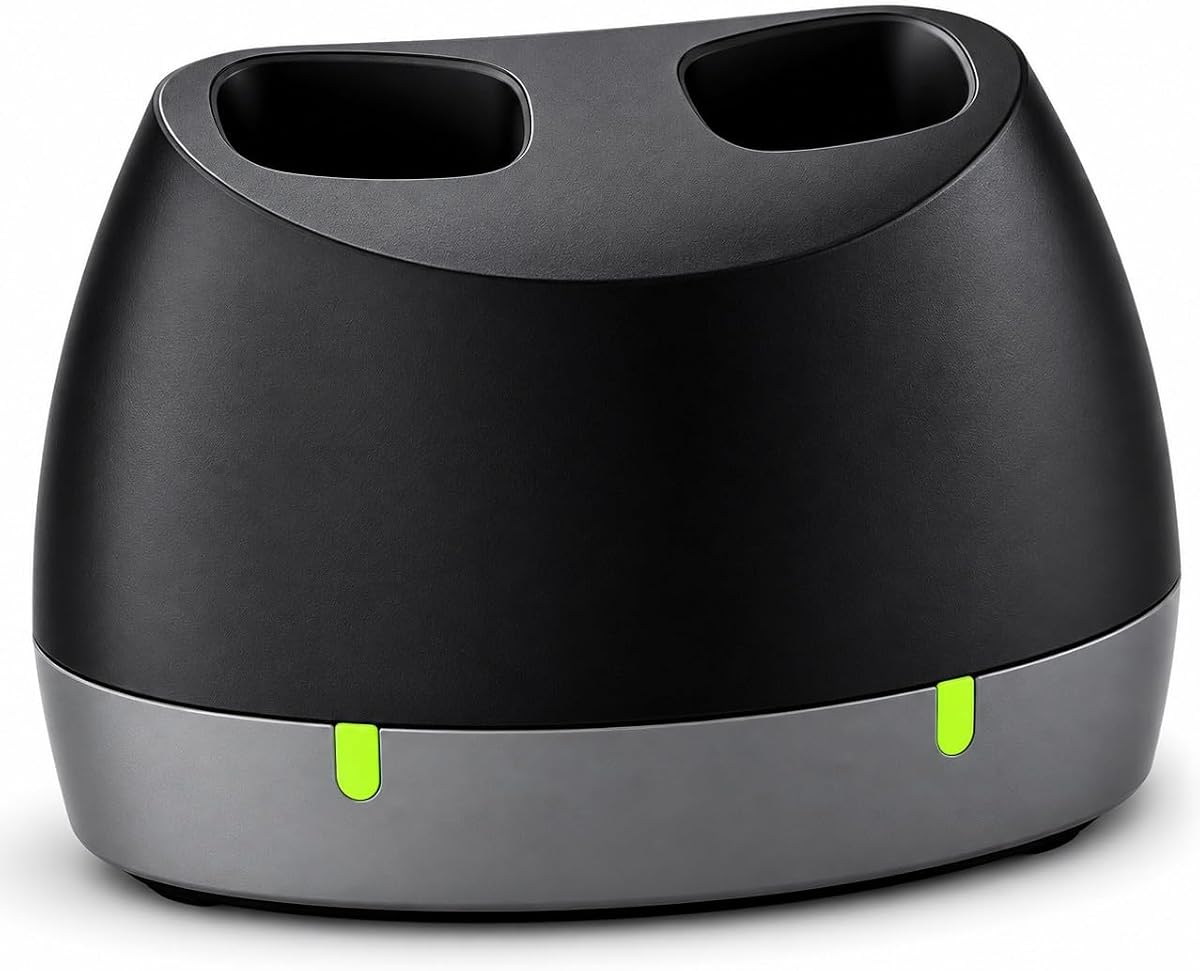


The Universal Phonak Hearing Aid Charger is a focused option for owners of several compatible Phonak RIC and BTE hearing aids. It carries a 4.4 rating and stands out for supporting Naida L-PR and Sky L-PR while also covering Marvel, Paradise, and Lumity devices. It is not universal across the entire hearing aid market, but it offers useful flexibility within the Phonak range.
We may earn a commission when you buy through this link, at no additional cost to you.
Its compatibility list is the most important feature. The charger works with Phonak Naida L-PR, Sky L-PR, Marvel, Paradise, and Lumity models, including supported RIC and BTE configurations. The design also works with a Phonak power pack, allowing a compatible charging setup to become more useful while traveling. The power pack is not included, so buyers should account for that if their daily routine requires cordless charging away from an outlet.
The main limitation is that the word universal should not be interpreted as meaning compatible with every hearing aid or even every Phonak product. Compatibility depends on the exact model and charging contact arrangement. Users who own a different brand, an unsupported Phonak generation, or a style outside the listed RIC and BTE families need to verify the model with their hearing care professional before ordering.
This is a sensible featured choice for Phonak users who want one charger to cover several supported families without moving between multiple bases. It is particularly attractive when a compatible power pack can extend use away from mains power. The Best Budget designation reflects useful multi-model support rather than inexpensive accessories or unverified universal claims.
Supporting several named Phonak families makes this a practical single-base solution for compatible RIC and BTE users. It can simplify ownership when more than one supported hearing aid is in use, provided the exact model and receiver style appear in the documented list.
Compatibility with a separately sold power pack means the charger can fit more mobile routines. For users who already own the correct pack, this adds flexibility without changing the basic charger itself.
We may earn a commission when you buy through this link, at no additional cost to you.
The Starkey StarLink Premium 2.0 Charger is a strong all-around choice for users of compatible Starkey Genesis mRIC and RIC RT hearing aids. Its 4.6 rating reflects a well-regarded feature set, and the most impressive elements are the built-in battery, support for three full charges, and convenient simultaneous charging for two hearing aids.
We may earn a commission when you buy through this link, at no additional cost to you.
The on-board battery is designed to recharge the hearing aids while users are away from a wall outlet. According to the supplied product information, it can deliver three complete hearing aid charges before the charger itself needs recharging. That makes it useful for travel, long workdays, or periods when a nightstand outlet is not readily available. Fast charging also helps reduce waiting when a quick top-up is needed.
Dual charging is a meaningful advantage for people with bilateral hearing loss because both aids can be placed in the unit at once. Individual LED indicators provide visual charging feedback, making it easier to see whether each device is charging and when the hearing aids are ready. The trade-off is strict model compatibility: the charger is marketed for Starkey Genesis mRIC and RIC RT devices rather than every hearing aid sold under the Starkey name.
The Editor's Choice award goes to the strongest balance of everyday convenience, charging flexibility, and clear user feedback in this roundup. It is an especially strong recommendation for a compatible Starkey user who regularly travels or wants one charger to handle overnight charging and several additional charging sessions away from an outlet.
The integrated battery can provide three complete hearing aid charges before the charger itself must be recharged. This creates a useful balance between compact portability and enough reserve power for extended time away from an outlet.
Separate LED indicators make the charging state easier to understand at a glance. Charging both hearing aids simultaneously also reduces the number of separate routines users need to manage.
We may earn a commission when you buy through this link, at no additional cost to you.
The Otto Tech Oticon Charger 1.0 combines broad compatibility within the miniRITE R category with a polished desktop format. It has a 4.6 rating and is designed not only for Oticon devices but also for compatible Sonic and Bernafon rechargeable hearing aids. Its fast charging schedule and always-ready desktop design make it a strong choice for a stable home charging routine.
We may earn a commission when you buy through this link, at no additional cost to you.
Using inductive technology, the charger wirelessly charges supported hearing instruments in up to three hours. The product information also gives useful charging milestones: approximately 30 minutes reaches 25 percent, 60 minutes reaches 50 percent, and three hours reaches a full charge. Magnetic charging sockets help secure each hearing aid in the proper position, reducing the chance that a device is placed incorrectly.
This is a permanent desktop solution rather than a battery-powered travel case. Its USB cable, power connection, green readiness light, and simple placement-based operation make it convenient to leave beside a bed or on a desk. The included travel pouch adds some carrying value, although the base itself still depends on access to a power supply. Compatibility is narrower than the product's multi-brand title might initially suggest because the chargers are designed around miniRITE R models.
The Best Premium award recognizes the charger's detailed charging behavior, secure inductive design, and broad supported model list. It is a particularly compelling option for users of listed Oticon, Sonic, or Bernafon miniRITE R hearing aids who want a dependable bedside charger with clear partial and full charging milestones.
Documented progress at 30 and 60 minutes shows that the charger can be useful before an overnight cycle is complete. Users can build a quick top-up into a morning routine or rely on a full three-hour charge for overnight readiness.
Inductive charging removes the need to connect a cable to each hearing aid. Magnetic sockets help guide the devices into position, supporting a consistent and visually simple charging routine.
We may earn a commission when you buy through this link, at no additional cost to you.
The Oticon Desktop Charger 1.0 is designed for users of several Oticon RIC receiver-in-the-canal families, including More, Opn S, Opn Play, and Ruby. Its 4.4 rating and straightforward always-connected design make it a practical replacement or spare for a home charging routine where overnight reliability matters more than portability.
We may earn a commission when you buy through this link, at no additional cost to you.
The charger uses inductive technology and can charge compatible hearing aids fully within three hours. Magnetic connections help keep the devices in place, while the supplied USB cable, wall plug, and manual provide the core components needed for setup. The product information also highlights that a 30-minute charge can deliver approximately six hours of power, which may be useful for a short daytime top-up.
The design is intentionally stationary. It is best suited to a bedside table, desk, or other location where it can remain connected to power, rather than to users who need a charger that can operate entirely from an internal battery. The product does not claim universal Oticon compatibility, so the exact hearing aid model must be checked against the supported list before purchase.
This charger is a sensible choice for supported Oticon owners who want a straightforward desktop base with a full accessory package. It is especially useful as a second charger for a work desk, a replacement for a damaged base, or a central overnight charging point for compatible hearing aids.
The always-connected desktop format is intended for simple drop-in charging. Leaving the unit at a consistent location can make it easier to recharge hearing aids each night without assembling extra components.
A 30-minute top-up can provide about six hours of power according to the supplied information. This gives compatible users some flexibility when a complete three-hour cycle is not possible.
We may earn a commission when you buy through this link, at no additional cost to you.
The Signia Pure Standard Charger is a refined desktop option for compatible Pure Charge and Go IX and AX RIC hearing aids. It has the highest numerical rating among the products in this roundup at 4.7 and stands out for a fast-charge option that can add substantial listening time in only half an hour.
We may earn a commission when you buy through this link, at no additional cost to you.
A full charge takes approximately three to four hours and can provide up to 23 hours of hearing aid use. The 30-minute fast charge offers roughly seven additional hours of use, making the charger useful for short-notice routines. Its attractive design also reduces the visual bulk commonly associated with electronic charging bases, making it suitable for a modern bedside or desk setup.
Compatibility is deliberately narrow. The product is specified for Signia Pure Charge and Go IX and Charge and Go AX RIC hearing aid models only, so owners of other Signia products should not assume that it will work. Because the charger is a standard desktop design, it is best positioned where mains power is consistently available rather than used as a standalone travel solution.
This charger suits compatible Signia users who value fast partial charging and a clean, compact appearance. It is a strong candidate for the main bedside charger or an office setup, particularly for users who want a short morning top-up without waiting for the entire overnight charging cycle.
The fast-charge claim gives users a useful middle ground between a full cycle and no charging at all. A brief routine can deliver enough additional runtime for many parts of a workday or travel day.
The sleek form is intended to blend into a bedside or desk environment. A less cumbersome charging base can make a nightly routine feel more natural and reduce visual clutter around sleeping or working areas.
We may earn a commission when you buy through this link, at no additional cost to you.
The Signia Pure Portable Charger is designed for users who want a compact charging option for compatible Signia and TruHearing RIC hearing aids. The supplied information does not include a numerical customer rating, so it cannot be compared on rating strength, but its stated portability, broad model list, and secure fit make it relevant for travel-focused routines.
We may earn a commission when you buy through this link, at no additional cost to you.
Compatibility covers Signia iX, iX BCT, and AX devices, as well as TruHearing 6 and 7 RIC hearing aids. Its lightweight, slim enclosure is intended to fit in a bag or pocket, while the secure charging position helps prevent accidental slips or misplacement. The design works at home and while traveling, offering more placement flexibility than a fixed desktop base.
The most important uncertainty is that the supplied information does not state a full charging time, number of complete charges, or onboard battery capacity. Buyers who prioritize known runtime figures may want to confirm those details with the seller or hearing care provider. The product is also still model-specific despite supporting several Signia and TruHearing families.
This portable charger is best for compatible users who regularly move between home, work, and travel and want a compact alternative to leaving a desktop charger behind. Its straightforward placement, travel-ready shape, and secure fit make it a practical option, provided the buyer confirms the exact hearing aid model and current power specifications.
The slim enclosure is intended to move easily between locations. It is particularly useful for users who split their time among home, work, and travel and do not want to depend on a single fixed charging station.
A fitted charging position helps keep hearing aids from shifting or being misplaced. That design detail is particularly valuable inside a bag or suitcase where the charger may be moved before use.
We may earn a commission when you buy through this link, at no additional cost to you.
The Pure IX Portable Charger is a compact charging case made specifically for TruHearing 6 and 7 in-ear hearing aids. It has a 3.9 rating, the lowest numerical score among the rated products, but its defining attraction is the simple place-and-close routine designed for portability and minimal setup.
We may earn a commission when you buy through this link, at no additional cost to you.
Users simply place compatible hearing aids inside the case and close the lid, with no buttons or complicated setup described in the supplied information. The small enclosure fits into a bag, purse, or suitcase pocket, and it can serve as a primary charger or a backup kept at another location. This makes it especially relevant for users who want a simple charging routine while moving through the day.
The narrower compatibility is a significant constraint because the charger is designed specifically for TruHearing 6 and 7. It is not a broad multi-brand solution. In addition, the product information does not provide a full charging time, battery capacity, or number of complete charges, so users seeking concrete runtime guarantees should verify those specifications before purchase.
This charger is best for a TruHearing 6 or 7 owner who prioritizes simplicity, compact size, and a button-free routine. It may work particularly well as a travel backup, while buyers who require detailed charging performance information may prefer one of the alternatives with more clearly documented timing and battery specifications.
The place-and-close design removes button selection and complicated mode changes from the charging process. That simplicity may be helpful for users who prefer a predictable routine with fewer steps.
A compact case can remain in a work bag, travel bag, or second residence. Keeping a backup charger in another regular location can help ensure hearing aids are ready without relying on a single desktop base.
We may earn a commission when you buy through this link, at no additional cost to you.
The Connexx Pure Desktop Charger is a compact standard base for compatible Signia and TruHearing hearing aids. The supplied product information does not provide a numerical customer rating, so its strengths should be evaluated through its documented compatibility, design, and operating simplicity rather than a score.
We may earn a commission when you buy through this link, at no additional cost to you.
The charger supports Signia Pure Charge and Go iX, iX BCT, and AX RIC devices. It is also listed as compatible with TruHearing 7 BCT, 7, and 6 RIC hearing aids. Its compact desktop form is intended for a nightstand or desk, where the charger can remain in one familiar location and provide a straightforward overnight charging routine.
A major limitation is the absence of specific timing and capacity details in the supplied information. The description promises consistent, full charging but does not provide a full charging time, partial charging milestone, or onboard battery capacity. It is also a stationary desktop unit, so it does not replace a portable charging solution for extended time away from power.
This charger is best for compatible Signia or TruHearing users who want a small, uncomplicated base at home or work. The wide named model list is useful, but buyers should verify the precise hearing aid version and confirm current charging specifications before ordering. Once confirmed, its simple form can make a nightly charging routine easier to maintain.
The named compatibility list includes several Signia Pure Charge and Go configurations and several TruHearing models. This creates useful flexibility for compatible users, though the exact hearing aid version still needs confirmation.
A space-saving desktop form is easy to position beside a bed or on a desk. Keeping the base in a consistent location can reinforce a simple routine of placing hearing aids in the charger every evening.
We may earn a commission when you buy through this link, at no additional cost to you.
The Starkey Premium Standard Charger is an on-board-battery charger for several Starkey hearing aid families, including Evolv AI, Livio Edge AI, Livio AI, Livio RIC, and Muse IQ. Its 4.2 rating reflects a generally positive reception, while the broad named support and portable power distinguish it from a simple plugged-in desktop base.
We may earn a commission when you buy through this link, at no additional cost to you.
The built-in battery allows compatible hearing aids to be charged while users are away from a power outlet. This makes the unit useful for travel or extended days away from home while still functioning as the primary charger for a regular routine. The product's support across multiple Starkey generations can also be helpful for households or users who may encounter more than one named model.
Compatibility boundaries are important. The charger is for RIC and BTE hearing aids only and is explicitly not compatible with Starkey ITE, ITC, or CIC devices. It should not be treated as a universal Starkey charger, and buyers should confirm the exact model printed on their hearing aids. The supplied information also does not state a specific full charging time or the number of complete charges available from the onboard battery.
This is a good fit for supported Starkey users who want flexible cordless charging without giving up a standard charger for nights at home. It is less suitable for anyone with an ITE-style device or a Starkey model outside the listed range. Confirming compatibility before ordering is the essential first step.
The on-board battery makes the charger useful beyond a bedside table. It can support charging during travel, appointments, or workdays when keeping the unit connected to a wall outlet is inconvenient.
The listed models span Evolv AI, Livio Edge AI, Livio AI, Livio RIC, and Muse IQ. That range can simplify ownership when more than one supported hearing aid is involved, as long as each device falls within the documented RIC or BTE families.
We may earn a commission when you buy through this link, at no additional cost to you.
The Widex sRIC Charger is a dedicated charging solution for Widex Moment mRIC and Sheer sRIC rechargeable hearing aids. Its 4.3 rating and clearly stated performance figures make it easy to understand, while the four-hour recharge and up to 30 hours of continuous use provide a useful basis for planning a daily routine.
We may earn a commission when you buy through this link, at no additional cost to you.
The charger is built around lithium-ion technology and reaches a full charge in about four hours. It is designed as a plug-and-charge unit: connect power, place the compatible hearing aids inside, and allow them to recharge. Its compact construction makes it straightforward to bring along, although the full recharge time means it needs to be planned into a morning or evening routine.
Compatibility is limited to the two named Widex styles, so users of other Widex products should not assume support. The four-hour full cycle is the central trade-off in this product. Although the charger can supply substantial continuous use after charging, it does not match the faster partial-charging claims of some alternatives and is best used as part of an overnight or scheduled routine.
This charger is a solid choice for compatible Widex Moment and Sheer users who prioritize documented runtime, simple operation, and portability. It may suit travelers who want a compact dedicated charger, provided they can accommodate the longer full-charge cycle and confirm that their exact hearing aid model is supported.
A full charge can power compatible hearing aids for up to 30 hours of continuous use. This helps users plan listening time around a regular charging schedule and reduces the need for repeated top-ups.
The four-hour cycle is straightforward but requires planning. Charging before bed or during a long home routine can make the process predictable, while the compact form still allows the unit to travel when needed.
We may earn a commission when you buy through this link, at no additional cost to you.
Choosing a hearing aid charger begins with the exact hearing aid model and ends with the way you travel, charge, and organize your devices. Compatibility, power behavior, charging speed, and included accessories should be weighed together rather than treating a charger as a generic accessory.
Hearing aid chargers are closely tied to the brand, generation, receiver style, and physical contacts of the supported devices. Even two hearing aids from the same manufacturer may use different charging systems, so the model printed on the device, its packaging, or its user guide should be checked before buying. A charger that powers on but does not charge a hearing aid is not a suitable substitute, and attempting to force an incompatible device into the wrong base may result in poor alignment or unreliable charging.
The compatibility distinction is especially important for products labeled universal, standard, or premium. Those terms often describe a product range or form factor rather than unrestricted compatibility. Treat the documented list as a strict boundary and ask a hearing care professional when the model designation is unclear.
A desktop charger normally stays connected to mains power and works best on a nightstand or desk. It is a straightforward solution for users with a stable charging location, though it cannot provide power when disconnected. A portable charger with an internal battery is better for travel, workdays, and locations without a nearby outlet, but its capacity and number of complete charges determine how independently it can perform.
Consider your actual routine rather than simply choosing the smaller or larger design. Frequent travelers may prioritize onboard power, while users who charge every night at home may value a compact stationary base, a longer cord, or a fast partial-charge function. A backup charger at a second regular location can also reduce the risk of being caught without a ready-to-use device.
Full charging time matters because a long cycle must fit around work, sleep, and travel. Some products provide meaningful partial charging, such as a 30-minute session that returns a useful percentage of battery, while others document only a full-cycle time. A fast top-up can be particularly valuable for users who forget to charge regularly or who need hearing aids ready before leaving home in the morning.
Compare both the duration and the resulting battery level rather than looking at speed alone. A short charge that provides little runtime may be less useful than a moderately longer session. Full-cycle and partial-cycle figures should also be considered separately because manufacturers describe them differently.
Hearing aid runtime can vary with listening demands and device features, so charger claims should be treated as useful guidance rather than an exact promise for every user. Products that state an expected number of continuous-use hours after a full charge make it easier to plan. Portable chargers should also be evaluated by the number of complete hearing aid charges their internal battery can provide.
For frequent travelers, total stored power may be as important as charger size. Look for a documented capacity, number of full cycles, or clearly stated charge count. If these details are missing, ask the seller for current specifications before relying on the charger for a trip where regular mains access is uncertain.
Many modern chargers use inductive technology, allowing hearing aids to charge without connecting a cable directly to each device. Magnetic sockets or fitted wells can guide each aid into the correct charging position. This secure alignment is useful because a poorly positioned hearing aid may charge slowly or not at all while still appearing to rest in the base.
The charging wells should match the size and shape of the user's hearing aids without forcing them into an awkward position. A charger that accommodates both left and right devices clearly, resists accidental slipping, and does not require repeated adjustment can make the nightly routine more dependable.
LED indicators can confirm whether the charger is powered, whether each hearing aid is charging, and when devices are ready to use. Per-device indicators are especially helpful for bilateral users because they show that both sides are seated correctly. A single green connection light is simpler but may only communicate that the base itself is ready.
Choose feedback that is easy to understand without requiring close inspection or repeated button presses. Brightness also matters if the charger sits beside a bed, since an overly intense light may be distracting at night. The most useful setup provides visible confirmation without making the daily process unnecessarily complicated.
A complete desktop package may include a USB cable, wall plug, manual, and sometimes a travel pouch. These accessories can improve setup convenience, particularly when replacing a lost or damaged original charger. A USB-connected unit may also be easier to place if the nearest outlet is inconvenient or if the included plug does not fit the user's location.
Some power solutions require an additional component, such as a compatible power pack or internal battery sold separately. Treat such products as a multi-part system rather than assuming every necessary part is in the box. Review the full contents carefully, especially when purchasing a replacement outside the original manufacturer's bundle.
A sophisticated charger is not automatically the right choice for every user. Some people benefit from visible status lights and partial-charge guidance, while others prefer a case that works by placing hearing aids inside and closing the lid. The best daily tool is usually the one that supports a routine the user will consistently follow without confusion.
Avoid paying for unnecessary features if compatibility is uncertain or if the core charging experience is not clearly documented. Prioritize a secure fit, dependable power, and clear instructions, then consider portability, speed, and indicators as secondary benefits. A simple charger that is used consistently is more valuable than a feature-rich unit that sits unused.
Begin by confirming that the hearing aid model appears in the charger's compatibility list. Place the charger on a clean, dry, level surface near the intended outlet or power source, and connect the supplied power components exactly as directed in the manual. If using a portable case, check that its internal battery is adequately charged before relying on it away from mains power.
Inspect each hearing aid and charging well before every session. Remove visible dust or debris gently, align the device according to the left and right markings, and seat it fully in the correct charging position. Do not force a hearing aid into a charger or attempt to connect a charging contact manually. Close the lid on portable cases or leave the desktop base in its charging state as instructed, then use the LED indicators to confirm that charging has begun.
Allow the hearing aids to complete the recommended charging cycle and confirm that their own status displays show the expected battery level before use. Clean the charger with a dry or lightly dampened soft cloth as directed, keep liquids away from the charging wells, and protect the unit from heat, moisture, and impact. Replace a charger that has a damaged cable, unstable connection, or cracked charging socket, and periodically confirm compatibility if the hearing aid is upgraded.
No hearing aid charger is universal in the broadest sense. Chargers are designed around specific manufacturers, model families, receiver styles, and charging contacts, and even closely related hearing aids may use different bases. Check the exact model on the device and compare it with the charger listing before ordering. If the documentation is unclear, confirm compatibility with the hearing care professional who supplied the hearing aids.
It is generally not safe to assume that another brand's charger will work. Different manufacturers can use proprietary charging contacts, battery systems, and physical designs, so a charger may fail to charge the device or could be used incorrectly. Use a charger explicitly listed for the hearing aid's brand, generation, and model. Similar appearance alone is not sufficient evidence of compatibility.
The time depends on the charger and its internal battery capacity. Some products can provide several full hearing aid charges, while others provide one or a smaller number, and the supplied specifications may not state a complete charger recharge time. Users who travel regularly should ask for the full-cycle time, partial-charge behavior, and number of complete charges before relying on the case away from an outlet.
A desktop charger generally remains connected to a power outlet and is intended for overnight charging at a nightstand or desk. A portable charger includes a battery and is designed to charge hearing aids while traveling or spending time away from power. The best choice depends on where the user charges most often and how much independent stored power is needed.
Some chargers provide useful partial charging, but the result varies by model. The Signia Pure Standard Charger in this guide is documented to provide up to seven additional hours of use after 30 minutes, while the Otto Tech Oticon Charger 1.0 reaches about 25 percent in the same time. Other chargers may provide different results, so follow the specific product instructions rather than assuming every charger shares the same schedule.
Begin by checking the compatibility list, because a charger may physically hold the hearing aid without charging an unsupported model. Confirm that the charger has power, the internal battery is charged if applicable, and the hearing aid is seated in the correct left or right position. Inspect the contacts for dirt or damage and read the indicator guidance. If the problem continues, contact the seller or hearing care professional rather than forcing the device into place.
A replacement can be necessary when the original charger is lost, damaged, unreliable, or incompatible with an upgraded hearing aid. Even if the hearing aids work, their batteries may not receive a full or consistent charge through a faulty base. Purchase the same documented model where possible, and confirm compatibility whenever the hearing aid brand, generation, or receiver style changes.
Disconnect power before cleaning and use a soft, dry or lightly dampened cloth as permitted by the manufacturer's instructions. Remove loose dust from the charging wells without pushing debris deeper into the contacts. Avoid immersing the charger, spraying cleaner directly into it, and using harsh chemicals that could damage plastic, indicators, or electronic components. Let it dry fully before reconnecting power or placing hearing aids inside.
The three featured selections serve different needs. The Universal Phonak Hearing Aid Charger offers flexible coverage for several supported Phonak RIC and BTE families, the Starkey StarLink Premium 2.0 combines an onboard battery with three complete charges and dual-device charging, and the Otto Tech Oticon Charger 1.0 delivers a polished inductive desktop system with clear charging milestones.
For every remaining model, compatibility should remain the deciding factor. Signia and TruHearing owners should identify the exact Pure Charge and Go, iX, AX, or TruHearing model, while Starkey users must distinguish RIC and BTE devices from incompatible ITE styles. Widex users should confirm Moment mRIC or Sheer sRIC support. Within the correct family, consider portability, partial charging, indicators, and the user's ability to maintain a simple routine.
Current prices, promotions, product versions, and availability can change, so review the listing and confirm charger specifications before purchasing. Also verify whether a required power pack, wall plug, cable, or other accessory is included. A compatible charger that supports the user's actual routine will provide more dependable everyday value than a more advanced model with the wrong model support or an unsuitable power design.