
XRDS-RF 200W PL259
4.8Editor score
200-watt power handling
DC-to-520MHz frequency range
VSWR of 1.2 or less
Air-cooled resistive design
Compare the best CB Radio Dummy Load options for 50-ohm RF testing, comparing power ratings, connectors, frequency range, construction, VSWR, and heat handling.
A CB Radio Dummy Load provides a safe, controlled 50-ohm termination for transmitters, antennas, amplifiers, and other radio equipment. The right model should match your transmitter’s output, use the correct connector, handle the intended frequencies, and dissipate heat safely during testing.
The products in this guide are compared using their stated power ratings, impedance, frequency coverage, VSWR, connector type, construction, and intended applications. The list includes compact PL259 loads for amateur and CB work, higher-wattage RF terminations, an SMA model, and an oil-filled can load for high-power equipment.
Each review highlights the specifications that distinguish a model from its alternatives and explains who is most likely to benefit from it. Product availability and prices can change, so verify the current specifications, connector arrangement, and operating requirements before making a purchase.
4.8Editor score
4.4Editor score

4.7Editor score
The comparison below places all ten loads side by side, emphasizing power handling, impedance, frequency range, connector type, and cooling or construction details that determine the right fit for a given radio setup.


The XRDS-RF 100W PL259 UHF Male Plug RF Dummy Load is a conventional 50-ohm termination rated for continuous operation up to 100 watts. Its 4.6 rating reflects a generally positive reception, while its strongest specifications are the DC-to-520MHz range, VSWR of 1.2 or less, and straightforward PL259 male connection.
We may earn a commission when you buy through this link, at no additional cost to you.
The load is designed for stations that need a dependable bench or field termination without moving to a much larger high-power assembly. Nickel-plated copper forms the outer shell, while the inner needle is silver-plated copper. Those materials are relevant because the connector must carry RF current and remain stable through repeated connection cycles and changing ambient conditions.
The stated operating range of -55°C to +125°C also makes this model more broadly applicable than a basic low-power attenuator. The main limitation is connector-specific: a PL259-equipped radio or cable may require an adapter if the transmitter uses SO-239, N-type, SMA, or another interface. Buyers should also allow the load to handle heat responsibly during prolonged transmission.
This is a strong choice for a 100-watt CB, amateur, or UHF setup that already uses PL259 hardware. It is particularly useful for bench testing, antenna comparisons, service work, and reducing unwanted radiation. Choose it when its stated 520MHz upper frequency limit covers your intended bands and its physical form fits your available test area.
The 100-watt capacity aligns well with many high-power mobile and amateur radio transmitters. It provides useful headroom without moving to the substantially larger 200-watt or 1000-watt options, while the PL259 connector makes setup straightforward for compatible equipment.
Nickel-plated copper outside and silver-plated copper at the center contact support conductivity and corrosion resistance. Combined with the stated VSWR of 1.2 or less, these details make the load a sensible termination for routine RF measurement work.
We may earn a commission when you buy through this link, at no additional cost to you.
The BECEN 100 Watt PL259 Dummy Load is a high-power 50-ohm termination with a 4.7 rating and a stated operating range from DC through 1.0GHz. That upper limit distinguishes it from most competing PL259 loads in this guide, which stop at 520MHz.
We may earn a commission when you buy through this link, at no additional cost to you.
Its most useful feature is the combination of 100-watt capacity and integrated heat-dissipation fins. Those fins are especially relevant when a transmitter is operated into the load repeatedly or for extended diagnostic sessions. The description also identifies silver-plated pins on the UHF male connector, a detail intended to support conductivity and reduce connection-related signal loss.
The load is advertised for transmitter, amplifier, antenna calibration, RF circuit validation, and field testing. It includes a stated VSWR below 1.2 across its frequency range. Although that promise is not the same as a full laboratory characterization report, it gives buyers a clear performance target and positions the product for users who care about reflection and signal integrity.
This model suits a technician or radio operator whose equipment uses PL259 and whose work extends beyond the 520MHz limit of many alternatives. The trade-off is that the 1GHz rating still excludes many microwave systems, and a user with an SMA or N-type setup needs an appropriate adapter or a different load. It is best recommended for high-power, wide-range UHF testing.
The DC-to-1GHz range provides meaningful headroom above the 520MHz limit of several other products. That makes the BECEN a stronger candidate for wideband RF amplifier work and equipment validation near the upper end of its stated coverage.
Integrated heat-dissipation fins improve the model’s suitability for prolonged testing. Users should still maintain airflow and follow the transmitter manufacturer’s recommended duty cycle when operating at the full stated power.
We may earn a commission when you buy through this link, at no additional cost to you.
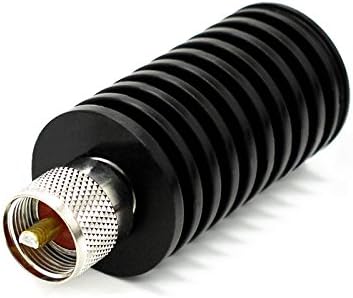
The XRDS-RF 200W PL259 UHF Male RF Dummy Load offers the strongest combination of customer rating and practical power capacity in this group, earning a 4.8 rating. Its 200-watt rating gives it room for powerful transmitters, amplifiers, and bench applications without relying on the 100-watt class.
We may earn a commission when you buy through this link, at no additional cost to you.
The load operates from DC to 520MHz with a stated VSWR of 1.2 or less. It is a self-contained air-cooled resistive unit designed to attach directly to a male PL259 antenna connector on the back of an amateur radio rig. Nickel-plated copper and silver-plated copper are used for the outer shell and inner needle, respectively.
The primary trade-off is physical size and heat. A 200-watt termination needs more surface area to dissipate energy safely than a 50-watt model, so it may take more room on a crowded workbench. Its PL259 interface also prevents direct use with radios equipped with a different connector. Appropriate airflow and sensible test intervals remain important.
This is the premium choice for a technician, serious amateur operator, or CB user who regularly works with high-output equipment and needs additional power margin. It is particularly appropriate for transmitter alignment, amplifier testing, and antenna comparison. For lighter workloads, the 50-watt alternative is more compact, but this model offers better suitability for demanding service benches.
A 200-watt rating is the key attraction for technicians who routinely test high-output radios and amplifiers. The extra capacity can provide comfort when the transmitter’s output is near the lower end of a 100-watt load’s limit.
Because the unit incorporates resistive loading and air cooling, it can function as a standalone termination. Keep it in an open, ventilated position so heat can leave the body during sustained transmission.
We may earn a commission when you buy through this link, at no additional cost to you.
The Diamond Antenna DL30A is a compact dummy load intended for testing, calibration, and safe transmitter operation across amateur, mobile, and CB radios. Its 4.4 rating is the lowest among the highly rated choices, but the product stands out for its broad use case and compact format.
We may earn a commission when you buy through this link, at no additional cost to you.
Its listed strengths are practical rather than headline-driven: a compact enclosure, heat-resistant construction, standard connectors, and an emphasis on maintaining proper impedance while minimizing reflection. Those qualities make it approachable for radio enthusiasts and technicians who need a dependable termination without committing to a large high-power load.
The supplied information does not state a precise frequency range, numeric VSWR limit, or detailed connector inventory, so buyers should verify those points for a particular installation. The product’s lower power class also means it is not interchangeable with a 100-watt or 200-watt load. Cable and connector requirements should be checked before ordering.
The DL30A is a strong recommendation for CB, mobile, and amateur operators who value compatibility and compact storage. It is well suited to basic transmitter tests, antenna comparisons, and service procedures within its intended power class. Users with larger transmitters should select a model with a clearly stated higher capacity.
The DL30A is explicitly positioned for mobile, amateur, and CB radios. That wider compatibility makes it useful for home operators who may switch between different radio systems rather than maintain a dedicated load for only one transmitter.
Its compact design is beneficial for technicians who need to carry test equipment or work in limited spaces. The heat-resistant construction also supports its stated role in reliable transmitter testing.
We may earn a commission when you buy through this link, at no additional cost to you.
The 50W PL259 UHF Male Dummy Load is a straightforward, well-specified choice for lower- and mid-power testing. It carries a 4.7 rating, operates from DC to 520MHz, and provides a VSWR of 1.2 or less while maintaining a 50-ohm impedance.
We may earn a commission when you buy through this link, at no additional cost to you.
Its heat-dissipation performance is specifically highlighted in the product data, making thermal management one of its most useful selling points. The stated operating temperature of -55°C to +125°C allows use in environments that would be unsuitable for some less robust RF accessories.
As a 50-watt load, it is best matched to equipment whose output leaves adequate margin below that rating. A radio producing 50 watts continuously would not provide ideal operating headroom, and a 100-watt transmitter should use a load rated for that output. The PL259 male connector also needs to match the radio or its cable.
This model is an excellent value-oriented pick for CB operators, amateur radio enthusiasts, and students who need a dependable 50-ohm termination for common bench tasks. It handles typical test scenarios without the bulk of a 200-watt unit. Its broad range, low VSWR claim, and cooling-oriented design make it more complete than a simple low-power attenuator.
A 50-watt rating covers many common CB and amateur radio test setups. It is most appropriate when transmitter output is comfortably below the limit and the user needs a portable, dedicated 50-ohm load.
The DC-to-520MHz specification and VSWR of 1.2 or less support use across a broad portion of the UHF spectrum. That makes the load more versatile than one intended only for a single narrow band.
We may earn a commission when you buy through this link, at no additional cost to you.
The XRDS-RF 100W PL259 UHF Male RF Dummy Load is a self-contained air-cooled resistive unit intended to attach to the male PL259 antenna connector on the back of an amateur radio rig. Its 4.6 rating is supported by a clear set of core specifications and a practical 100-watt capacity.
We may earn a commission when you buy through this link, at no additional cost to you.
Operating from DC to 520MHz, the load provides a stated VSWR of 1.2 or less and uses nickel-plated copper for the outer shell with a silver-plated copper center needle. These specifications place it squarely in the mainstream category for 100-watt amateur and mobile radio testing.
Compared with the BECEN model, it has a lower stated upper frequency limit, but that ceiling still covers a large amount of common VHF and UHF work. Compared with the 50-watt options, it offers more power margin. As with every passive load, continuous operation at its limit requires adequate ventilation and responsible test procedures.
This is a sound selection for an amateur or CB operator who wants a dedicated 100-watt PL259 termination and does not need coverage beyond 520MHz. It is useful for bench calibration, antenna testing, and keeping the transmitter from radiating during service procedures. The direct PL259 arrangement simplifies use with compatible rigs.
The self-contained PL259 format removes the need for a separate RF cable when the radio has a matching male connector. That convenience is especially helpful for temporary test arrangements and mobile service work.
The 100-watt rating, 50-ohm impedance, and VSWR of 1.2 or less create a useful combination for ordinary transmitter testing. Confirm your radio’s output and connector before committing to the purchase.
We may earn a commission when you buy through this link, at no additional cost to you.
The XRDS-RF 50W PL259 UHF Male Plug RF Dummy Load is a compact, highly rated option for standard RF testing. Its 4.7 rating places it among the better-received products in the guide, and its stated 50-watt, 50-ohm configuration covers many common bench applications.
We may earn a commission when you buy through this link, at no additional cost to you.
The load spans DC to 520MHz with a VSWR of 1.2 or less. Its outer shell uses nickel-plated copper and the inner needle uses silver-plated copper, while the working temperature range is listed as -55°C to +125°C.
The main limitation is power headroom. While 50 watts is suitable for many lower- and mid-power radios, a high-output transmitter may require the 100-watt or 200-watt options. Buyers should also consider heat during long key-down periods and ensure that the attached cable or adapter does not exceed its own ratings.
This load is well suited to CB users, amateur operators, and electronics technicians who want a small, dependable termination with straightforward specifications. It can be used for antenna comparisons, transmitter checks, and RF system verification within its rating. The PL259 male interface is the principal compatibility consideration.
The 50-watt format is easier to store and carry than the higher-capacity choices in the list. It is a sensible option for routine testing where a full-size high-power termination would add unnecessary bulk.
Nickel-plated copper and silver-plated copper are appropriate for a connector exposed to repeated handling. The 50-ohm impedance and VSWR specification make it a conventional choice for RF termination work.
We may earn a commission when you buy through this link, at no additional cost to you.
The XRDS-RF 15W UHF Male Dummy Load is a compact 50-ohm termination with a 4.9 rating, the second-highest customer rating among the ten products. It is designed for RF testing, calibration, and equipment termination where the equipment under test stays within 15 watts.
We may earn a commission when you buy through this link, at no additional cost to you.
The load uses a UHF male connector and maintains a consistent 50-ohm impedance. Heat dissipation is a stated design priority, helping the unit remain stable during prolonged use within its rating. The construction is also described as durable and intended to withstand regular handling.
What the supplied specifications do not include is a numeric frequency range, VSWR limit, or exact operating temperature. Those omissions make it especially important to verify the product details before using it in a high-frequency, high-precision, or safety-critical application. A 15-watt rating also provides little or no headroom for a 20-watt transmitter.
This is a strong choice for low-power RF equipment, bench calibration, and technicians who need a small, dependable 50-ohm reference. It can be particularly useful with signal generators, compact transceivers, and service procedures involving modest RF levels. It is not the right choice for a standard 50- or 100-watt CB radio.
A 15-watt capacity is useful when the transmitter or signal source produces substantially less than that figure. It can handle routine low-power calibration while remaining compact and dedicated to one impedance.
The stated heat-dissipation design improves suitability for regular service work. Even so, operators should avoid unnecessary key-down time and leave clear airflow around the load.
We may earn a commission when you buy through this link, at no additional cost to you.
The 10W SMA Dummy Load is the most compact and broad-spectrum option in the guide, with a stated DC-to-3GHz range and a perfect 5.0 customer rating. It is built around a standard SMA male interface and a 10-watt, 50-ohm termination.
We may earn a commission when you buy through this link, at no additional cost to you.
Its stated VSWR of 1.2 or less makes it useful for antenna testing, RF system calibration, transmitter tuning, and coaxial verification. The product information specifically names signal generators, SWR meters, transceiver systems, ham radio accessories, and lab environments as potential applications.
The decisive limitation is power. Ten watts is far below the output of most common CB or high-powered amateur transceivers, so this should not be mistaken for a full-power CB dummy load. The SMA connector also differs from the PL259 interface used by many conventional mobile radios. An appropriate adapter may be possible, but cable and adapter ratings must also support the intended test.
This model is an excellent portable termination for low-power equipment, signal generators, wideband bench work, and users who need coverage well beyond the UHF range of the other products. It is also attractive for instrument cases where space is limited. It is best recommended for low-power RF testing rather than ordinary CB radio transmissions.
The DC-to-3GHz specification extends far beyond the other loads in the list. This makes the unit useful for higher-frequency bench tools and compact service kits, even though its power handling remains modest.
A standard SMA male connector supports direct connection to compatible signal generators, SWR meters, and transceivers. This reduces connector complexity in a laboratory or portable test arrangement.
We may earn a commission when you buy through this link, at no additional cost to you.
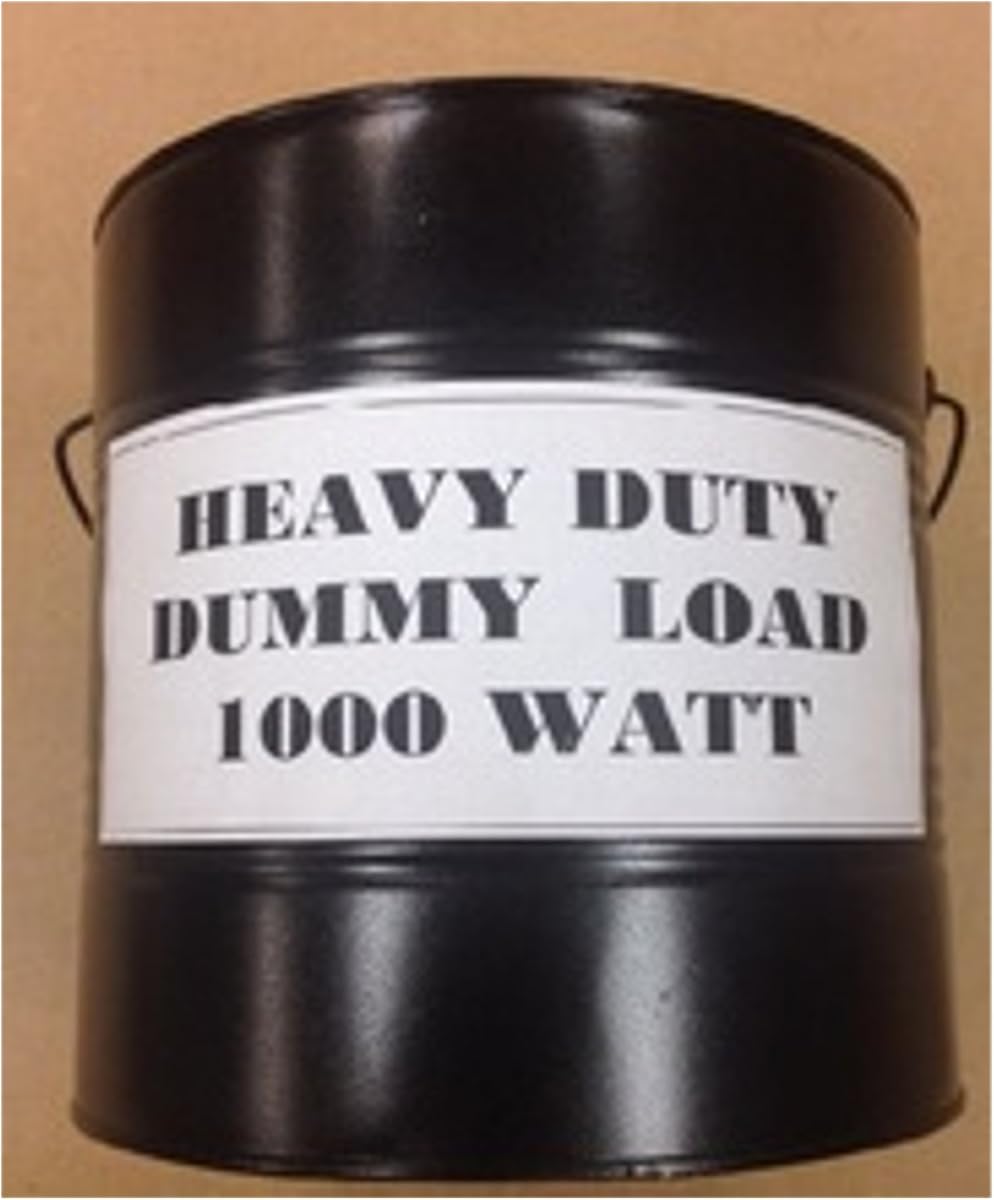
The Pro Trucker 1000-watt one-gallon can dummy load is the dedicated high-power option in this guide. It has a 3.8 rating, lower than the other products, but its 1000-watt capacity, 50-ohm impedance, and 0-to-30MHz frequency range serve a clearly different role.
We may earn a commission when you buy through this link, at no additional cost to you.
Its frequency specification states 1.2 SWR or less from 0 through 30MHz, with low SWR continuing to 400MHz. The can uses a heavy-duty design and a rust-proof powder coat inside and out. That durability is important in a large, oil-filled assembly intended to absorb substantial RF energy.
The unit must be filled with motor or mineral oil, and the oil is not included. This is a significant setup requirement that should be completed carefully according to the manufacturer’s directions. The one-gallon can is also much larger and less convenient for a small bench or mobile field kit. Its 3.8 rating reinforces the importance of reading recent customer feedback before ordering.
This load is intended for serious high-power testing, particularly on HF equipment where the stated 0-to-30MHz range is most relevant. It is a better fit for a dedicated test area or professional service setup than for ordinary CB bench use. Buyers who need only 50 or 100 watts should consider a smaller, simpler PL259 model instead.
A 1000-watt rating makes the can suitable for high-output RF equipment and professional test environments. The load should be operated within its stated limits with appropriate cooling and correctly filled with a compatible oil.
The stated 0-to-30MHz range and low SWR make the load particularly relevant to amateur HF testing. Its one-gallon format and filling requirement make it less convenient than the compact UHF alternatives.
We may earn a commission when you buy through this link, at no additional cost to you.
A useful dummy load is defined less by brand name and more by the match between your radio, its output power, the connector you have, and the frequency bands you need to test. The following factors help prevent an expensive mismatch at the bench.
Choose a 50-watt load for substantially lower-output equipment, a 100-watt load for common 100-watt transmitters, or the 200-watt model for more demanding service work. The 1000-watt can is a specialized high-power choice rather than a general-purpose compact bench load.
Do not assume that every UHF connector is interchangeable at higher frequencies. Check the exact connector, impedance, voltage standing wave ratio, and power specifications of any adapter or coaxial cable before connecting the load.
For CB and ordinary amateur radio service, DC-to-520MHz coverage is generally convenient. For wideband RF instruments or microwave-oriented equipment, select a model whose stated limit comfortably exceeds the highest frequency you need to test.
Several products specify VSWR of 1.2 or less, while the BECEN states VSWR below 1.2. Look for a numeric VSWR limit when measurement accuracy matters, and remember that a stated specification does not replace checking the full system, including adapters, cables, connectors, and the load’s operating condition.
Never place a load against a wall, inside a sealed toolbox, or beneath flammable material. Allow cooling space, inspect the unit after demanding tests, and follow a conservative duty cycle if the manufacturer gives one.
Choose an air-cooled unit for convenience and routine bench work. Choose the oil-filled can only when its high power capacity is genuinely needed and the user can accommodate the larger, nonportable setup.
Look for a load that feels suitably robust for where it will live. A bench model benefits from durable plated contacts, while a mobile or field model should also be easy to protect during transport.
Write down the radio’s output power, connector, lowest and highest frequencies, and how long you expect to transmit. Use those details to identify the model with the least compromise instead of selecting solely on the highest power number.
Begin by confirming that the dummy load’s power rating, impedance, connector, and frequency range match the equipment you plan to test. Connect the load with the radio powered down, or follow the manufacturer’s stated changeover procedure if the radio must remain on. Inspect the connector, cable, and load for damage, contamination, or loose fittings before applying power.
Operate the transmitter at a modest output level first and check for stable readings on an SWR meter or other appropriate test instrument. Increase power gradually while observing the load, transmitter behavior, and measurement equipment. Keep the load in a well-ventilated position, avoid covering it, and do not exceed the stated power or frequency limits. For the oil-filled can, fill it with compatible motor or mineral oil before use according to the product instructions.
After testing, disconnect the radio and allow the load to cool before handling it. Wipe the exterior with a dry or lightly damp cloth, avoid pushing debris into the connector, and keep the electrical contacts clean and dry. Inspect the unit periodically for discoloration, deformation, corrosion, or connector wear. Replace a load that has been operated beyond its rating or shows physical damage rather than relying on it for future measurements.
A CB Radio Dummy Load provides a controlled 50-ohm termination for a transmitter when you do not want to radiate a test signal. It is useful for bench testing, antenna comparisons, amplifier alignment, calibration, and service procedures. The load should match the radio’s power, connector, and operating frequency.
No, you should not operate a 100-watt transmitter into a 50-watt dummy load. The load must be rated for at least the intended output, with useful headroom preferred for sustained testing. Use a 100-watt or higher-rated load for a 100-watt transmitter, and follow the radio manufacturer’s guidance.
A VSWR of 1.2 or less indicates that the load is presenting a close approximation of the intended 50-ohm impedance. Lower reflection generally supports more dependable measurements and transmitter behavior. Cable losses, adapters, dirty contacts, incorrect power, and operation outside the load’s frequency range can all affect the measured result.
No. A PL259 male load requires a matching female PL259 connection or a suitable adapter. Many mobile radios use SO-239 connectors, and newer or specialized equipment may use SMA, N-type, or another interface. Verify the radio connector and the ratings of any adapter before testing.
Operating time depends on the load’s rating, cooling, ambient temperature, and transmitter duty cycle. A load near its maximum rating may require shorter intervals and cooling pauses, while a smaller load may become hot quickly. Keep the unit ventilated, inspect it during use, and stop if it becomes excessively hot or discolored.
Only if your testing requires that load’s high power capacity. A 1000-watt oil-filled can is a specialized choice for powerful equipment, especially on lower-frequency bands, and it must be filled with motor or mineral oil that is not included. Most routine CB and amateur radio tests are better served by a smaller air-cooled PL259 load.
The primary difference is the connector and supported use case. PL259 models are common for higher-power mobile and amateur radio equipment, while the listed 10W SMA model is compact, low-power, and specified up to 3GHz. Connector selection should follow the equipment and the cable or adapter in use.
A single load can serve many radios if its power, impedance, frequency range, and connector are suitable. Even then, the RF system should be checked as a whole, including the coax and adapters. For broad-frequency professional testing, separate dedicated loads may be more practical than relying on one compromise model.
The Diamond Antenna DL30A stands out as the most broadly applicable compact choice for CB, mobile, and amateur radio testing, while the XRDS-RF 200W PL259 offers the strongest premium option for high-power bench work. For more modest transmitters, the 50W PL259 UHF Male provides a useful balance of capacity, frequency coverage, and affordability.
Prioritize the specifications that directly affect your setup: select a power rating with headroom, match the connector, confirm the required frequency range, and account for ventilation. Low-power users can also consider the 15W UHF or 10W SMA models, while the 1000-watt can is reserved for dedicated high-power applications.
Before ordering, verify the current product details and connector requirements, and check the latest customer feedback and manufacturer information. Product prices, availability, and configurations can change, so compare the present offering rather than relying on an old listing or a previous test arrangement.