
Dracaena.io PETG Hard Tubing
4.4Editor score
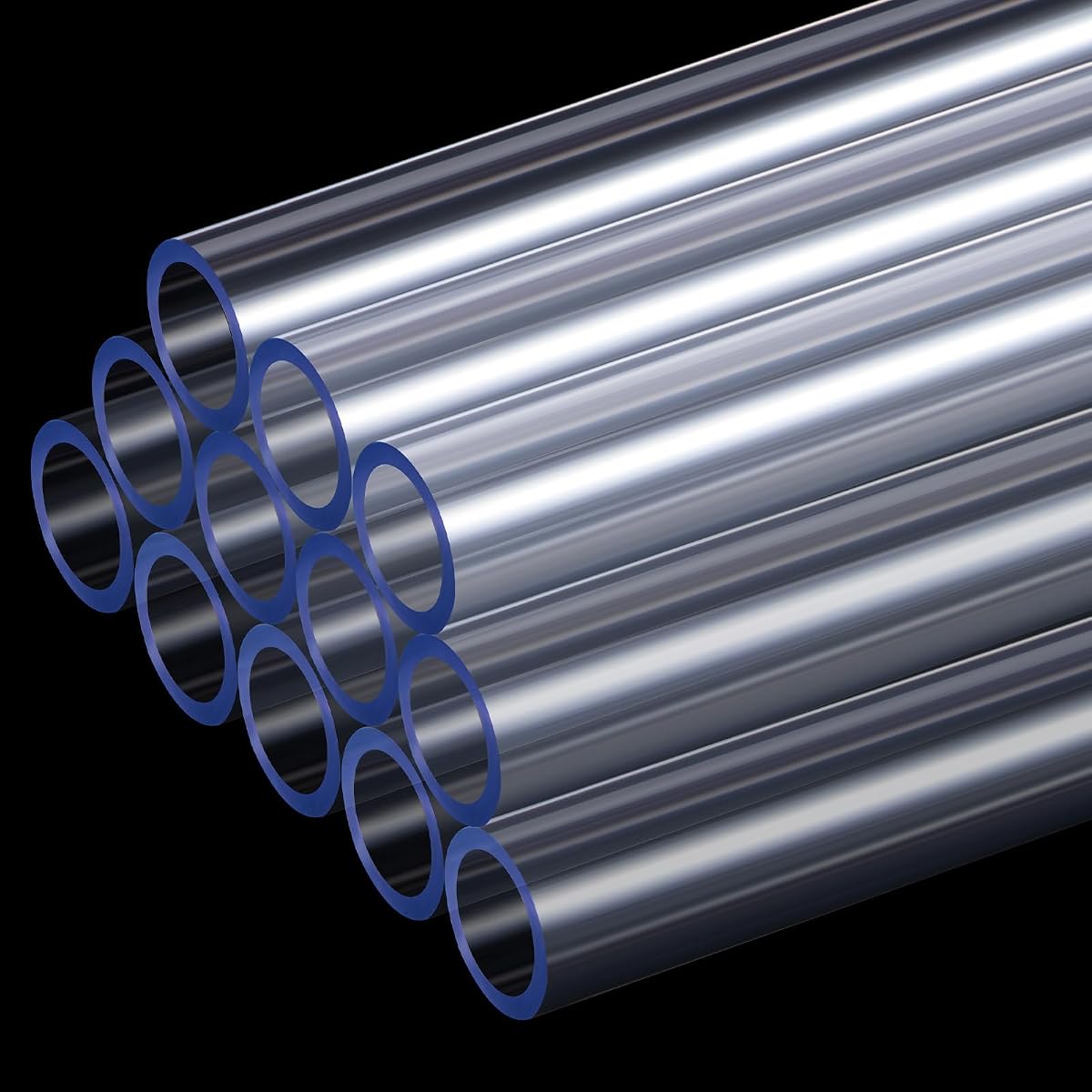
16 straight PETG lengths
10mm inner, 14mm outer
Stronger than acrylic
Multiple color options
Our hard tubing for water cooling guide compares PETG, acrylic, PMMA, PVC, and EPDM options for fit, clarity, bendability, and modern builds.
Hard tubing for water cooling gives custom PC loops a clean, structured appearance, but the best choice depends on material, dimensions, bendability, and fitting compatibility. Clear options reveal coolant movement, while rigid PETG and acrylic tubes suit builders creating precise runs and polished layouts across reservoirs, radiators, pumps, and blocks.
We compared all ten products by examining the stated material, inner and outer diameters, tube length, clarity, flexibility, temperature resistance, installation considerations, and intended cooling-loop applications. The list includes rigid hard tubing, pre-bent acrylic, and soft-tube alternatives that can still be useful when rigid routing is impractical.
Each review identifies the standout benefits and practical trade-offs behind the specifications, helping you match the tubing to your case, fittings, routing style, and experience level. Product prices and availability can change, so verify the current listing, dimensions, and included accessories before making a final purchase.
4.4Editor score

4.6Editor score

4.5Editor score
This side-by-side comparison covers rigid PETG and acrylic hard tubes, clear PMMA and PVC options, pre-bent tubing, and soft-tube alternatives, with particular attention to dimensions, materials, length, clarity, and routing convenience.


PrimoChill's rigid PETG tubing earns the top position because it combines a clear presentation with a material that is specifically presented as approachable for custom watercooling. Its 4.6 rating also places it among the strongest-rated options in this guide. The set includes six clear tubes, each measuring 30 inches, giving builders multiple sections for radiator, reservoir, pump, and block connections.
We may earn a commission when you buy through this link, at no additional cost to you.
The 3/8-inch inner diameter and 1/2-inch outer diameter create a 10-by-12-millimeter sizing scheme that must agree with the fittings used in the loop. PrimoChill describes the PETG as durable, cuttable, bendable, and shortenable, while its clear finish lets the selected coolant remain visible. Extra lengths can also be useful for testing different routes or completing a future revision without replacing the entire tubing set.
The main compromise is that this is straight rigid tubing rather than a pre-bent or continuously flexible product. Although the material has forgiving bending properties, achieving a polished result still calls for accurate measurement and suitable cutting and shaping tools. Buyers also need to verify fitting dimensions carefully because the listed tube size does not by itself confirm compatibility with every adapter on the market.
This PrimoChill set is a strong recommendation for first-time hardline builders and experienced custom-loop owners who want a clear, workable PETG option. It is especially compelling for people who value visibility into the coolant and need a manageable amount of tubing to complete a carefully planned route. For those seeking the simplest possible installation, a soft tube may be easier, but for a structured hardline aesthetic this is the most balanced pick.
The listing specifically identifies rigid PETG as a beginner-friendly hardline option. Its cuttable and bendable construction gives new builders room to adjust plans while preserving the straight, orderly appearance associated with a professionally routed custom loop.
Clear tubing provides a useful view of the coolant and the interior of each run. Six individually cuttable sections also provide enough material to create a complete layout without forcing every connection into a single overly restrictive piece.
We may earn a commission when you buy through this link, at no additional cost to you.
Frienda's 12-piece PETG set provides one of the largest quantities of straight tube in this comparison. Every piece is 30 inches long, with a 10-millimeter inner diameter and 14-millimeter outer diameter. The 4.4 rating reflects a broadly favorable buyer response, and the clear finish is particularly useful when coolant visibility is part of the intended appearance.
We may earn a commission when you buy through this link, at no additional cost to you.
The product data emphasizes that the PETG is easy to cut and bend, making the set approachable for DIY builders. It also states a thickened-wall design and an operating temperature range from minus 4 degrees Fahrenheit to 143.6 degrees Fahrenheit. Smooth inner and outer surfaces are intended to reduce particle accumulation and make the flow of coolant easier to observe.
Twelve long sections offer considerable routing flexibility, but quantity alone does not guarantee a clean installation. A 30-inch tube can be difficult to maneuver inside a compact chassis, and an overlong rigid run can put unwanted stress on connections. The builder should measure the case, identify every component position, and trim each section only after deciding how it will be supported and bent.
This set is an appealing option for builders who want abundant clear PETG without moving to a more specialized pre-bent product. It works particularly well for users who enjoy cutting, routing, and refining a custom loop themselves. Choose it when your fittings accept the stated 10-by-14-millimeter sizing and when the available case space can accommodate long, straight sections.
With twelve separate sections, the pack gives a builder room to plan multiple runs and retain spare material. It is a useful format for complex layouts, although cutting a tube only after confirming the final route will reduce unnecessary waste and stress on fittings.
The transparent PETG supports coolant monitoring while preserving the crisp look associated with rigid tubing. Smooth surfaces are also presented as helping limit the retention of particles along the tube wall.
We may earn a commission when you buy through this link, at no additional cost to you.
Corsair Hydro X Series Xt hardline tubing focuses on visual clarity and a straight-line appearance. Its crystal-clear PMMA construction is designed to showcase the coolant, while the 4.4 rating indicates solid customer reception. The product is presented as resilient tubing intended to withstand high pressure and high coolant temperatures without warping or deforming.
We may earn a commission when you buy through this link, at no additional cost to you.
Straight tubing makes this option suitable for builds that value parallel lines, visible coolant, and accurately measured segments. It can form the visual foundation of a custom loop running between a reservoir, radiator, pump, and water block. The clear material may appeal particularly to builders who want the internal plumbing to remain a deliberate part of the system rather than being hidden.
The primary challenge is installation precision. Corsair recommends cutting the tube to length with a fine-toothed hacksaw, which is not included, and a rough cut can compromise the appearance or fit. Unlike PETG options that are promoted as particularly forgiving, this PMMA tube requires a careful, measured approach and appropriate finishing after cutting.
Corsair Hydro X hardline is a strong choice for experienced builders who prioritize crystal clarity, a straight profile, and resistance to deformation. It may be less forgiving for a first custom-loop attempt than a more flexible PETG product, but it can produce a particularly polished result when each section is measured and cut cleanly.
Crystal-clear PMMA makes the coolant and internal routing highly visible. That visual transparency is one of the main reasons a straight hardline product can serve as the centerpiece of a custom watercooling build.
The stated construction is designed to resist warping and deformation under high pressure or elevated coolant temperatures. It remains a rigid product, though, so the quality of each cut and bend will have a noticeable effect on the finished layout.
We may earn a commission when you buy through this link, at no additional cost to you.
PrimoFlex LRT is included because a complete hard-tubing comparison should acknowledge when a soft tube is the more practical answer. This crystal-clear flexible product carries a 4.6 rating, matches the rating of the leading rigid PETG pick, and offers ten feet of tubing with a 3/8-inch inner diameter and 5/8-inch outer diameter.
We may earn a commission when you buy through this link, at no additional cost to you.
Its main practical strength is routing freedom. A continuous flexible section can negotiate tight corners and reach components in locations where rigid straight runs would be awkward. The 10-foot bundle provides enough length for elaborate layouts, while the logo-free construction preserves an uninterrupted view of the coolant and avoids distracting printing on the tube surface.
The included Liquid Utopia and SysPrep cooling-loop pre-treatment supplies are a meaningful convenience for a new build, although the complete installation still requires compatible fittings and standard loop-preparation steps. Its 5/8-inch outer diameter is larger than several hardline options in this guide, making compatibility checks especially important. It also does not create the rigid, sharply defined visual character sought by hardline enthusiasts.
Choose PrimoFlex LRT when routing ease, a long continuous length, and bundled preparation products matter more than perfectly rigid lines. It is a strong fit for compact cases, complex internal paths, and builders who want the look of visible tubing without committing to a fully hardline design.
The ten-foot bundle gives a builder considerable freedom to connect multiple components through a single material. Its flexibility can also reduce the need to create multiple rigid bends in a crowded chassis.
Liquid Utopia and SysPrep pre-treatment are included with the tube. Those additions can support initial loop preparation, though tubing selection should still be based on the actual dimensions and type of fittings already in the build.
We may earn a commission when you buy through this link, at no additional cost to you.
Corsair Hydro X Series Xt Softline tubing is designed for builders who want transparent coolant views without the rigidity of a hardline tube. Its stated 10-by-13-millimeter dimensions, flexible PVC construction, and 4.4 rating make it a practical soft-tube alternative. The product is also described as UV-resistant and intended to resist discoloration and deformation over time.
We may earn a commission when you buy through this link, at no additional cost to you.
The primary benefit is installation flexibility. PVC that is flexible enough for tight bends can negotiate crowded spaces more easily than a rigid PMMA, PETG, or acrylic tube. It is also easy to cut with either tube cutters or scissors, which can simplify a build when exact segment lengths are needed around reservoirs, pumps, radiators, and blocks.
Because it is not hard tubing, it cannot deliver the same precise, architectural appearance created by rigid straight runs. The relatively slim 10-millimeter bore may also require an adapter if the rest of the loop uses a larger tube size. Compatibility with bends, connectors, and any pre-existing fittings must be confirmed before the loop is assembled.
Hydro X Softline is best for users prioritizing straightforward routing and long-term clarity over a rigid visual style. It may be especially useful when modifying an existing loop that already uses compatible 10/13-millimeter soft tubing. For a fresh showcase build with straight runs, the Corsair hardline or PETG alternatives are more aligned with the core purpose of this category.
The flexible PVC construction is specifically suited to tight internal bends. That flexibility makes it easier to route around motherboard components and case features than a fully rigid tube.
Fully transparent tubing keeps coolant visible, while the stated UV resistance is intended to limit discoloration. Straightforward cutting with common tools also helps simplify last-minute length adjustments.
We may earn a commission when you buy through this link, at no additional cost to you.
Dracaena.io's hard tubing set contains sixteen straight PETG lengths, each measuring 43 centimeters or about 17 inches. That shorter format differentiates it from the longer 30-inch sets. The tubes have a 10-millimeter inner diameter and 14-millimeter outer diameter, and the product carries a 4.4 rating.
We may earn a commission when you buy through this link, at no additional cost to you.
Multiple short sections can be advantageous in a compact case or a layout with many modest-length connections. The PETG is described as stronger than acrylic with better impact resistance, and the set is positioned as a non-toxic, environmentally friendly material. Although the featured version is white, the product information also lists red, blue, green, and transparent options for aesthetic or color-coded builds.
The instruction to sand both ends after cutting is important. Sharp edges can damage the inner seal of an adapter, potentially creating a hidden hazard even when the tube appears to fit. This makes smooth finishing a non-negotiable part of installation rather than an optional cosmetic step. The straight shape also means that builders will still need a suitable method for creating controlled bends.
This set is well suited to builders who prefer many manageable straight pieces over a few long tubes. It is especially attractive for a white-themed or color-coded installation, although the featured white finish will show coolant less clearly than transparent tubing. Choose it when PETG durability and the convenience of shorter segments outweigh the visual preference for full transparency.
Sixteen 43-centimeter lengths can be easier to position inside a compact chassis than longer sections. The quantity also provides useful spares for a system that may later be reconfigured.
Sanding the ends smooth is essential because sharp edges may damage an adapter's inner seal. A careful finishing process helps protect the connection and supports a more reliable installation.
We may earn a commission when you buy through this link, at no additional cost to you.
Thermal Grizzly's DeltaMate ST16 is a soft-tube product with a 5.0 rating, the highest numerical rating in this group. It is supplied as one continuous three-meter length with a 10-millimeter inner diameter and 16-millimeter outer diameter. The large material allowance and continuous form are the product's most distinctive features.
We may earn a commission when you buy through this link, at no additional cost to you.
The EPDM tube is described as flexible, UV-resistant, ozone-resistant, and resistant to acids and alkalis. Its stated temperature range extends from minus 30 to plus 110 degrees Celsius, while diameter tolerances are said to be quality controlled and optimized for Thermal Grizzly fittings. Those claims make it particularly relevant to builders who want a dedicated 10/16-millimeter soft-tube solution.
This is not rigid hard tubing, and its black finish does not provide the coolant visibility that defines many of the clear products on this list. The 16-millimeter outer diameter may also require a deliberate check against the size of the intended fittings. Although one long tube simplifies some routes, builders may still need to determine how it will be supported through the case.
DeltaMate ST16 is recommended for users who value a long continuous soft run, a high customer rating, and compatibility with 10/16-millimeter Thermal Grizzly fittings. It works best when the system design intentionally uses black tubing rather than a visible hardline aesthetic. Buyers should verify the full fitting plan before ordering because the tube's dimensions are more specialized than the most common 10/12 or 10/14 sizing.
The three-meter one-piece format can simplify routes that would otherwise require several joins. It also provides abundant material for a larger loop and allows the final path to be planned around the actual case layout.
EPDM is presented as resisting UV, ozone, acids, and alkalis while remaining elastic across a broad temperature range. These properties make it a relevant option for long-duration cooling-loop use when matched with suitable fittings.
We may earn a commission when you buy through this link, at no additional cost to you.
Thermaltake's Pacific Hard Tube set contains four 1000-millimeter lengths of PCTG tubing. Each tube has a 16-millimeter outer diameter and a 12-millimeter inner diameter, and the set carries a 4.3 rating. Its long straight sections distinguish it from compact 43-centimeter packs and pre-bent designs.
We may earn a commission when you buy through this link, at no additional cost to you.
The product is described as high-quality, 100-percent PCTG with high-temperature resistance. It is also Tt LCS certified, adding a specific compatibility-related detail for builders who are assembling a Thermaltake-centered loop. Long straight tubes can span larger gaps between components and preserve uninterrupted visual lines when the case provides enough room to maneuver them.
A one-meter length is both a benefit and a complication. It can be ideal for a reservoir-to-radiator run in a spacious chassis, but it may be unnecessarily long for a compact case. The 12/16-millimeter sizing also needs to be matched to the relevant connectors, and the set provides only four pieces for an entire loop. Accurate planning is therefore more important than it would be with many short sections.
This Thermaltake set is a sensible pick for builders with a spacious case, a preference for long straight runs, or an existing loop designed around 12/16-millimeter components. It is less attractive when the case is compact or when the desired layout requires several small connections. As with other rigid tubing, cutters, shaping tools, and appropriate fittings remain essential parts of the overall build.
Four one-meter sections can bridge larger gaps without unnecessary joins. That makes the set useful for a spacious case where radiator, reservoir, pump, and block positions require longer straight sections.
The stated PCTG construction and high-temperature resistance suit rigid custom-loop layouts. Tt LCS certification also makes this option more relevant to builders assembling a compatible Thermaltake cooling system.
We may earn a commission when you buy through this link, at no additional cost to you.
EKWB's EK-Loop Acrylic Hard Tube is a specialized rigid option for builders already working with compatible EK fittings. The four-pack has a 4.6 rating, uses clear extruded acrylic, and measures 10 millimeters internally by 14 millimeters externally. Each of the four sections is 500 millimeters long.
We may earn a commission when you buy through this link, at no additional cost to you.
The defining feature is its stated compatibility with EK-HD push-in adapters and EK-HDC series compression fittings. This explicit fitment guidance is valuable in a category where similar-looking tubes can have different outer diameters. The acrylic may also be heat treated to create certain bends, offering a way to form more complex routes while retaining a rigid appearance.
Heat treating acrylic is not a casual shortcut. The process requires controlled heating and careful handling, and the material must be allowed to cool properly before it is stressed or installed. Four 500-millimeter sections may also be insufficient for a highly complex loop without adding another set. Buyers should treat the fitting type as part of the selection rather than assuming all 10/14-millimeter hard tubes are interchangeable.
This EKWB set is a strong recommendation for builders using the specified push-in or compression fittings and wanting a clear, rigid result. Its 4.6 rating, explicit compatibility, and manageable 500-millimeter lengths make it particularly attractive for precise custom builds. It is less suitable for users who have not yet settled on their fittings or want a forgiving all-purpose tube.
The tube is explicitly intended for EK-HD push-in adapters and EK-HDC compression fittings. That specificity reduces uncertainty when the rest of the loop is already based on these connectors.
Clear acrylic provides a polished appearance, and the material may be heat treated to achieve certain bends. Proper control of the heating process is essential to achieving the intended geometry without compromising the tube.
We may earn a commission when you buy through this link, at no additional cost to you.
EKWB's pre-bent EK-Loop hard tubing provides six clear acrylic sections, each formed with a 90-degree bend. Every tube is 800 millimeters long, with 250 millimeters on one side of the bend and 550 millimeters on the other. The set carries a 4.5 rating and is designed around a 10/14-millimeter inner and outer diameter.
We may earn a commission when you buy through this link, at no additional cost to you.
The obvious advantage is time. Instead of creating every right angle by hand, a builder can position factory-bent sections and cut them to the required length. The product information identifies liquid-cooling beginners as a primary audience, while also describing the tubes as a quality-of-life improvement for enthusiasts who want to reduce bending time and effort.
Pre-bent does not mean plug-and-play. The two unequal sides of each bend must correspond to the space available in the case, and the tube still needs to be cut accurately for a neat fit. The 800-millimeter section is considerably longer than many compact straight-tube options, so it works best where the component spacing can accommodate the bend and its extensions. Fitting compatibility must also be confirmed in advance.
This set is the premium choice for builders who want a rigid acrylic appearance without spending considerable time forming their own bends. It is particularly useful for right-angle transitions in a case with a carefully planned layout. Those with a compact chassis or a different fitting standard may find that shorter straight tubes or a dedicated soft tube offer a better fit.
Each tube already includes a 90-degree bend, reducing the need to heat, shape, and perfect multiple corners. That can make a rigid custom loop faster and less intimidating to construct.
The 250-millimeter and 550-millimeter sections on either side of the bend offer different reach options. Measuring the actual distance between components before choosing where each tube will sit is essential for a clean result.
We may earn a commission when you buy through this link, at no additional cost to you.
The right tubing depends on the full loop rather than appearance alone. Material, inner and outer diameter, available case space, fitting style, bend method, coolant visibility, and the builder's experience should all influence the decision before any tube is ordered.
Inner diameter controls the opening through which coolant flows, while outer diameter must match the fitting's connection depth and sealing design. A tube that looks similar to another can still fail to seal if its inner or outer measurement is wrong. Compare the listed dimensions with the specifications of every fitting, adapter, pump port, reservoir port, radiator port, and block connection that will appear in the loop.
Common combinations in this guide include 10/12-millimeter, 10/13-millimeter, 10/14-millimeter, 10/16-millimeter, and 12/16-millimeter sizing. These numbers describe inner and outer dimensions, not interchangeable labels. Verify the full fitting standard and the manufacturer's intended tube size before purchase.
PETG is presented as durable, impact resistant, cuttable, and relatively forgiving to bend. Acrylic provides a highly polished rigid appearance but can be more sensitive to cutting, shaping, and impact. PMMA offers crystal clarity and a straight hardline format, while PVC and EPDM are flexible alternatives suited to tight routes. The best material is the one that matches both your routing style and your confidence with the required installation process.
Do not choose solely by the word rigid. Flexible tubing can make a complex loop easier to install, while a hard tube can deliver a cleaner architectural layout. Prioritize comfort with the corresponding cutting and bending method before focusing on the final visual effect.
Rigid tubing can require heat, specialized tools, or repeated shaping to create clean bends. PETG is frequently promoted as forgiving, and acrylic may be heat treated to achieve certain bends, but neither eliminates the need for accurate preparation. Pre-bent tubes remove much of that work, though their fixed geometry must match the case. Flexible PVC and EPDM require no hardline-style shaping but will not create the same rigid visual structure.
Practice on an offcut when using heat or a powered shaping tool. Prioritize smooth curves, controlled heating, and stable support so the finished tube does not stress the connection points.
Tube length affects handling as much as it affects routing. Long one-meter or 30-inch sections can span distant components, but they can be difficult to maneuver inside a compact chassis. Shorter 43-centimeter pieces are easier to position and can be rearranged more easily, while a continuous ten-foot or three-meter soft tube can negotiate complicated paths. Measure component locations, account for fittings, and consider how each straight section will enter and leave its connection.
Choose a length that fits the route without creating unnecessary excess. A tube that is too long adds stress and makes the layout harder to control; a tube that is too short may be unable to reach cleanly.
Tubing material and diameter are only part of a sealed connection. Some products explicitly reference particular adapter families, such as EK-HD push-in adapters or EK-HDC compression fittings, while others are intended for general custom-loop use. Check the connector type, tube dimensions, and manufacturer guidance for every connection before committing to a complete set.
A compatible size is necessary, but so is a proper installation process. Use the cutter or tool recommended by the tube manufacturer, deburr sharp ends, and ensure the tube seats fully in the connection without damaging its sealing surfaces.
Clear PETG, PMMA, acrylic, and PVC allow the coolant and internal flow to remain visible. That visibility is a major part of the appeal of a custom liquid-cooling build, but it also exposes kinks, trapped air, particles, and uneven bends. Black EPDM and white PETG create a more restrained appearance and may suit a system in which the tubing is intended to blend into the surrounding components.
Choose transparency when the routing itself is a visual feature. Choose a darker or opaque finish when minimizing visible connections is more important than displaying the coolant.
Tubing should be suitable for the coolant and operating conditions of the loop. The Frienda PETG listing states a range from minus 4 degrees Fahrenheit to 143.6 degrees Fahrenheit, while the Thermal Grizzly EPDM product is rated from minus 30 to plus 110 degrees Celsius. Other products emphasize rigid construction, resilience, or high-temperature resistance without the same numerical range.
Treat stated figures as product-specific information rather than a guarantee for every loop. Confirm the material, coolant, fittings, and system design form a compatible set before operating the cooling loop.
Beginner-friendly does not mean installation-free, but it can mean a product that is more forgiving. PrimoChill explicitly positions its PETG for newcomers, and the pre-bent EKWB set is intended to reduce bending time and effort. Experienced builders may prefer long straight PMMA or acrylic sections for maximum control over a custom layout. Flexible tubing offers the most forgiving routing, although it creates a different appearance.
Choose the product that makes your intended build easiest to complete correctly. A slightly less rigid option can produce a better result for a first build than a premium rigid tube that demands techniques you have not yet mastered.
Begin by mapping the entire cooling loop and confirming that the tube dimensions match every fitting. Measure the distance from each component connection to the next, mark the intended cutting points, and dry-fit the straight sections before permanently shaping them. This planning stage prevents the need to reconnect a partially completed loop simply because a run is too long or incorrectly positioned.
Cut each tube with a tool suitable for the material, then remove rough edges and debris. Dracaena.io specifically recommends sanding both ends because sharp edges may damage an adapter's inner seal. For hardline materials, shape bends gradually with controlled heat and appropriate tools, allowing the tube to cool before installing it. Flexible tubing can be cut to length and routed by hand without rigid-line shaping.
After the loop is assembled, inspect every connection for a full seat and look for kinks, sharp bends, trapped air, and debris. Flush the loop according to the guidance supplied with the cooling system and the selected cleaning products, then monitor it while operating. Keep the tubing adequately supported, avoid unnecessary movement, and periodically inspect clear runs for discoloration, sediment, or changes that could indicate a problem.
Many of the products in this guide use a 10-millimeter inner diameter with an outer diameter of 12, 13, 14, or 16 millimeters. Other options pair a 12-millimeter bore with a 16-millimeter exterior. The correct choice depends on the exact fittings in the loop, so measure both the inner and outer tube dimensions rather than comparing only one number. Always check the fitting manufacturer's stated tube size before purchasing.
PETG is generally presented as more forgiving to cut and bend and as having better impact resistance than acrylic. Acrylic can provide a highly polished rigid appearance and may support heat-treated bends when handled correctly. The better choice depends on your tools, comfort with shaping, fitting system, and desired finish. For first-time builders, the more forgiving PETG option is often easier to work with.
Some PETG products are marketed as easy to bend, but clean results generally depend on accurate measurements and the right technique. Acrylic may require heat treatment for certain bends, and a fine-toothed cutting tool is commonly recommended for hardline PMMA. A proper tube cutter, deburring method, heat source where appropriate, and practice on an offcut can prevent damage.
Yes. A notation such as 10/14 millimeters normally describes a tube with a 10-millimeter inner diameter and a 14-millimeter outer diameter. The inner dimension affects the flow passage, while the outer dimension must fit the connection's depth and seal. Reversing the values would produce an entirely different tube, so compare the manufacturer's full specification with the fitting requirements.
They can be suitable if the priority is easier routing, tight bends, or a long continuous run rather than a rigid visual structure. The Corsair Hydro X Softline, PrimoChill PrimoFlex LRT, and Thermal Grizzly DeltaMate ST16 are included as flexible alternatives. Their dimensions and connector requirements must still match the rest of the loop, and they will produce a different appearance from straight hardline tubing.
Pre-bent tubes can save time because the 90-degree angles are already formed. The EKWB set is specifically intended to reduce bending effort for beginners and enthusiasts. However, the two sides of each bend have different lengths, so your case layout must provide enough space. Measure first, and use pre-bent sections where their fixed geometry complements the available route.
Remove rough edges and make sure the end is smooth before inserting it into a fitting. Dracaena.io explicitly warns that sharp edges may damage the inner seal of an adapter. Use a cutter appropriate for the tube material, then deburr or sand as directed. A smooth, clean end supports a full seat and reduces the chance of compromising the connection.
Long sections are useful for spanning large gaps and creating uninterrupted straight runs, but they can be difficult to maneuver in a compact case. Short sections are easier to position, modify, and use in a layout with several modest runs. Continuous soft tubing offers another approach because it can curve through a complex path. Choose based on the measured distance between components and the amount of space available for handling each section.
PrimoChill's rigid PETG set stands out as the most balanced overall option because it combines clear presentation, forgiving handling, six useful lengths, and explicit attention to beginner watercooling. Dracaena.io offers a generous collection of shorter PETG tubes for compact layouts, while the premium EKWB pre-bent acrylic set reduces the effort required to form right-angle turns.
Prioritize the loop's dimensions before appearance. Confirm inner and outer diameter, identify the fitting system, measure the case, and decide how much bending work you are prepared to perform. PETG suits builders who want a workable rigid option, acrylic and PMMA emphasize polished straight runs, and flexible tubes remain practical when complex routing matters more than rigid definition.
Finally, check the current listing and its details before ordering. Prices, availability, included accessories, and manufacturer information can change, and compatibility depends on the exact components in the build. A little planning before the first cut is the most effective way to avoid leaks, damaged seals, unnecessary material waste, and an unsatisfying final routing.