Compare 10 Ham Radio Bandpass Filters by band coverage, power handling, isolation, connectors, portability, and interference reduction for amateur radio.
As an Amazon Associate we earn from qualifying purchases. We may earn a commission when you buy through links on this page, at no additional cost to you.As an Amazon Associate we earn from qualifying purchases.Purchases through our links may earn us a commission, at no extra cost to you.
Ham radio bandpass filters help operators separate wanted signals from unwanted noise, adjacent-band interference, and strong local transmissions. A well-matched filter can improve signal clarity, protect a receiver or transceiver, and make portable or shared-location operation more dependable. The right choice depends heavily on frequency, power, connector, and operating style.
This guide compares ten filters using the specifications and product information supplied for each model. It covers narrow HF filters, multiband modules, portable QRP accessories, high-power units, and several UHF-oriented options. We also consider passband range, isolation claims, power limits, connector compatibility, physical size, and likely station applications.
Each selection highlights a distinct use case, from high-power contest operation to lightweight Parks on the Air setups. Ratings reflect the available customer feedback, while products without a listed rating remain in the guide because their specifications may still fill a specific need. Product availability and current prices can change, so confirm the latest listing details before purchasing.
Top 3 Picks for Best Ham Radio Bandpass Filters
Best Budget
Nooelec Ham Filter Bank Barebones – Multiband Radio Module with 5 Separate Bandpass Filters and Passthrough. Operates at 5 Common ISM Frequencies to Cover the 2m, 1.25m, 70cm, 33cm, and 23cm Ham Bands
Top 10 Best Ham Radio Bandpass Filters in 2026 Compared
The table below compares all ten filters by target frequency, power capability, interface, and primary role. It is designed to make it easier to identify a filter for a single HF band, a portable setup, a high-power station, or a multiband VHF/UHF system.
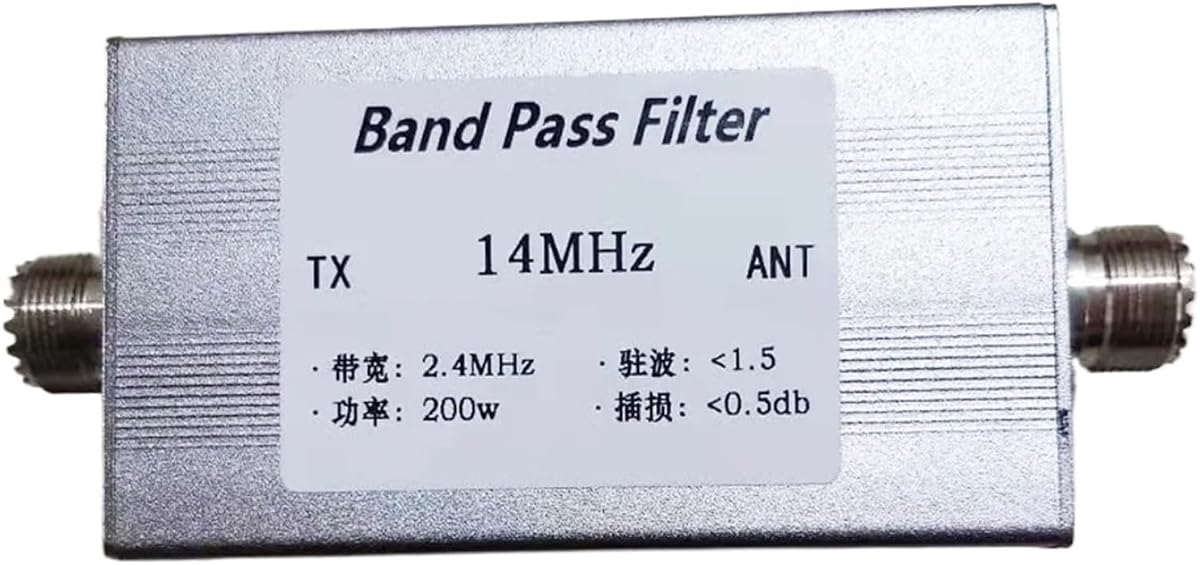
The 200W Shortwave Band Pass Filter is a focused 14MHz solution with a 5.0 customer rating and a clear emphasis on high-power shortwave operation. Its LC construction, narrow passband, and stated capacity for up to 200 watts make it especially interesting for operators who want more selectivity around 14MHz without moving to a large multiband filter system.
Pros
Handles demanding 200W operation
Targets the popular 14MHz band
Narrow filtering improves selectivity
Compact professional connectivity
Supports SSB and contest use
Cons
Single-band rather than multiband
Type M connector needs adaptation
We may earn a commission when you buy through this link, at no additional cost to you.
The main advantage is its combination of power handling and band-specific design. A 14MHz filter can suppress out-of-band noise and reject unwanted energy outside the amateur band, which may improve the apparent cleanliness of a crowded HF band. The Type M female connector also gives operators a defined interface for integrating the unit with compatible station equipment, although cable planning remains important.
Its narrow specialization is also its principal limitation. Unlike a multiband module, this filter is intended around one operating band and may not be the most convenient choice for a station that regularly changes bands. Operators will also need to confirm that the Type M connector and the filter's exact electrical interface match their existing radio, cable, and antenna arrangement. The listed 200W capacity is the key specification, but it should be compared with actual transmitter output and operating mode.
This is a strong choice for a 14MHz-focused contest station, a home HF setup experiencing adjacent-band interference, or an operator who values a dedicated high-power filter. It is less compelling for portable QRP work or users who need one device to cover many frequencies. For those who can accommodate the connector and band-specific design, it combines useful power capacity with a particularly clear filtering purpose.
Focused Filtering for 14MHz
A dedicated 14MHz filter is useful when the desired signal sits within the amateur band but unwanted energy lies outside it. Narrow passband behavior can make nearby activity less disruptive and help the receiving system concentrate on the band you intend to use.
Power for Demanding Stations
The stated 200W rating positions this filter for more substantial HF installations. It is particularly relevant to SSB and contest-style operation, provided the operator maintains suitable duty cycles and follows the product's connection requirements.
The Nooelec Ham Filter Bank Barebones stands apart by covering five higher-frequency amateur bands in one module: 2m, 1.25m, 70cm, 33cm, and 23cm. Its 4.1 rating reflects a more specialized product than a conventional single-band HF filter, but the breadth of functions makes it compelling for VHF/UHF operators and mixed-band experimenters.
Pros
Covers five amateur radio bands
Combines filters and passthrough
Supports bias tee-powered devices
Useful for transceiver protection
Suited to selective signal processing
Cons
Not intended for lower HF bands
Requires compatible control and connections
We may earn a commission when you buy through this link, at no additional cost to you.
Each listed band has a dedicated high-performance passband filter: 144-148MHz, 220-225MHz, 420-450MHz, 902-928MHz, and 1240-1300MHz. Including a passthrough gives the module broader utility, while the stated uses include ham radio communication, selective signal processing, and transceiver protection. A pushbutton applies 4.5V bias tee voltage at the input SMA, helping the unit integrate with compatible bias tee-powered equipment.
Because this is a barebones multiband module, the buyer should not expect the same simplicity as a self-contained filter with a finished enclosure and a full set of station cables. The product is centered on switching among common ISM-adjacent amateur allocations rather than the lower HF bands. Its 4.1 rating also suggests that users should examine current feedback carefully, particularly in relation to their intended control method and operating environment.
This filter bank is best for an operator who works across 2m through 23cm, needs more than one passband available at a station, and wants signal selection or protection in a compact multiband arrangement. It is a less logical choice for an HF-only station or for someone who needs a fully self-contained, connector-ready appliance. For the right VHF/UHF installation, though, it offers unusual coverage in one module.
Five Channels in One Module
Separate filtering paths let an operator move among widely separated amateur allocations without treating all frequencies as one broad passband. That distinction can be valuable in crowded VHF and UHF environments where local signals and equipment noise vary dramatically by band.
Integration With Powered Devices
The pushbutton-controlled 4.5V bias tee function can simplify use with compatible powered devices. Operators should still verify voltage, connector, and signal-path requirements so that the bias arrangement matches their specific equipment.
This multi-band high-isolation BPF is the most flexible HF-focused design in the list, with stated options at 7, 14, 18, 21, 24, 27.5, and 28MHz. It handles up to 200W across SSB, CW, AM, FM, and FSK according to the supplied information, giving it broad relevance for a home station that operates on several traditional HF bands.
Pros
Offers seven HF band options
Supports up to 200W operation
Compact and relatively lightweight
Designed for stronger isolation
Useful across multiple SSB modes
Cons
No listed customer rating
Interface may require adaptation
We may earn a commission when you buy through this link, at no additional cost to you.
The filter's value lies in its combination of compact dimensions, multiple frequency choices, and high isolation. At 140 by 53 by 38mm and approximately 245-255 grams, it is easier to integrate than a large rack-style unit. The listed SL16-F, or Type-N female, interface provides a recognizable station connection, while the stated high-isolation design targets the reduction of interfering signals and improvement of usable sensitivity.
There is no customer rating in the supplied listing data, so prospective buyers cannot use the same feedback signal available for several other products. That does not negate the stated engineering features, but it makes careful review of connector compatibility, selected frequency, and power details especially important. The range of supported modes should also be considered against the exact signal characteristics and duty cycle of the station.
This BPF is a good fit for an operator who wants one high-power design that can be configured for numerous HF bands. It is less suitable for a single-band specialist who prioritizes a minimal signal path, or for a portable setup where size and weight are critical. Its broad band options and stated power capacity give it strong value for a versatile fixed station.
One Platform, Seven Frequencies
The range of stated frequency choices allows a station to preserve a narrow filtering approach while moving among common HF allocations. This is more adaptable than a fixed-band filter and potentially simpler than maintaining several separate devices.
Compact High-Power Construction
A stated 200W capacity and relatively compact enclosure make the filter relevant to serious HF stations that want meaningful power handling without a large dedicated housing. Actual suitability still depends on the chosen variant and station operating conditions.
The 40m Band Pass Filter is a dedicated 7MHz unit with a 5.0 rating, 200W power handling, and a straightforward objective of improving receiver sensitivity by reducing interference. It is aimed directly at 40-meter operators who want a narrow filter for a heavily used amateur band and prefer a purpose-built high-power device.
Pros
Targets common 40m band
Supports substantial power levels
Reduces out-of-band noise
Durable anodized housing
Clear Type-N connection standard
Cons
Limited to one target band
Requires Type-N cable planning
We may earn a commission when you buy through this link, at no additional cost to you.
Its strongest features are practical rather than exotic. The anodized aluminum housing should appeal to operators who want a durable enclosure, while the Type-N female interface offers a consistent connection point. The stated ability to handle SSB, CW, AM, FM, and FSK makes the filter applicable to a range of common 40m operating modes, assuming the radio and station arrangement are appropriately matched.
A single-band design naturally sacrifices the flexibility offered by a multiband unit. If your station regularly moves among 20, 15, 10, and 40 meters, the added convenience of a configurable filter may be worth more than the focused characteristics of this device. The 5.0 rating is encouraging, although it should not substitute for checking passband width, insertion loss, and connector requirements against your particular receiver.
The 7MHz filter is best for 40m enthusiasts, contest stations, and home setups experiencing strong out-of-band or adjacent-band noise. It also suits operators seeking a high-power filter without a large multiband appliance. If your primary requirement is dedicated 40m selectivity, the purpose-built approach is persuasive; if broad coverage matters more, consider a more configurable model.
Cleaner 40m Reception
A filter centered on 7MHz can reduce signals outside the desired amateur band, making a dedicated 40m setup more resistant to interference. The potential benefit is clearest in locations with heavy local activity or strong non-amateur RF sources.
Durable Station Housing
The anodized aluminum case gives the filter a more permanent station-oriented feel than a lightweight portable accessory. That construction is appropriate for an indoor installation where connector security and physical durability are priorities.
The BPF-3.8 is a specialized 3.8MHz bandpass filter with a 200W designation for shortwave communication. Unlike the richer descriptions provided for several other products, its supplied information is concise, identifying the target frequency, power class, and general filtering role. It appears designed for operators with a specific 3.8MHz requirement.
Pros
Specialized 3.8MHz passband
High stated power capacity
Suited to shortwave use
Simple dedicated-filter concept
Cons
No listed customer rating
Limited published specification detail
We may earn a commission when you buy through this link, at no additional cost to you.
A narrow filter at this frequency could be useful for separating 3.8MHz activity from signals outside the desired range. The 200W designation makes it superficially relevant to higher-power stations, but buyers should seek detailed insertion-loss, passband-width, isolation, and connector information before treating it as a drop-in addition to an established antenna system.
The lack of a listed rating is another reason to conduct careful due diligence. It is not possible to infer field performance, construction quality, or ease of integration from the short description alone. A filter placed directly in a high-power signal path must also be installed with sound connectors, appropriate cable, and attention to grounding and station layout. These practical details can be as important as the headline frequency and wattage.
This filter makes the most sense for a station with a clearly defined need around 3.8MHz and access to complete product specifications before ordering. It is not the best first choice for an uncertain buyer because several multi-band products provide much more detailed frequency and interface information. For the correctly prepared operator, however, a dedicated 3.8MHz unit can offer a focused path to cleaner shortwave reception.
Purpose-Built 3.8MHz Passband
The defining feature is concentration around 3.8MHz rather than general-purpose shortwave coverage. That specificity can be valuable when the target operating condition is already known and a broader filter would add unnecessary loss or complexity.
Verify Before High-Power Use
A 200W label alone does not describe the full electrical behavior. Operators should confirm passband bandwidth, insertion loss, power tolerance, connector type, and grounding requirements before placing the filter in a high-power transmission path.
The JMT Bandpass Filter is a compact UHF-focused option with SMA connectors and several frequency configurations, including 868MHz, 915MHz, 433MHz, and a 1200MHz low-pass/pass-through version. Its 4.0 rating and stated suppression characteristics make it more relevant to receivers and compact RF systems than to conventional high-power amateur-radio transmitters.
Pros
Offers several UHF options
Compact SMA-equipped design
Targets passband ripple control
Provides out-of-band suppression
Uses imported SMD components
Cons
Power handling is modest
Not a conventional HF-band filter
We may earn a commission when you buy through this link, at no additional cost to you.
For the 868MHz configuration, the supplied bandwidth is 867-869MHz with a stated maximum withstand power of 20W. The 915MHz version covers 902-928MHz and is listed at up to 1W, while the 433MHz filter is also rated at 1W. The 1200MHz option acts as a low-pass filter with a 5-1200MHz pass-through and a 1W maximum load rating. These distinctions are important because the variants are not interchangeable power devices.
The use of imported SMD components, a shielding design, and a focus on passband ripple and out-of-band suppression are the main technical attractions. However, the filter's 1W limits on most listed versions rule it out as a general high-power station accessory. It is better suited to an RFID receiver, a low-power radio, a compact control module, or a receive-only installation using SMA connections.
This JMT filter is best for a specific UHF task and a technically informed buyer who can select the correct frequency variant. It also offers an accessible route to targeted filtering where a large HF filter would be excessive. For high-power 2m or 70cm transmission, a dedicated amateur-band product with appropriate power handling would be a better fit. Within compact UHF receive applications, however, the focused design is useful.
Choose the Correct Variant
The 868MHz, 915MHz, 433MHz, and 1200MHz options have different bandwidth and power characteristics. Choosing by nominal frequency alone can lead to an unsuitable device, so operators should compare the exact signal they need to pass.
Designed for Compact UHF Systems
The SMA interface and shielded construction suit equipment spaces where a full-size HF filter would be impractical. Low insertion loss and controlled passband ripple are especially relevant to receivers working with modest RF levels.
The 10MHz Low-Loss Bandpass Filter is a compact, single-frequency design with a strong 4.8 rating and a clearly stated low insertion-loss figure. Its 7-11MHz passband centers on the 10MHz region, making it a practical choice for operators seeking focused filtering without a large multi-band system.
Pros
Low stated insertion loss
Simple 10MHz configuration
Useful 7-11MHz bandwidth
Strong 4.8 customer rating
Compact single-filter format
Cons
Narrower coverage than multiband options
Power rating is not specified
We may earn a commission when you buy through this link, at no additional cost to you.
The main benefit is efficiency. With insertion loss stated as better than 1.3dB, the filter aims to preserve more of the desired signal while rejecting energy outside its useful range. A threaded SMA male interface is also convenient for many compact station arrangements, although users should confirm whether the installation requires a particular connector gender or cable orientation.
The listing does not state a power-handling figure, so this option should not automatically be assumed suitable for a high-power transmitter. It is more defensible for receiving, low-power operation, or installations where the radio's output remains within unspecified but conservative limits. The 7-11MHz bandwidth is also narrower than a multi-band product, making the filter most attractive to 10m operators or experimenters with a known target frequency.
This filter is a good budget-oriented choice for someone building a focused 10MHz receiving path, experimenting with compact station design, or seeking low insertion loss in a single-band arrangement. Its 4.8 rating adds reassurance, although purchasers should still seek power and isolation details. For higher-output HF work, one of the explicitly rated 200W filters is the more transparent choice.
Preserve More Wanted Signal
Low insertion loss matters when a filter sits in the receive path and every decibel can affect weak-signal work. The stated better-than-1.3dB figure gives this compact design a clear efficiency-oriented identity.
A Practical 10MHz Target
The 7-11MHz range is broad enough to cover the intended 10MHz activity while remaining far more focused than a general HF filter. It is a sensible middle ground for a station that does not need multiband switching.
The K9DP 100W BCI Filter has a 5.0 rating and addresses a highly specific problem: front-end overload from AM broadcast signals affecting amateur HF radios and receivers. Unlike a general 40m or 10m bandpass filter, it is designed to help an HF front end cope with strong nearby broadcast energy that can suppress desired weak signals.
Pros
Targets strong AM broadcast overload
Supports 100W operation
Portable 78g construction
Uses C0G capacitors and Micrometals toroids
Assembled and tested in the USA
Cons
Focused on BCI rather than general filtering
SO-239 connectors need adaptation
We may earn a commission when you buy through this link, at no additional cost to you.
Its claimed testing up to 100W with SSB, CW, and digital FT8 makes it relevant to more than lightweight receive-only use. The inclusion of C0G capacitors and Micrometals toroids signals attention to component quality, while the fully assembled and tested construction may appeal to operators who want a ready-to-install solution rather than a kit. SO-239 connectors at both ends are familiar on amateur-radio equipment.
At four inches, or 102mm, long and 78 grams, the filter is also well suited to portable work. The product information specifically mentions POTA, SOTA, and Field Day, where operators may operate near transmitters or in electrically noisy locations. Its limitation is that BCI protection does not replace a carefully chosen bandpass filter for adjacent-band interference or a general-purpose receive amplifier.
This is an excellent choice for an HF operator whose main difficulty is AM broadcast overload, particularly during portable activities. It may also serve as a complementary front-end accessory when a station already has appropriate band filtering. The 5.0 rating and stated 100W capability make it one of the most compelling products in the guide, but the specific interference mechanism must match the buyer's actual problem.
Strong Signal Protection
AM broadcast stations can overwhelm a receiver's front end before the operator's intended tuning can suppress them. A dedicated BCI filter addresses that strong-signal condition, helping preserve sensitivity for weak HF signals nearby.
Ready for Portable Operation
The 78-gram weight and four-inch length make the filter easy to carry to a park, summit, or field operation. Its stated SSB, CW, and FT8 testing supports use across common HF modes without making it a dedicated QRP-only accessory.
The K9DP QRP 20 Meter Portable Bandpass Filter is designed for the most common lightweight radio configuration. It handles up to 20 watts with SSB, CW, and digital FT8, has a 4.8 rating, and focuses on rejecting interference from nearby stations operating on different bands.
Pros
Excellent low-weight portability
Designed for nearby-band rejection
Supports SSB, CW, and FT8
Uses quality capacitors and toroids
Made in the USA by K9DP
Cons
Limited to 20W power
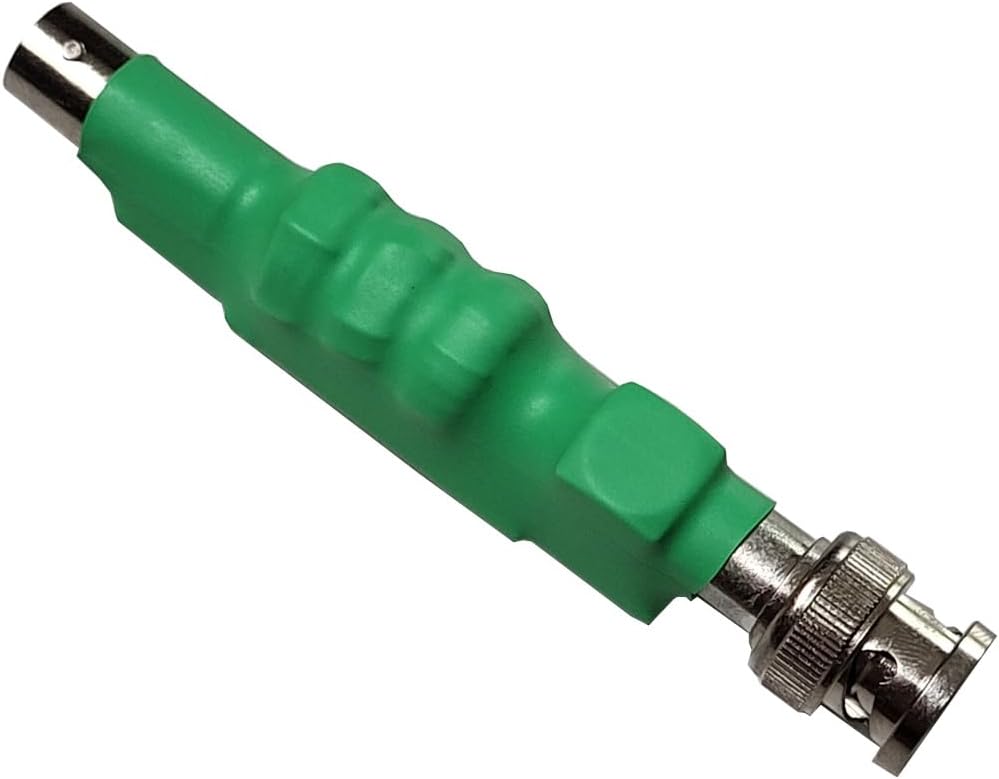
BNC adapters may be required
We may earn a commission when you buy through this link, at no additional cost to you.
Its defining advantage is portability. At 3.7 inches, or 85mm, long and just 35 grams, it can travel in a small pack or sit beside a lightweight transceiver without becoming a burden. The male/female BNC connectors are also friendly to common portable radio accessories, although operators with SO-239 or SMA equipment will need the appropriate adapter.
A 20W limit makes this filter a natural fit for QRP, backpack radio, and lightweight field stations. It should not be judged as a high-power home-station filter, and operators should resist applying it to a transmitter that can exceed its rating. The use of C0G capacitors and Micrometals toroids indicates attention to stable component characteristics, and the product was made in the USA by K9DP.
This is a particularly attractive pick for POTA, SOTA, Field Day, and other portable 20m activities where nearby-band interference can disrupt reception. It also suits a small home radio using low power. For operators prioritizing minimal weight and straightforward 20m selectivity, it is hard to overlook; for a more powerful station, the 100W K9DP BCI filter or a dedicated 200W design is the better match.
Minimal Weight for Field Radio
At only 35 grams, the filter has a negligible effect on pack weight. That makes it particularly suitable for operators who carefully choose every accessory for a hilltop, park, or contest-day setup.
Focused 20m Selectivity
By rejecting energy from nearby bands, the filter can help a QRP station hear wanted activity more clearly. Its male/female BNC arrangement also simplifies some common portable station layouts compared with filters that require two separate adapters.
The 7MHz Band Pass Filter is a dedicated 40m high-power option with a stated 200W capacity, a Type-N female connector, and an anodized aluminum housing. It is intended to improve sensitivity and reduce interference, making it relevant to stations that rely heavily on 7MHz and want a permanent filtering component.
Pros
Strong 200W power designation
Targets popular 40m band
Reduces out-of-band noise
Durable aluminum construction
Designed to improve sensitivity
Cons
No listed customer rating
Only one band is covered
We may earn a commission when you buy through this link, at no additional cost to you.
The 200W rating gives the filter a clear role in a more substantial HF installation. Supporting SSB, CW, AM, FM, and FSK, it can serve a variety of operating modes as long as the radio's actual output and duty cycle remain within the manufacturer's limits. The Type-N connection offers a secure, recognizable station interface, while the aluminum housing suits a fixed installation.
Its single-band focus is both the main strength and the main limitation. A 40m filter can be especially effective when out-of-band noise is the chief concern, but it will not replace a multiband unit for an operator who routinely changes bands. The absence of a listed customer rating means there is no visible review consensus to supplement the specifications, so buyers should ask for or confirm detailed passband and isolation information.
This filter is a solid candidate for 40m-focused home stations, contest operators, and anyone seeking a dedicated high-power filter rather than a portable accessory. It is less suitable for QRP rigs, multiband users, and operators with limited connector options. When the target is clearly 7MHz, a focused high-power filter can be a straightforward way to improve the station's operating environment.
High-Power 40m Performance
The stated 200W capacity makes this filter relevant to conventional HF station outputs rather than only QRP or receive-only installations. Operators should still ensure that the selected mode, carrier level, and duty cycle are appropriate for the device.
Practical Station Integration
The anodized aluminum case and Type-N female connector provide a straightforward fixed-station package. With correct cable and placement, a dedicated 7MHz filter can help reduce the effects of out-of-band noise on a 40m receiver or transceiver.
We may earn a commission when you buy through this link, at no additional cost to you.
Buying Guide – How to Choose the Best Ham Radio Bandpass Filters
The best ham radio bandpass filter depends on the bands you use, transmitter output, connector arrangement, and the kind of interference you need to control. These factors help narrow the list without treating one filter as suitable for every station.
Target Frequency and Bandwidth
Choose a filter whose stated passband matches your operating plan and check whether your activity sits near the band edges.
Transmitter Power Handling
Never install a filter above its stated limit, and leave margin when the radio can exceed its nominal output.
Interference Type
Identify whether the problem is adjacent-band activity, broadcast overload, or broad-band noise before selecting the filter type.
Connector Compatibility
Prefer native station connectors or a planned, properly rated adapter rather than solving a mismatch after installation.
Insertion Loss and Signal Path
Balance rejection against insertion loss, paying particular attention to low-power or weak-signal receiving paths.
Portable or Fixed-Station Use
For field use, prioritize low weight, manageable size, and the correct power class before adding features you will not need.
Filtering Method and Features
Choose the simplest architecture that solves the interference while supporting every mode and device in the signal chain.
Build Quality and Support
Look for documented construction, suitable connectors, credible testing, and clear guidance for the environment where the filter will be used.
How to Use and Care for Your Ham Radio Bandpass Filters
Before installation, confirm the filter's target band, rated power, connector gender, and compatibility with your radio and antenna system. Read the available specifications rather than assuming every filter with the same nominal frequency behaves identically. Position the filter where it can protect the sensitive receiver stage without creating unnecessary cable length or awkward transitions. For a portable setup, a short, supported connection is usually easier to manage than a filter hanging from a connector.
Install good-quality coaxial cable and clean connectors carefully, following the manufacturer's guidance. Do not exceed the stated power or mode limits, and leave an appropriate margin below the maximum. High-power operation also calls for sound station grounding, cable routing that minimizes unwanted coupling, and attention to any product-specific bias requirements. The Nooelec bank, for example, can apply 4.5V bias at its input through a pushbutton, so the connected equipment must be compatible with that arrangement.
Care for the filter by keeping its housing and connectors dry, avoiding impact, and checking attachments after transport. Store portable filters in a protective case so that connector threads are not damaged. Periodically inspect the cable, connector interface, and housing for looseness, corrosion, or discoloration. If reception or transmission behavior changes unexpectedly, test the system without the filter before replacing it, and consult the current manufacturer documentation for the specific model.
Frequently Asked Questions
What does a ham radio bandpass filter do?
A bandpass filter passes signals within a selected frequency range while attenuating signals outside that range. In an amateur radio station, it can reduce adjacent-band interference, limit strong unwanted energy reaching a receiver front end, or protect sensitive equipment. Its usefulness depends on matching the filter's passband, power rating, connectors, and insertion loss to the station.
Is a bandpass filter better than a low-pass filter?
It depends on the interference source and desired operating range. A bandpass filter is useful when you want to isolate a particular amateur band, while a low-pass filter suppresses higher frequencies and can help control harmonic energy or out-of-band transmitter output. Some compact UHF products combine low-pass behavior with a pass-through path, but a bandpass filter is generally the more focused choice for rejecting signals below and above the target band.
Can I use a high-power filter with a low-power radio?
Usually yes, provided the filter's frequency and connector arrangement suit the radio and the impedance path is appropriate. A filter with a higher power rating does not require the radio to operate at that rating. Check that the filter does not introduce unacceptable loss for the operating mode and that its passband includes the frequencies you intend to use.
What power rating should I choose?
Choose a rating above the radio's actual maximum output, with additional margin for the operating mode and duty cycle. The list includes designs rated from 1W on several compact variants to 20W, 100W, and 200W. Never use a filter beyond its specified limit, and do not assume a wattage figure alone guarantees adequate passband loss, isolation, or connector suitability.
What is the difference between isolation and insertion loss?
Isolation describes how strongly the filter attenuates signals outside its intended passband, while insertion loss describes how much signal power is lost as the wanted signal passes through. Strong isolation helps reject interference, but every practical filter also introduces some loss. A good choice provides enough out-of-band rejection for the station without imposing unnecessary loss on the desired signal.
Do I need matching connectors for these filters?
You may need an adapter depending on the radio, amplifier, antenna feed point, and filter connectors. This guide includes Type M female, Type-N female, SMA, BNC, and SO-239 options. Confirm the gender and mounting style of both ends, and use an adapter or cable rated appropriately for the intended power and frequency.
Are portable bandpass filters useful for POTA and SOTA?
They can be, particularly when a station receives unwanted energy from nearby transmitters or other RF sources. The K9DP 100W BCI filter weighs 78 grams, while the QRP 20m filter weighs 35 grams and is limited to 20 watts. Both are explicitly designed with portable operation in mind, but the right model depends on the radio's output, operating band, and the type of interference encountered.
How do I know if a filter is improving my station?
Compare the station's behavior with and without the filter while keeping the same antenna, frequency, mode, and operating conditions. Listen for reduced unwanted signals, less front-end overload, or clearer reception of the target band, while checking that the intended signal remains audible at an acceptable level. If results are unclear, verify the connector, passband, grounding, and installation before attributing the change to the filter.
Final Thoughts on Choosing the Best Ham Radio Bandpass Filters
The leading choices serve different needs. The 14MHz shortwave filter stands out for dedicated 200W operation and a 5.0 rating, while the Nooelec filter bank offers the broadest amateur-band coverage across 2m, 1.25m, 70cm, 33cm, and 23cm. The 10MHz low-loss filter provides a focused, budget-conscious option with a 4.8 rating and insertion loss stated better than 1.3dB.
Prioritize the problem you need to solve before focusing on a general feature list. A 40m or 20m operator should examine dedicated HF filters, an AM-overload victim may find the K9DP BCI filter more relevant, and a portable QRP station should favor low weight over unnecessary power capacity. Verify frequency, power, mode, connector, and insertion loss, and favor a model whose specifications clearly match the equipment in your signal path.
Ratings and product details can evolve, while availability and current prices change over time. Review the latest listing, manufacturer documentation, and customer feedback before ordering, and confirm that the filter's connector and rating fit your station. The right product is not necessarily the one with the widest feature set, but the one that solves your interference problem cleanly and safely.