Our Starlink Ethernet Adapter guide compares products for Gen 2, Gen 3, and Mini systems, highlighting compatibility, port count, wired speed, setup, and
As an Amazon Associate we earn from qualifying purchases. We may earn a commission when you buy through links on this page, at no additional cost to you.As an Amazon Associate we earn from qualifying purchases.Purchases through our links may earn us a commission, at no extra cost to you.
A Starlink Ethernet adapter can turn a satellite connection into a more flexible wired network, reducing reliance on Wi-Fi and helping multiple devices receive stable service. The right model depends on your Starlink generation, router, available ports, and whether you need indoor or outdoor installation.
We compared the listed adapters by examining stated compatibility, supported wired speeds, port counts, installation requirements, housing, cable features, and intended applications. The list includes single-port and multiport options for Starlink Gen 2, Gen 3, and Mini systems rather than treating every adapter as interchangeable.
Each review explains the strongest reason to consider a particular product and any limitations stated in its listing. Our top selections represent simple, well-rated, and feature-focused choices, while product prices and availability can change, so confirm the current details before buying.
Top 3 Picks for Best Starlink Ethernet Adapter
Best Budget
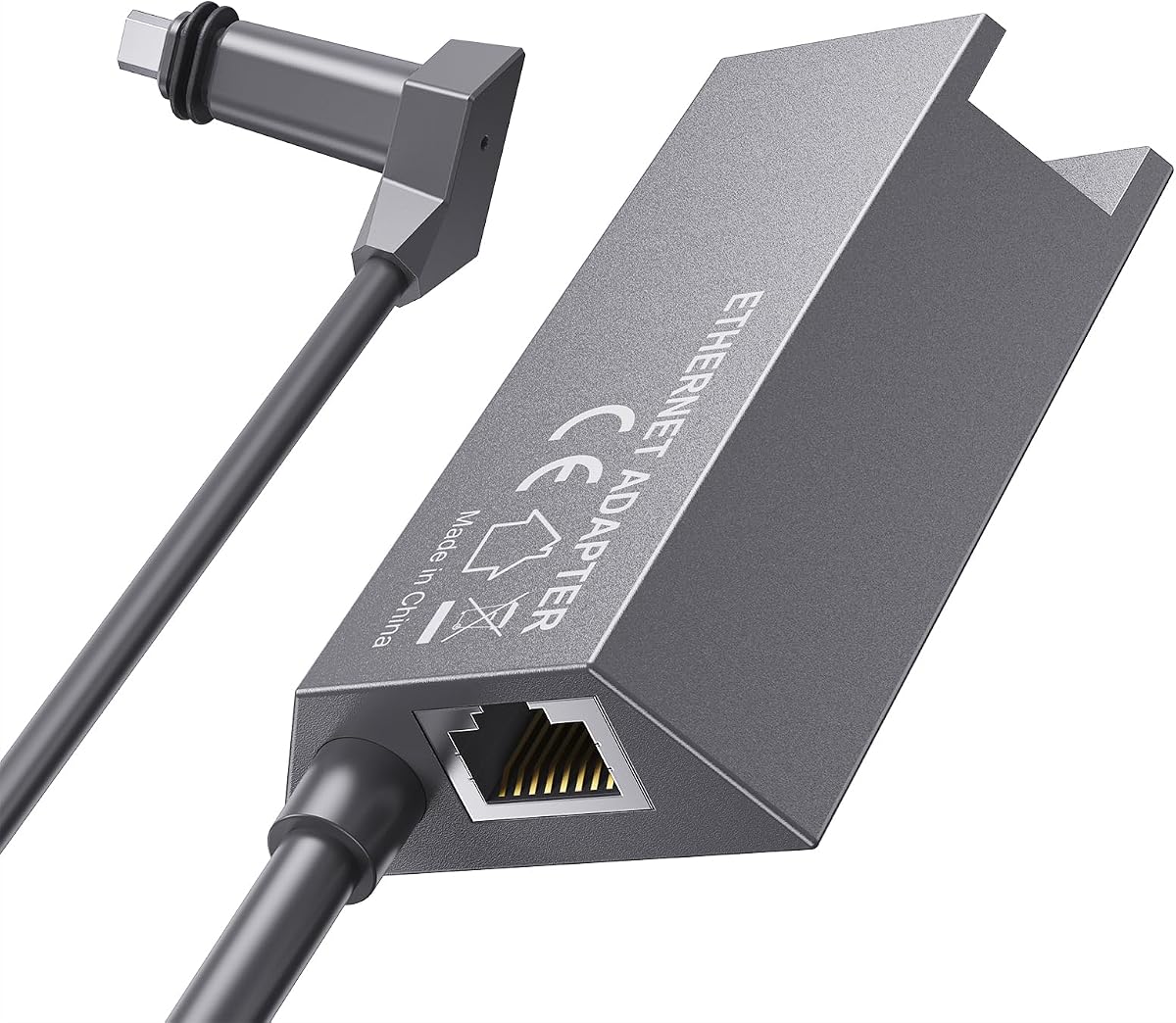
for Starlink Ethernet Adapter Gen 3/Mini, 1000 Mbps 11.8″ Starlink Cable SPX to RJ45 for Starlink V3 (Rev.4) Dish and Router Accessories, Cable Extension to Starlink Gen 3 for House/ Camping (INDOOR)
Top 10 Best Starlink Ethernet Adapter in 2026 Compared
The comparison covers adapters for Starlink Gen 2, Gen 3, and Mini systems, with particular attention to wired speed, port availability, installation style, environmental protection, and supported Starlink hardware.
ProductsSpecificationsEditor scorePrice
1
Editor's Choice
Starlink Ethernet Adapter for Rectangular Satellite Internet V2
Starlink Ethernet Adapter Gen 3/Mini with Cat 5e Gen3 Rj45 Cable Starlink Gen 3 Ethernet Adapter 1 to 4 Devices Networked Simultaneously for Cat 5/5e/6/7/8 Cable Fast & Stable Connection
for Starlink Ethernet Adapter Gen 3/Mini, 1000 Mbps 11.8″ Starlink Cable SPX to RJ45 for Starlink V3 (Rev.4) Dish and Router Accessories, Cable Extension to Starlink Gen 3 for House/ Camping (INDOOR)
Starlink Ethernet Adapter for Rectangular Satellite Internet V2
Rectangular Gen 2
Up to 1 Gbps
RJ45 wired connection
Plug-and-play operation
This rectangular-dish Starlink Ethernet adapter is one of the strongest general choices for owners of the Starlink Actuated Gen 2 system. It carries a 4.6 rating and centers on a simple proposition: place the adapter between the Starlink antenna cable and router, then connect an Ethernet-enabled device to the RJ45 port. That focused design makes it especially useful when a computer, smart television, network switch, or third-party router would benefit from a stable wired path.
Pros
Clear Gen 2 compatibility
Simple installation
Broad device support
Stable wired performance
Compact adapter design
Cons
Excludes kickstand Standard Kit
Only one Ethernet port
We may earn a commission when you buy through this link, at no additional cost to you.
Its standout specification is support for speeds of up to 1 Gbps. The listing describes the adapter as a way to reduce interference associated with wireless connectivity while maintaining a fast, stable link. It also works with a broad selection of Ethernet-equipped devices, including desktop computers, smart TVs, Ethernet switches, and third-party wireless routers, giving it more flexibility than an adapter intended for only one specific category of equipment.
The main limitation is compatibility. It is designed for the Starlink Actuated Gen 2 and the rectangular satellite dish, but it does not work with the latest Starlink Standard Kit that has a kickstand base. It also provides only one RJ45 connection, so users with several wired devices would still need a switch or a multiport alternative. Those constraints matter, but for a compatible system and a single wired endpoint, the design remains direct and useful.
The installation is also a strong point. No drivers are required, and the adapter works with the standard Starlink cable arrangement. Buyers should simply ensure that their hardware is the actuated Gen 2 rectangular-dish setup rather than the newer kickstand-based kit. For that audience, this adapter offers a persuasive mix of straightforward setup, broad device support, and gigabit-class wired performance.
A Simple Path to Wired Connectivity
The adapter is designed to create a direct wired connection without complex configuration or driver installation. That makes it useful for fixed devices that benefit from a consistent Ethernet link and for users who want to integrate the Starlink router with another network device.
One Important Compatibility Check
Before purchasing, check the shape and generation of the Starlink hardware. The product supports the rectangular Actuated Gen 2 system, but the seller explicitly excludes the latest Standard Kit with a kickstand base.
for Starlink Ethernet Adapter,Dual Ports Adapter for StarlinkGen 2
Gen 2 router support
Two RJ45 ports
Up to 1 Gbps
IP65-rated ABS housing
This dual-port Starlink Ethernet adapter is designed for Gen 2 users who want to connect two wired devices at once. Its 4.1 rating reflects a less universally favored product than some higher-rated choices, but the two-port arrangement addresses a common practical limitation: a single RJ45 connection is not enough when a computer, game console, network storage device, television, and other equipment all need access to the network.
Pros
Two wired connections
Broad Gen 2 compatibility
No driver installation
Gold-plated connectors
Supports many device types
Cons
More complex than single-port
Rating trails higher-rated options
We may earn a commission when you buy through this link, at no additional cost to you.
The listing identifies compatibility with Starlink Gen 2 routers paired with Enterprise, mobile High Performance, and Standard Actuated systems. It also lists a broad collection of endpoints, including PCs, Macs, PS5, Xbox consoles, smart TVs, NAS devices, mesh routers, and security systems. Support for up to 1 Gbps makes it appropriate for gaming, streaming, remote work, and large file transfers when the rest of the service and devices can support those speeds.
Physical construction is another differentiator. The adapter uses gold-plated ports, an energy-efficient chip, and an ABS housing with an IP65 rating. The seller also states that it underwent 72-hour industrial stress testing and is intended for continuous operation in multiple environments. These claims suggest a more rugged option than a basic indoor coupler, although buyers should still consider the precise environment where the unit will be installed.
Setup is presented as automatic and driver-free. The adapter is recognized after it is plugged into the Starlink router, creating a stable wired connection without complicated settings. This is a strong choice when two simultaneous RJ45 connections are specifically required. Its two-port design is more useful for a broad home setup than for someone needing only one direct wired device, and verifying the exact router pairing remains essential.
Two Ports Solve a Common Bottleneck
The main benefit is the ability to connect two devices simultaneously without immediately reaching for an external switch. It is a practical middle ground between a single-port adapter and a larger four-port network splitter.
Built for Demanding Network Roles
Gold-plated contacts, an energy-efficient chip, and an IP65-rated enclosure give this model a more industrial profile. That makes it worth comparing closely with simpler adapters if the installation location is exposed to dust or moisture.
Starlink Ethernet Adapter for Standard Actuated Gen 2
Actuated Gen 2 support
Up to 1000 Mbps
Single RJ45 port
Driver-free installation
This Standard Actuated Gen 2 adapter is a well-rated option for users who want one dependable Ethernet connection from a Starlink system. Its 4.5 rating places it among the stronger-reviewed products in the group. The adapter can be used to add or replace an RJ45 port, connect a computer directly, or integrate the outdoor dish with a home mesh Wi-Fi system when more control over the network path is desired.
Pros
High customer rating
Simple installation process
Gigabit wired speed
Supports mesh integration
Useful for rural connections
Cons
Single Ethernet port
Actuated Gen 2 only
We may earn a commission when you buy through this link, at no additional cost to you.
The listing highlights speeds of up to 1000 Mbps, covering common high-speed activities such as work, video calls, gaming, and streaming. It describes the wired approach as offering a more reliable and consistent experience than relying entirely on Wi-Fi, particularly in a rural property where signal distribution and wall construction can complicate wireless coverage.
Installation is presented clearly: unplug the Starlink router, disconnect the antenna cable, insert the adapter into the appropriate router port, reconnect the antenna cable to the adapter, and restore power. Because the process is driver-free, it should appeal to users who want a straightforward physical connection rather than a software-managed network device.
The trade-off is that this is a single-port solution for the Standard Actuated Kit V2. Buyers with more than one wired endpoint will need a switch or a multiport adapter. It is also important not to interpret the claimed speed improvement as guaranteed internet throughput; actual service performance depends on the Starlink subscription, location, network conditions, and connected equipment. Within those limits, it is a focused and highly rated choice.
Clear Four-Step Installation
The adapter changes the physical path between the antenna and router without requiring driver installation. Its direct setup process reduces uncertainty for first-time Starlink owners.
A Better Fit for Fixed Devices
Connecting a desktop directly can reduce unnecessary wireless variability. The adapter may also be useful when bridging Starlink with a mesh system, provided the setup and cabling are planned correctly.
Multi Ports Starlink Standard 4X/Gen 3/Mini Ethernet Adapter with Cable
Gen 3 and Mini
Four RJ45 ports
Ethernet cable included
Setup instructions included
This multiport adapter is intended for Starlink Standard 4X, Gen 3, and Mini portable-dish users who need more than one wired connection. It provides four RJ45 ports, allowing a household to connect a computer, television, game system, and another network device without relying exclusively on Wi-Fi. The product has a 4.2 rating and adds value by including a cable and setup instructions.
Pros
Supports four devices
Includes Ethernet cable
Supports Gen 3 and Mini
Instructions included
Stable wired networking
Cons
Not compatible with Mini X
Port speed not explicitly stated
We may earn a commission when you buy through this link, at no additional cost to you.
The product is positioned for scenarios where wired reliability is important, including videoconferencing and online gaming. Rather than sending every device through the wireless network, the adapter creates a more direct multi-device path. Its four-port format is especially convenient for a home office, media area, or a Starlink installation that already includes several Ethernet-capable products.
Compatibility is the most important qualification. The listing says the adapter supports the Standard 4X and Gen 3 systems as well as the Starlink Mini portable dish, but it explicitly does not support the Starlink Mini X. The broad product title could otherwise cause confusion, so buyers should verify the precise model and revision of their equipment before ordering.
Another limitation is that the product information does not prominently state a maximum data rate for its four ports, unlike several competing listings that explicitly advertise 1 Gbps or 1000 Mbps support. That does not mean the adapter cannot carry fast traffic, but it provides less detail for buyers making a direct speed comparison. Overall, it remains a practical choice for compatible systems where four wired outputs and an included cable matter most.
Four Wired Endpoints in One Adapter
Four RJ45 ports make this model practical for mixed-device homes. It can serve fixed equipment that benefits from Ethernet without requiring several separate adapter units.
Check the Exact Mini Model
The listing distinguishes the supported Mini portable dish from the incompatible Mini X. Confirming the hardware revision before purchase can prevent an otherwise straightforward installation from becoming frustrating.
Starlink Ethernet Adapter Gen 3/Mini with Cat 5e Gen3 Rj45 Cable Starlink Gen 3 Ethernet Adapter 1 to 4 Devices Networked Simultaneously for Cat 5/5e/6/7/8 Cable Fast & Stable Connection
Gen 3 and Mini
Four Gigabit ports
Cat 5e cable included
Dual-color status LEDs
This Gen 3 and Mini adapter combines a four-port network hub with an included Cat 5e cable. Its 3.9 rating is the lowest among the listed products, so it deserves a more measured recommendation, but the underlying feature set remains useful for buyers who want up to four wired devices and prefer a package that includes the necessary cable.
Pros
Four simultaneous connections
Cat 5e cable included
Snug Gen 3 fit
Status indicators included
No driver installation
Cons
Lowest product rating
Long and complex product title
We may earn a commission when you buy through this link, at no additional cost to you.
The adapter is designed around the shape of the Starlink Mini and Gen 3 hardware. The listing emphasizes custom contours, aligned button arcs, and a snug fit intended to keep the original device secure without the forced fit associated with more universal designs. That specificity is valuable if the visual fit and stability of the connection are priorities.
Its four Gigabit ports are advertised as supporting up to 1000 Mbps per connection, while the included Cat 5e cable is also described as capable of 1 Gbps transfer. LED indicators provide a quick way to view port status, and the plug-and-play design removes the need for drivers or advanced configuration. The listing also states that the unit underwent 72-hour full-load testing.
The product is less compelling for buyers who place the greatest weight on customer ratings or a highly compact package. It includes a separate Cat 5e cable and uses a more elaborate product design than a basic one-port coupler. Nevertheless, the combination of four ports, included cabling, and a stated 1 Gbps ceiling is compelling for compatible users who want a ready-to-install multi-device solution.
A Complete Multi-Device Package
The included Cat 5e cable removes the need to select a compatible lead separately. Buyers can move directly from connecting the adapter to attaching their wired network devices.
A Purpose-Built Physical Fit
Contoured attachment points are designed specifically for the listed Gen 3 and Mini systems. This focused geometry may appeal to users who want an adapter that sits securely rather than relying on a loose universal connection.
for Starlink Ethernet Adapter for Rectangle Dish Satellite Internet V2
Rectangular Gen 2
Up to 1000 Mbps
Single RJ45 port
Driver-free installation
This rectangular-dish Gen 2 adapter is designed to integrate a Starlink system into a home or business network while adding or replacing an RJ45 connection. It has a 4.1 rating and shares several fundamentals with other single-port rectangular-dish adapters, including support for speeds up to 1000 Mbps and a driver-free installation process.
Pros
Can replace faulty RJ45
Supports mesh network integration
Simple power-off installation
Gigabit speed support
Broad online use cases
Cons
Only one Ethernet port
Specific rectangular-kit requirement
We may earn a commission when you buy through this link, at no additional cost to you.
One particularly useful use case is replacing a faulty Ethernet port on a device. Instead of replacing the entire router or relying on an unreliable connection, the adapter can provide a dedicated wired path from the Starlink system. The listing also suggests connecting the Starlink dish to an existing mesh Wi-Fi system, which can help extend network availability through areas affected by walls or weak wireless coverage.
The installation sequence is clearly explained: remove the router's power, unplug the antenna cable, insert the adapter into the relevant router port, reconnect the antenna cable to the adapter, and restore power. This process is appropriate for the Standard Actuated Kit V2 with a rectangular dish. It does not need special drivers, making the product accessible to users without advanced networking experience.
As with other one-port choices, its main limitation is limited expandability. A PC can receive a direct connection, but multiple wired devices would require an additional switch. Claims about dramatically improved speeds should also be understood as descriptions of the adapter's intended benefits rather than guaranteed service results. For a compatible rectangular Gen 2 setup needing one dependable RJ45 path, it remains a capable option.
Useful as a Port Replacement
A dedicated adapter can bypass a damaged RJ45 interface. That makes it a potentially economical repair option for users who do not need to replace an entire network device.
Integration With Mesh Networks
The product can be used as part of a wider home-network plan rather than as the only connection method. This allows wired Starlink service to feed a mesh system that distributes connectivity throughout the property.
Starlink Ethernet Adapter Gen 3/Mini, IP68 Waterproof Standard V3/Mini Dish and Router Connector, Starlink Cable Extension to RJ45 Ethernet Cable Interface
Gen 3 and Mini
IP68 waterproof kit
Up to 1200 Mbps
24AWG pure copper
This IP68-rated Gen 3 and Mini adapter is built for installations where the Starlink connection must be extended outdoors. Its 4.4 rating reflects a well-regarded option with a clear environmental advantage: the product listing describes a robust waterproof kit for protecting the connection from moisture, dirt, and other outdoor conditions.
Pros
Strong outdoor protection
No cable cutting required
Supports long cable runs
Metal shielding reduces interference
Works with Gen 3 and Mini
Cons
Cable length not included
Speed depends on installation
We may earn a commission when you buy through this link, at no additional cost to you.
The adapter connects to standard Ethernet cable without requiring the original Starlink cable to be cut and crimped. Its 24AWG pure-copper construction is advertised for strong signal transmission at up to 1200 Mbps, while a full-metal shielding layer is intended to reduce interference. The seller recommends keeping the Ethernet run under 175 feet, or 50 meters, to maintain reliable operation and minimize potential signal loss.
That cable guidance makes the adapter more useful for planned installations than for an improvised short extension. It could be particularly relevant when the router or another Ethernet endpoint is not positioned directly beside the dish connection and the cable must travel along a roof, wall, or other exposed route.
The product is not described as a multiport network splitter, so it is primarily a connector and extension interface. Users should plan to connect a single Ethernet lead or use an appropriately placed switch when additional wired endpoints are needed. Despite that limitation, the strong IP68 protection, shielded construction, and straightforward RJ45 conversion make this a compelling choice for compatible Gen 3 and Mini owners focused on outdoor reliability.
Protection for Exposed Connections
The IP68 waterproof kit is the defining feature for users routing a cable outdoors. It is particularly relevant for installations that expose the connection to rain, dust, dirt, and changing weather conditions.
Extend Without Cutting the Cable
The adapter allows standard Ethernet cable to be used without cutting or crimping the original Starlink wiring. This can make extensions and repairs more predictable while keeping the supplied connection intact.
Starlink Ethernet Adapter Gen 2 for Wired External Network, Starlink RJ45 Gigabit Ethernet Adapter Support High Speed 1000Mbps
Actuated Gen 2 support
Up to 1000 Mbps
Compact portable housing
Plug-and-play setup
This compact Gen 2 adapter is designed for users who want a direct, stable Ethernet connection to the Starlink router. Its 4.0 rating places it in the middle of the group, but the product is straightforward: it supports speeds up to 1 Gbps, requires no drivers, and works with a broad range of Ethernet-enabled devices.
Pros
Compact portable form
No driver installation
Gigabit wired connection
Broad Ethernet device support
Simple connection process
Cons
Excludes kickstand Standard Kit
Only one RJ45 port
We may earn a commission when you buy through this link, at no additional cost to you.
The adapter is intended for the Starlink Standard Actuated Kit and can reduce the interference that sometimes affects wireless connections. That makes it relevant to a desktop, smart television, switch, or other device that remains in one location. Its stated gigabit capability is suitable for common high-speed tasks, although the real connection remains limited by the Starlink service, router, and local network.
Portability is part of the product's appeal. The listing describes a compact and portable design, which may be useful for temporary installations or for users who need to move between compatible Starlink setups. The plug-and-play approach means installation does not depend on operating-system drivers or complicated configuration steps.
Compatibility remains the decisive factor. It is only compatible with the Actuated Gen 2 system and explicitly does not work with the latest Standard Kit using a kickstand base. It also has one RJ45 port, so a user with several wired devices will still need a switch. For a compatible owner seeking a small and uncomplicated adapter, it checks the essential boxes.
Compact and Easy to Carry
The small housing is easier to incorporate into a tidy installation than a larger multiport unit. It can also be moved between compatible Starlink arrangements without carrying additional configuration software.
A Stable Alternative to Wi-Fi
For stationary equipment, a direct Ethernet path can offer a more consistent experience than wireless connectivity. The benefit is most apparent where walls, distance, or congestion make a wireless link less dependable.
for Starlink Ethernet Adapter Gen 3/Mini, 1000 Mbps 11.8″ Starlink Cable SPX to RJ45 for Starlink V3 (Rev.4) Dish and Router Accessories, Cable Extension to Starlink Gen 3 for House/ Camping (INDOOR)
Gen 3 and Mini
Up to 1000 Mbps
IP67 waterproof seal
11.8-inch cable
This SPX-to-RJ45 adapter has a 4.8 rating, the highest among the listed products, making it a compelling value-oriented pick for compatible Starlink users. It supports the Starlink Gen 3 Standard and Mini dishes and routers, uses an 11.8-inch cable, and provides a straightforward way to connect the Starlink interface to a standard Ethernet port.
Pros
Highest customer rating
Simple RJ45 conversion
No cutting or crimping
Compact 11.8-inch lead
Suitable for camping setups
Cons
Short fixed cable length
Single RJ45 connection
We may earn a commission when you buy through this link, at no additional cost to you.
The adapter supports data rates up to 1000 Mbps over Cat 5e or Cat 6 cabling. Its sealed design includes an IP67-rated waterproof rubber ring, allowing the connection to be used in home or camping environments where moisture could otherwise affect an exposed joint. The focus is on a stable and convenient connection rather than adding multiple ports.
Installation is simplified by the integrated Starlink connector and T568B RJ45 female port. There is no need to cut or crimp the original Starlink cable, which can reduce installation errors and preserve the supplied wiring. The short, compact format is particularly helpful for temporary setups where a full-length cable would be inconvenient.
The main limitation is its 11.8-inch cable length. This is not a general-purpose long extension solution, and users needing more distance will require a different product or a carefully planned cable arrangement. It also supplies only one RJ45 endpoint. Even so, for Gen 3 or Mini owners seeking a highly rated, compact, waterproof, and uncomplicated converter, this is an excellent first choice.
A Compact Adapter for Tight Setups
The 11.8-inch lead is suited to close-range connections, travel, and camping arrangements. It can be especially convenient where a long cable would be difficult to route or store.
Weather-Sealed Connection
The IP67-rated sealing ring adds environmental protection around the connection. While it does not make every part of a Starlink installation waterproof, it addresses a common concern for portable and exterior use.
Ethernet Adapter for Starlink Gen3/Mini, 4 Port RJ45 GbE Network Splitter
Gen 3 and Mini
Four Gigabit Ethernet ports
9–60V power support
Aluminum alloy housing
This four-port network splitter is the most feature-focused option in the group. It carries a 4.6 rating and is designed specifically for Starlink Standard Gen 3 and Mini antennas. The adapter converts the satellite connection into a stable wired network with four independent RJ45 Gigabit Ethernet ports, allowing computers, game devices, televisions, cameras, and other equipment to connect simultaneously.
Pros
Four gigabit Ethernet ports
Premium aluminum construction
Broad power input range
Wide operating temperature range
No complex configuration
Cons
Requires power connection
Larger than basic adapters
We may earn a commission when you buy through this link, at no additional cost to you.
Its premium distinction comes from the combination of a four-port design, an aviation aluminum alloy shell, and a broad 9–60V power input range. The aluminum housing is designed to improve heat dissipation, while the wide voltage support is intended to prevent disconnections caused by fluctuating power conditions. The stated operating range is from -20°C to 60°C, making the enclosure suitable for demanding indoor or outdoor network environments.
Cable construction is another premium detail. The connecting cable uses a 16AWG tinned pure-copper core, and its jacket is made from UL-certified fire-resistant and temperature-resistant rubber rated from -30°C to 105°C. A built-in chip supports plug-and-play operation, so no complicated settings are required once the unit is connected.
The trade-off is size and the presence of a power connection. A basic passive coupler is smaller and easier to carry, while this product functions as a more substantial network splitter. It is best for owners of compatible Gen 3 or Mini systems who want multiple wired endpoints, robust construction, and flexible power compatibility from one dedicated unit.
Four Independent Gigabit Connections
The four-port layout supports a broad mix of wired devices without requiring a separate basic adapter for each one. With advertised gigabit operation, it is well suited to fixed entertainment, computing, and surveillance equipment.
Premium Materials and Power Support
The aluminum shell, copper cable core, temperature-resistant jacket, and 9–60V input work together to support stable operation. These details make the splitter more appropriate for demanding installations than a basic one-port coupler.
We may earn a commission when you buy through this link, at no additional cost to you.
Buying Guide – How to Choose the Best Starlink Ethernet Adapter
The most important buying factors are exact Starlink hardware compatibility, the number of wired endpoints, installation environment, and whether a simple connector or a powered network splitter best matches the intended setup.
Confirm Your Starlink Generation
Starlink adapters are not interchangeable across every dish, router, and service configuration. The products in this guide include units for the rectangular Actuated Gen 2 system, Starlink Gen 3 and Standard 4X systems, and the Mini portable dish. One listing explicitly excludes the latest Standard Kit with a kickstand base, while another multiport product states that it is not compatible with the Mini X. Check the model designation of the dish and router, not merely the brand, before choosing an adapter.
Choose only an adapter explicitly listed for your hardware generation. If the listing names a standard, high-performance, mobile, or enterprise pairing, verify that your particular router falls within it. When a product description conflicts with the broad title, the detailed compatibility notes deserve close attention.
Choose the Required Port Count
A single RJ45 port is sufficient for one direct wired device, such as a desktop computer or smart television. Two-port adapters serve two simultaneous endpoints, while four-port splitters are more convenient for homes with several Ethernet-capable devices. Consider whether the devices can share a switch instead, because a multiport adapter may provide a cleaner central installation.
Match the port count to the number of wired endpoints. Avoid paying for unnecessary complexity if only one connection is required, and avoid adding a separate switch if the multiport unit offers the required capacity in a single package.
Understand the Advertised Speed
Most listed products advertise 1000 Mbps or 1 Gbps wired operation, while the IP68 cable extension states support up to 1200 Mbps. These figures describe the maximum capability of the adapter or cable under suitable conditions, not the guaranteed speed of the Starlink internet service. Actual performance also depends on the subscription plan, local network congestion, device capabilities, cable quality, and distance.
Use speed ratings to screen out products that cannot support your requirements, but do not treat them as a promise of identical internet throughput. A gigabit-class port gives a wired device room to operate, even when the active satellite connection is slower.
Assess Indoor or Outdoor Use
An indoor adapter near the router has different environmental requirements from a connector mounted on an exterior wall, roof, or portable camping setup. The IP68 outdoor extension is designed for moisture and dirt resistance, while the shorter SPX adapter includes an IP67 sealing ring. Products with metal housings or temperature-resistant cables may also be preferable for exposed installations.
Consider rain, direct sunlight, dust, temperature changes, and cable movement. An IP rating adds useful protection, but it does not mean the entire Starlink system can be exposed. Follow the guidance for the dish, router, power equipment, and all connected cables.
Determine Whether Power Is Needed
Simple Gen 2 and short extension adapters generally provide a direct physical connection and do not describe powered network electronics. The four-port premium splitter includes a built-in chip, heat-dissipating housing, and broad 9–60V power input. This architecture suits a permanent installation with several network devices, but it is larger and requires a suitable power source.
Choose a passive-style adapter for a compact, uncomplicated point-to-point connection. Choose a powered splitter when you value multiple simultaneous ports, a stable central network hub, and stronger environmental and power-management specifications.
Check Included Cable Details
Some adapters include a Cat 5e cable, while the outdoor extension is designed to accept Ethernet cable chosen by the user. The included Cat 5e options support fast connections, but the length may not suit every installation. Short 11.8-inch leads are useful for close-range and portable configurations, whereas longer outdoor runs require appropriate Ethernet cable and careful distance planning.
Confirm whether a cable is included before adding a separate purchase. If it is not included, plan the route, select an appropriate category, and keep the run within the manufacturer's stated guidance. For the IP68 product, the listing recommends keeping the Ethernet cable under 175 feet, or 50 meters.
Review Installation Requirements
Most products use a plug-and-play approach and require no driver installation. The typical Gen 2 process involves disconnecting router power, removing the antenna cable, inserting the adapter, reconnecting the cable, and restoring power. The four-port products are more substantial and may require both the Starlink connection and an appropriate power lead. Always follow the instructions included with the selected product and the official guidance for the Starlink equipment.
Favor adapters with a clear physical procedure and minimal software dependency. This makes installation easier for temporary setups, reduces troubleshooting, and avoids the need for advanced network configuration.
Compare Construction and Device Support
Housing material, port finish, shielding, status indicators, and operating temperature can distinguish basic adapters from more specialized models. Gold-plated ports, an aluminum alloy case, metal shielding, or status LEDs may be useful in a permanent installation. At the other end of the range, a compact coupler with a short lead may be more appropriate for travel or a closely positioned router.
Choose construction based on the environment rather than on appearance alone. A premium housing is most valuable when the adapter will remain in a demanding location, while a simple unit is often sufficient for a protected indoor installation near the router.
How to Use and Care for Your Starlink Ethernet Adapter
Before connecting any adapter, identify the dish and router generation and compare it with the compatibility information in the product listing. Turn off and unplug the Starlink router, disconnect the antenna cable, and allow enough time to handle the connectors without strain. If a multiport splitter requires external power, connect its power lead only as directed by the included instructions.
Install the adapter in the specified position between the Starlink system and the Ethernet equipment. For a typical Gen 2 installation, the antenna cable connects to the adapter and the Ethernet cable runs from the adapter to the router or target device. For multiport models, connect each supported device to an available RJ45 port, taking care not to bend the cables sharply at the connector.
Restore power and allow the network to initialize. Confirm wired connectivity through the connected device or router, and check any status indicators on the adapter. Keep connectors dry unless the product has a suitable waterproof rating, avoid exceeding the recommended cable length, and periodically inspect outdoor runs for damage, looseness, water intrusion, and cable strain.
Frequently Asked Questions
Which Starlink Ethernet adapter works with the rectangular dish?
Adapters specifically labeled for the rectangular Starlink V2 or Standard Actuated Kit V2 are the relevant choices. Two products in this guide make that claim, while several others are designed for Gen 3 or Mini hardware. The latest Standard Kit with a kickstand base is expressly excluded by some Gen 2 listings, so the exact model should always be verified before purchase.
Do I need a multiport adapter for several Ethernet devices?
Not necessarily. A single-port adapter can serve one wired device, while an external Ethernet switch can add more ports to that connection. A two- or four-port adapter may be tidier when the goal is a single central installation, particularly for users who want the product to handle several simultaneous connections directly.
Does a 1 Gbps adapter guarantee 1 Gbps internet speeds?
No. The 1 Gbps or 1000 Mbps figure describes the adapter's stated wired transmission capability. Actual internet speed depends on the Starlink service, location, router, local network congestion, Ethernet cable, and connected devices. A gigabit-capable adapter is still useful because it does not restrict a wired device to an older 100 Mbps interface.
Can I use a Starlink Ethernet adapter outdoors?
Only when the adapter and the rest of the installation are suitable for the exposure. The IP68 extension and the IP67-sealed short adapter offer stated environmental protections, but the router, connectors, power supply, and cables must also be rated appropriately. Follow local electrical guidance and the official Starlink instructions for outdoor equipment.
Do these adapters require software or driver installation?
The listed products are described as plug-and-play and do not require drivers. Basic installation involves physically connecting the adapter, antenna cable, router, and Ethernet devices. Multiport models may also need an appropriate power connection, but their listings do not describe complex software configuration.
Will a Starlink Ethernet adapter improve my Wi-Fi coverage?
It can help if the adapter is used to connect Starlink to a mesh router or another wired network device. In that arrangement, the wired connection becomes the backbone and the mesh system distributes Wi-Fi around the property. It will not automatically improve every Wi-Fi issue, and placement, interference, and the capabilities of the mesh equipment still matter.
Can I cut and crimp the original Starlink cable?
It is better to use an adapter designed to avoid modifying the supplied cable. Several products in this guide explicitly state that the original Starlink wiring does not need to be cut or crimped. This preserves the intended connection and makes installation or later relocation easier, especially for portable setups.
What Ethernet cable length should I use?
The appropriate length depends on the adapter. The IP68 extension includes guidance to keep the Ethernet run under 175 feet, or 50 meters, for reliable operation. Other products include a short fixed lead or a Cat 5e cable, so check what is supplied before planning a longer custom run. Standard Cat 5e or higher-quality Ethernet cable is suitable for the stated gigabit applications.
Final Thoughts on Choosing the Best Starlink Ethernet Adapter
The top selections cover three different needs. The SPX Gen 3 and Mini adapter is a highly rated, compact choice for a simple conversion, the rectangular Actuated Gen 2 adapter is an overall option for compatible Gen 2 owners, and the four-port Gen 3 and Mini splitter is the premium pick for users who want multiple powered Gigabit connections in one unit.
Prioritize exact hardware compatibility above every other feature. After confirming the dish and router generation, choose the number of ports required, consider whether the adapter will be used indoors or outdoors, and verify whether a cable and power connection are included. These details will determine whether the adapter integrates cleanly or creates installation problems.
Product prices and availability can change, so review the current listing, package contents, compatibility notes, and return terms before ordering. Taking a few minutes to verify the exact Starlink model can prevent an otherwise inexpensive adapter from becoming the wrong purchase.
Our AI Smart Vending Machine for Businesses guide compares 10 models across capacity, AI checkout, payments, remote management, refrigeration, and space needs.
Discover the best golf bag speakers for October 2026, comparing waterproofing, battery life, mounting options, sound quality, GPS features, and portability.