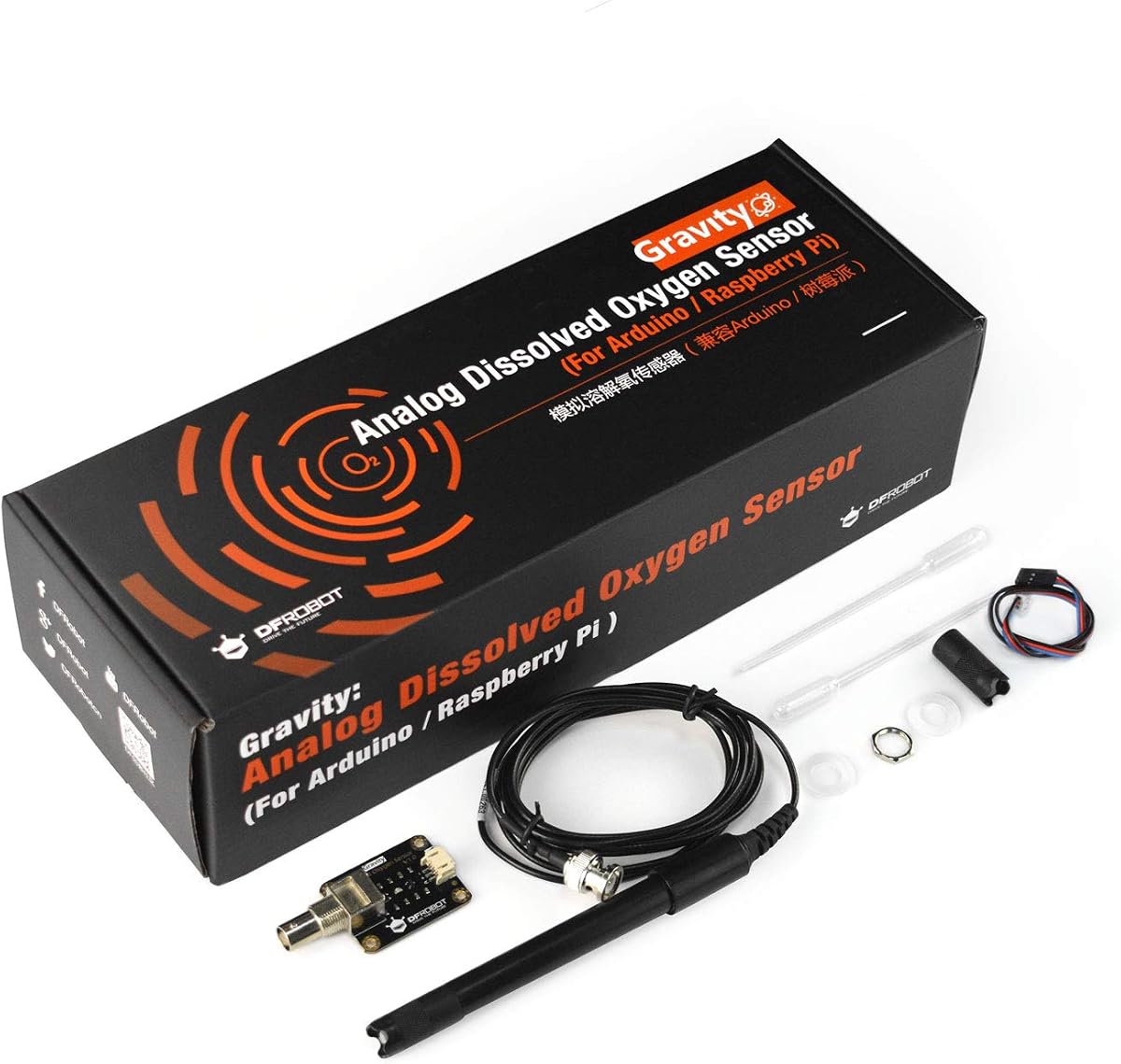
Gravity Analog Dissolved Oxygen Sensor Kit
4.4Editor score
Galvanic probe needs no polarization
Works with common maker boards
Replaceable membrane and filling solution
Compare dissolved oxygen sensors for aquariums, ponds, aquaculture, hydroponics, labs, and field use, including accuracy, range, calibration, and maintenance.
Dissolved oxygen sensors help users measure how much oxygen is available in water, making them essential for aquariums, ponds, aquaculture, hydroponics, wastewater analysis, environmental monitoring, and laboratory work. A useful sensor should combine an appropriate measurement range with dependable temperature compensation, straightforward calibration, and maintenance requirements suited to the environment.
This guide compares ten dissolved oxygen sensor options ranging from maker-friendly analog kits to handheld, portable, optical, galvanic, and polarographic instruments. The comparison considers sensor technology, supported measurements, calibration methods, accessories, environmental features, and practical maintenance needs rather than treating every model as suitable for the same application.
Each pick shows what distinguishes one option from the others, from low-power Arduino and Raspberry Pi compatibility to rugged handheld construction and minimal-maintenance optical probes. Ratings reflect the supplied product information, while features and limitations are based on the listed specifications. Product availability, configurations, and prices can change, so confirm current details before purchasing.
4.4Editor score

4.8Editor score

4.8Editor score
The table below places all ten options side by side, emphasizing the distinctions that matter most: sensing method, measurement capability, calibration approach, portability, and maintenance model. The list includes both complete meters and standalone sensors intended for integration with other equipment.


The Gravity Analog Dissolved Oxygen Sensor Kit is an appealing choice for builders who want dissolved oxygen data inside a custom Arduino, ESP32, or Raspberry Pi project. Its supplied rating is 4.4, and the standout feature is a galvanic probe that avoids the pre-heating and polarization delay associated with many polarographic systems. A 0–20 mg/L detection range fits ordinary aquarium, pond, aquaculture, and educational monitoring tasks.
We may earn a commission when you buy through this link, at no additional cost to you.
The integrated converter is designed to make implementation less difficult. It provides hardware filtering for a smoother, lower-jitter analog signal, supports a 3.3–5.5V operating range, and uses the familiar Gravity three-pin interface. This is particularly useful for intermittent-power and low-power IoT installations where a fast-reading probe is more useful than a continuously operating laboratory instrument.
There are important compromises. The package does not include the required 0.5 mol/L NaOH filling solution, and the sensor cannot function without it. The probe also uses replaceable consumables rather than being entirely maintenance-free. Builders should also account for analog-to-digital conversion on Raspberry Pi, as an ADC module is required there.
Overall, this is the strongest option for a programmable monitoring build rather than a ready-to-read handheld meter. Choose it when you want control over logging, alerts, display integration, or remote reporting. The documentation, wiring diagrams, open-source code, and single-point or two-point calibration support make it especially attractive to users comfortable assembling electronics themselves.
The no-polarization galvanic design reaches 98% of its full response in about 90 seconds at 25°C. That makes the kit more compatible with intermittent power than probes that need prolonged warm-up, while the filtered analog output simplifies downstream signal processing.
Open-source algorithms, diagrams, and one- or two-point calibration options reduce the amount of custom engineering required. The result is a flexible foundation for aquaculture alerts, hydroponic root-zone monitoring, classroom projects, and other connected water-quality systems.
We may earn a commission when you buy through this link, at no additional cost to you.
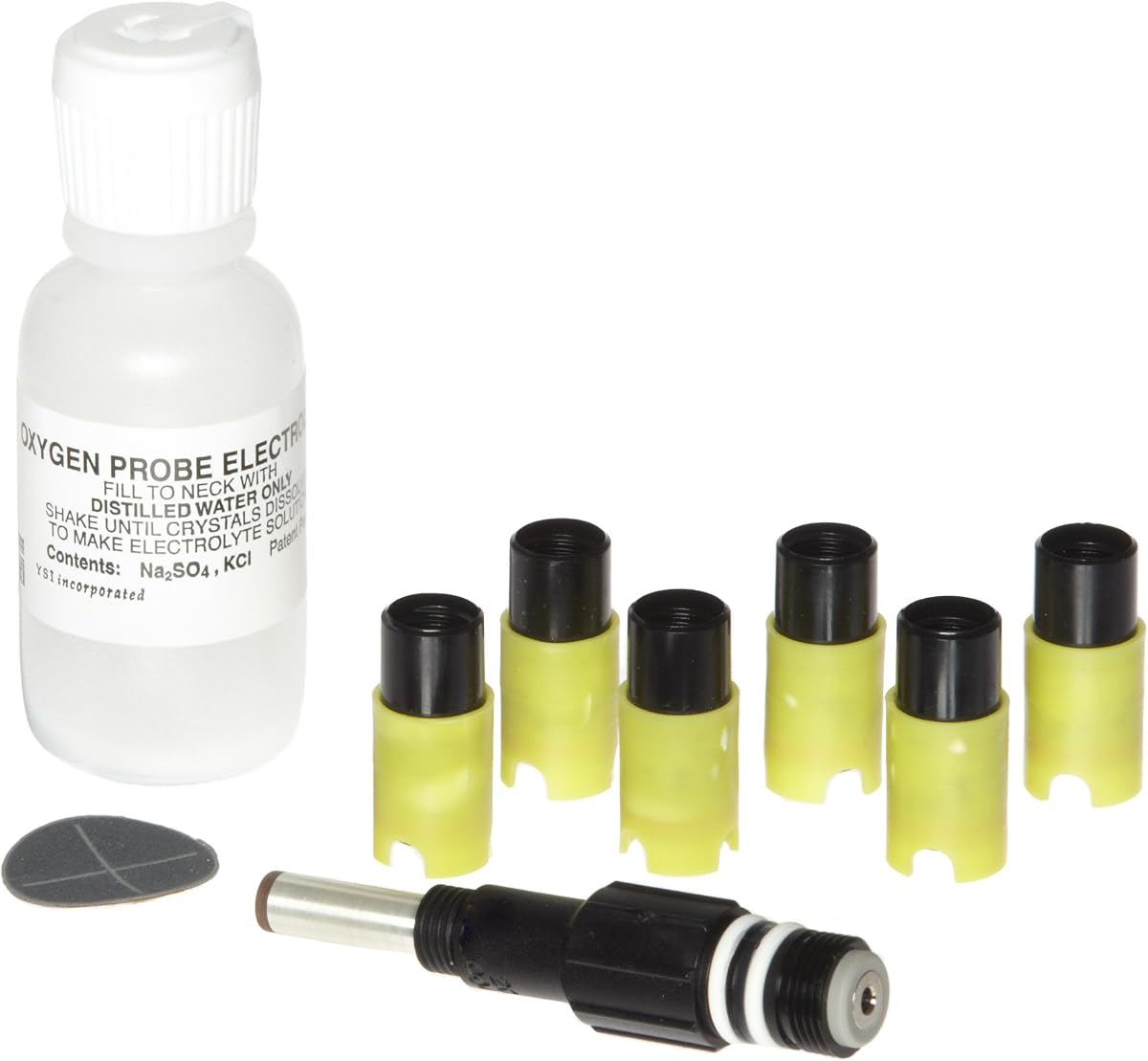
The YSI-605202 Pro Series Galvanic Dissolved Oxygen Sensor carries a 4.8 rating, placing it among the strongest-rated products in this guide. It is designed for users who value dependable professional sensor construction and straightforward upkeep. Rather than forcing the user to preserve an aging probe, the system permits quick sensor replacement without tools.
We may earn a commission when you buy through this link, at no additional cost to you.
Its screw-on membrane design simplifies the most important routine service task. The package includes six membrane caps and a bottle of solution, reducing the likelihood that a facility will experience a delay when consumables need attention. A galvanic sensor is also a logical choice for applications requiring repeatable measurements without a conventional polarographic sensing approach.
This is a standalone professional sensor rather than a complete handheld meter. It is therefore most appropriate for users with compatible YSI instrumentation or an existing multiparameter platform. Buyers should verify connection compatibility, output requirements, and intended deployment method before ordering, especially if a display, data logger, or controller is not already available.
For professional aquiculture, laboratory, or water-quality programs that value easy replacement and organized consumables, the 605202 is a compelling choice. Its high rating, simple service process, and included maintenance materials make it our Editor's Choice. It is less suitable for a first-time buyer seeking an all-in-one screen and standalone probe cable.
Tool-free sensor replacement and screw-on caps make servicing more approachable. Including six caps and solution gives operators a useful initial stock of consumables and helps keep preventive maintenance on a predictable schedule.
The professional-series format makes this sensor most attractive to users who already work with compatible monitoring equipment. It can complement a structured measurement system without adding the bulk of a full handheld meter to every sampling point.
We may earn a commission when you buy through this link, at no additional cost to you.
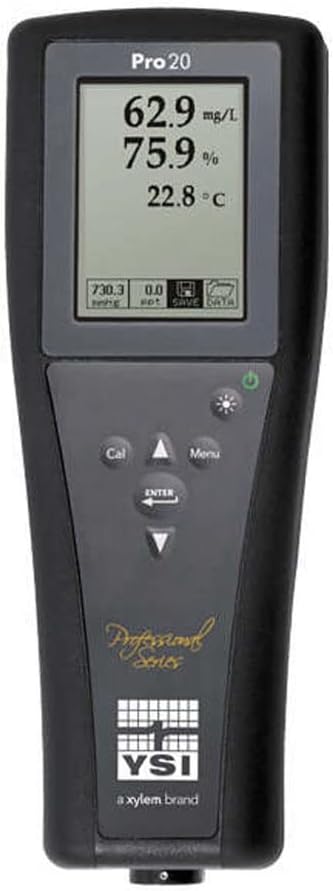
The YSI 6050020 Pro20 Handheld Dissolved Oxygen Meter is designed for operators who need quick, field-friendly readings without managing a permanently installed monitor. Its supplied rating is 4.4. The One Touch Cal feature is the main attraction, allowing dissolved oxygen calibration within approximately three seconds with a button press.
We may earn a commission when you buy through this link, at no additional cost to you.
Automatic barometric pressure compensation improves the practical accuracy of measurements taken in changing weather or elevation. The meter can store 50 data sets, reducing reliance on handwritten notes during pond surveys, aquaculture checks, or environmental sampling. A graphic backlit display and glow-in-the-dark keypad also support use in dim conditions.
The important procurement detail is the meter-only designation. The listing does not state that a probe or complete sampling kit is included, so buyers should inspect the current package contents carefully. This distinction matters for first-time users who might expect a ready-to-use field instrument.
Choose the Pro20 when rapid calibration, stored observations, and handheld convenience outweigh the need to carry a full multi-parameter kit. It is particularly well suited to users who already understand the instrument ecosystem or can confirm the appropriate probe compatibility. Confirming the package configuration before ordering can prevent an incomplete setup.
The advertised three-second One Touch process can reduce delays when a user is moving between multiple water samples. It suits repeat visits where prompt verification and adjustment are more valuable than elaborate menu interaction.
Storage for 50 data sets is useful for short campaigns and routine site inspections. The illuminated interface improves readability, while the glow-in-the-dark keypad helps users locate controls in low-light working environments.
We may earn a commission when you buy through this link, at no additional cost to you.
The YSI 6900 ProDSS ODO Optical Dissolved Oxygen Sensor is a specialized professional option built around the ProDSS platform. It is not supplied as a basic handheld meter, and the listing identifies it as an optical dissolved oxygen sensor. That focus makes it most relevant to users assembling or expanding a professional multiparameter monitoring configuration.
We may earn a commission when you buy through this link, at no additional cost to you.
Optical sensing is the defining technical feature. Compared with conventional membrane-based approaches, this technology is commonly associated with lower routine maintenance because the sensing method does not depend on the same consumable electrolyte and membrane replacement cycle. The supplied data does not list a customer rating, so the product's stronger selling point is its system role and sensing architecture.
Compatibility is the main caveat. This product should not be treated as a universal stand-alone dissolved oxygen meter. Buyers need to confirm the intended ProDSS host, field configuration, cable requirements, and sampling workflow. The limited supplied description also makes package-content verification especially important.
For a professional water-quality platform that already uses YSI equipment, the optical sensor can offer a more maintenance-conscious path to dissolved oxygen measurement. It is less appropriate for an aquarium hobbyist or a maker looking for a simple display and probe, and it requires more deliberate system matching than the general-purpose meters in this list.
The optical sensing approach is the central advantage for professional deployments. It can reduce the maintenance burden associated with continually replenishing and replacing conventional sensor consumables, provided the instrument platform supports it.
This option makes most sense when a ProDSS system is already part of the user's workflow. Confirming host compatibility and accessories before ordering will make integration more predictable than treating the module as a generic probe.
We may earn a commission when you buy through this link, at no additional cost to you.
This digital dissolved oxygen meter offers a broad 0.0–40.0 mg/L range, extending beyond the common 0–20 mg/L interval. Its supplied rating is 4.3. The extended range makes it a useful general-purpose option for aquariums, swimming pools, ponds, aquaculture, research, and other situations where the expected oxygen level may fall outside a conventional compact range.
We may earn a commission when you buy through this link, at no additional cost to you.
Automatic temperature compensation operates from 0–50°C and allows readings to remain relevant as water temperature changes. Users can immerse the electrode for measurement and calibration without removing its protective cover, which reduces setup steps. The LCD provides an easy-to-read result, while a low battery indicator and automatic power-off after eight minutes support unattended or intermittent use.
The package includes six probe protective covers, electrode filling fluid, and anaerobic water calibration powder. A transparent bottle is designed for preparing the anaerobic water used during calibration. Users are also advised to consider replacing the membrane sleeve if readings become inaccurate or calibration performance declines over time.
This is a good match for buyers who want a broad range, included consumables, and uncomplicated calibration. The lack of a backlight makes it less attractive for dark sampling conditions, and the possibility of membrane replacement is worth considering when comparing it with optical systems. Even so, the feature set and expanded range offer strong value for routine monitoring.
The 0–40 mg/L range provides more headroom than a standard 20 mg/L design. That is useful when monitoring variable water conditions, aquaculture environments, or samples whose expected concentration is not known in advance.
The ability to immerse the electrode during calibration reduces the need to repeatedly remove and reinstall a protective cover. Included filling fluid and anaerobic calibration powder help users perform the procedure with the supplied materials.
We may earn a commission when you buy through this link, at no additional cost to you.
The EZTOCH Digital Dissolved Oxygen Meter is oriented toward pond, aquarium, hydroponic, aquaculture, and general water-quality checks. Its supplied rating of 3.6 is the lowest among the rated products here, so buyers should weigh the extensive feature list against the need for careful calibration and maintenance. It measures 0.0–40.0 mg/L and 0.0–300.0% saturation.
We may earn a commission when you buy through this link, at no additional cost to you.
A two-point calibration process covering 0% and 100% provides a straightforward way to establish a usable reference. The backlit display improves visibility in dim conditions, and the five-minute automatic shutdown helps preserve battery life during intermittent monitoring. A 3.6-foot electrode cable gives the user some freedom to place the probe in a pond or tank.
The cable is shorter than those offered by several competing products, which may make the meter less convenient for deeper vessels or sampling from a shoreline. The relatively low supplied rating is another reason to examine recent customer feedback, although no personal testing has been performed for this guide.
For hydroponic nutrient solutions, small fish ponds, aquariums, and general educational projects, the unit offers a broad range, useful units, and a practical accessory package. It is less compelling for large tanks requiring a long cable or for professional users who place a higher value on consistently strong customer feedback. For either application, treat the first reading as part of a careful calibration and verification process.
Reporting both mg/L and percent saturation makes it easier to compare results with either concentration-based or saturation-based guidance. This is useful when checking pond health or maintaining dissolved oxygen within a hydroponic nutrient solution.
The package includes zero-oxygen water calibration solution, electrolyte solution, and six membranes. These materials address the principal routine service needs, although the user must still protect the probe and maintain its membrane condition.
We may earn a commission when you buy through this link, at no additional cost to you.
The Digital DO Tester combines dissolved oxygen measurement with temperature, salinity, and barometric pressure readings. Its supplied rating is 4.0. A major practical advantage is the 11.48-foot probe cable, which offers enough reach for larger aquariums, fish tanks, and many pond or laboratory vessels without requiring the user to hold the meter directly over the water.
We may earn a commission when you buy through this link, at no additional cost to you.
The large LCD can show dissolved oxygen in percent or ppm/mg/L along with supporting environmental values. A stability indicator helps users judge when a reading is ready, while automatic temperature compensation, 99-reading memory, a data hold function, and a low battery indicator make it suitable for repeated observations. Salinity can also be corrected manually when measuring brackish or marine water.
The sensor uses a Clark-type electrode, and the listed sensor life is more than 12 months with maintenance. That long claimed service interval is balanced by the need to maintain the membrane and electrolyte. Users should not interpret it as a maintenance-free optical probe.
This is a versatile option for aquarium work, aquaculture, education, environmental monitoring, and compact industrial sampling. The included meter, probe, batteries, five Teflon membranes or O-rings, electrolyte bottles, manual, and carrying case create a well-rounded package. Choose it when a long cable and several measurements in one instrument matter more than minimal probe upkeep.
The long probe cable is particularly valuable in vessels where access is restricted or where holding a display over the water would be inconvenient. Combined salinity and temperature readings help contextualize dissolved oxygen results in different water conditions.
Batteries, replacement membranes or O-rings, electrolyte, a manual, and a carrying case are included. The 99-reading memory and hold function support regular monitoring, while a selectable auto power-off helps manage battery use.
We may earn a commission when you buy through this link, at no additional cost to you.
The Milwaukee MW600 is a portable dissolved oxygen meter intended for education, aquaculture, water analysis, and environmental analysis. Its supplied rating is 4.2. The instrument measures 0.0–19.0 mg/L with 0.1 mg/L resolution, which is appropriate for many routine water-quality samples where readings above 20 mg/L are not expected.
We may earn a commission when you buy through this link, at no additional cost to you.
Two-point manual calibration provides control over the reference process, while automatic temperature compensation applies over 0–30°C. The LCD keeps the display straightforward, and the polarographic probe has a three-meter cable with a screw-on cap membrane. That membrane must be maintained properly to preserve measurement performance.
Compared with a compact meter featuring automatic calibration or an optical system with minimal consumables, the MW600 requires more involvement from the operator. Manual calibration can be valuable in a teaching environment because it demonstrates how a reference measurement affects subsequent readings, but it may be less convenient for occasional users.
Choose the MW600 for portable, budget-conscious sampling and educational work where a clear display and familiar probe arrangement are priorities. It is a solid field option for aquaculture and general environmental tasks, provided the operator is comfortable with manual calibration and routine membrane care. Always confirm the included meter, probe, and accessories before ordering.
The two-point manual process is well suited to demonstrations and controlled field sessions. It lets operators understand the reference standard instead of relying entirely on an automatic procedure.
The three-meter cable, LCD, and automatic temperature compensation cover the essentials of a portable dissolved oxygen meter. The 0–19 mg/L range and 0.1 mg/L resolution suit many standard environmental and aquaculture checks.
We may earn a commission when you buy through this link, at no additional cost to you.
The Apera Instruments AI480 DO850 Optical Dissolved Oxygen Meter Kit is built around an optical sensor and carries a supplied rating of 4.8. Its central advantage is reduced maintenance: there is no need to refill sensor solution or frequently replace a membrane. That makes it attractive for users who take repeated measurements without wanting to service a conventional electrochemical probe.
We may earn a commission when you buy through this link, at no additional cost to you.
Automatic calibration supports saturated-air and zero-oxygen reference points, helping simplify setup at the start of a sampling session. The meter and probe kit includes a ten-foot optical probe, calibration cap, and rugged carrying case. The long cable offers practical positioning flexibility in tanks, aquaria, or field vessels.
The meter has an IP67-rated waterproof and dustproof structure, making it better suited to harsh working environments than a basic handheld unit. The trade-off is that the optical system represents a specialized instrument tier, and repair or replacement may cost more than routine membrane and electrolyte upkeep on a traditional probe.
Choose the DO850 when reliable optical measurement, reduced consumable maintenance, and a complete field-ready package are the highest priorities. It is especially useful for aquaculture, environmental work, and professional users who value uptime. The included calibration cap and case further improve the ownership experience by supporting organized storage and transport.
Eliminating solution refills and frequent membrane changes reduces both downtime and the risk of a poorly maintained sensor producing inconsistent results. Optical measurement is particularly attractive for users who take measurements often.
The IP67 enclosure protects against dust and water exposure during field use. A ten-foot probe, calibration cap, and rugged carrying case make the package easier to deploy across ponds, tanks, aquaculture sites, or environmental sampling locations.
We may earn a commission when you buy through this link, at no additional cost to you.
The YSI-605203 Pro Series Polarographic Dissolved Oxygen Sensor is a professional-series probe with a supplied rating of 4.6. It is intended for users who already operate compatible YSI dissolved oxygen instrumentation and want a polarographic sensing option within that equipment family.
We may earn a commission when you buy through this link, at no additional cost to you.
Polarographic sensors are established choices for dissolved oxygen measurement and are commonly selected when consistent, conventional probe performance is important. This model is sold as a sensor rather than a complete handheld meter, which allows it to fit into a broader professional measurement setup rather than requiring a separate display and logger for every use.
The supplied information is limited to the professional series identity, polarographic technology, product type, quantity, dimensions, and package weight. Because the listing does not provide detailed range, accuracy, cable, membrane, or compatibility specifications, prospective buyers should confirm those details for their intended instrument before ordering.
Despite that limited listing detail, the 4.6 rating and familiar Pro Series naming make this a credible option for established YSI users. It is best suited to aquaculture, water-quality, and laboratory workflows that already use compatible hardware. It is a less convenient choice for a beginner seeking a complete meter, probe, consumables, and carrying solution in one package.
The professional-series format makes the sensor relevant to users who value continuity with compatible YSI equipment. Polarographic sensing provides a familiar alternative to optical or galvanic probes when maintaining an established measurement platform is the priority.
Because this is a module rather than a complete meter, buyers should verify electrical, mechanical, and software requirements. The compact package should not be mistaken for a full sampling kit, and the current listing should be checked for the latest technical details.
We may earn a commission when you buy through this link, at no additional cost to you.
The right dissolved oxygen sensor depends on where it will be used, how often readings are taken, what equipment must connect to it, and how much routine maintenance you can perform. The following factors help separate simple educational meters, integrated maker kits, professional modules, and low-maintenance optical systems.
Galvanic sensors are commonly suited to continuous monitoring, intermittent operation, and maker projects because they can be ready to read without a prolonged polarization period. Polarographic probes use a different electrochemical approach and may require preparation, solution, and membrane care. Optical sensors reduce the need for electrolyte refills and frequent membrane changes, making them attractive where uptime and low maintenance are priorities. Choose based on both the measurement environment and the host equipment rather than treating one technology as automatically superior.
In short, match the sensing method to your maintenance schedule, existing instruments, and required response behavior.
A sensor that covers the expected oxygen concentration is essential. Many general-purpose meters measure 0–20 mg/L or slightly above that, while some products extend to 40 mg/L and offer percentage saturation as a second unit. Consider both the water type and normal operating conditions. Aquariums, ponds, hydroponic reservoirs, and industrial samples can have different requirements, and a broader range can provide more headroom during changing conditions.
Prioritize a range that comfortably covers normal readings and check whether the display offers mg/L, ppm, or percent saturation.
Calibration establishes the relationship between the probe signal and a known reference. One Touch or automatic calibration is convenient for repeat field work, while two-point manual calibration can provide more control and teach useful measurement principles. Some packages include zero-oxygen water, calibration powder, or a calibration cap; others require users to prepare or purchase reference materials separately. Verify both the method and whether the necessary consumables are included.
Select a calibration process you can perform correctly and repeat, and confirm that all required reference materials are available.
Oxygen solubility changes with temperature, so automatic temperature compensation is important for readings taken in variable conditions. The listed products support compensation over different ranges, and higher-end instruments may also compensate automatically for barometric pressure. Consider the environmental range of your samples and the performance of the host meter. Compensation improves consistency, but it does not replace correct calibration or proper probe maintenance.
Make sure automatic compensation covers your expected temperature range and that any manual salinity correction is understood.
Probe-cable length determines how freely the sensor can be placed in a tank, pond, or sampling vessel. Short leads suit small aquariums and tabletop work, while cables around 10 feet or more offer better positioning in larger tanks and at field sites. Handheld portability also depends on the meter size, carrying case, display readability, and battery life. A longer cable is useful only if it does not become cumbersome to transport or manage.
Choose enough cable for comfortable placement without carrying more length than your mobile setup can handle.
Conventional dissolved oxygen sensors may need electrolyte, replacement membranes, O-rings, or filling solution. Kits that include these materials offer a useful head start, but users should verify quantities and whether the provided materials are sufficient for the intended probe. Optical sensors reduce this burden, while integrated modules can have specialized replacement requirements. Maintenance is not merely an expense: worn consumables and improper storage can affect readings and repeatability.
Factor in the recurring consumables and service steps, not only the initial instrument purchase.
Some listings contain a complete meter and probe, while others provide only a professional sensor module or a meter without a probe. Confirm the package contents, connector type, voltage requirements, and compatibility with your controller, logger, or handheld unit. Maker kits also require attention to analog input, board voltage, wiring, and, on some Raspberry Pi systems, an external ADC. Buying a sensor first and a matching host later can create avoidable delays.
Verify physical and electrical compatibility before ordering, especially for standalone professional modules.
Backlighting helps in dark conditions, data storage supports repeated observations, automatic shutdown protects batteries, and water-resistant housings improve field reliability. Environmental and professional instruments may also benefit from pressure compensation, multi-parameter readings, and replaceable components. Features should solve a real need rather than simply enlarge the specification list. For classroom use, simplicity may matter more than storage, while a field researcher may prioritize a rugged case and stable probe connections.
Prioritize the features required at your actual sampling locations and avoid paying for capabilities you will never use.
Begin by reading the instructions for the specific meter and probe, then inspect the membrane, electrolyte level, connectors, and included reference materials. If the model uses a filling solution, install the correct fluid before powering or immersing the sensor. For the Gravity galvanic kit, prepare the required 0.5 mol/L NaOH filling solution according to the manufacturer's official guidance. Place the probe in the intended water only after the sensing system is prepared correctly.
Calibrate the meter at the temperature expected for the samples when the device supports temperature-aware calibration. Use the supplied calibration cap, zero-oxygen water, or anaerobic calibration material as directed. Allow the reading to stabilize, confirm that the stability indicator looks satisfactory when present, and compare the result with a known reference. For a custom Arduino, ESP32, or Raspberry Pi installation, follow the included wiring diagrams and apply the documented single-point or two-point calibration algorithm.
During use, immerse only the intended sensing portion, avoid striking the probe against tank walls, and keep the membrane clean. Afterward, remove the probe, rinse it with clean water, protect the sensing tip from physical damage, and store it as directed. Replace membranes, O-rings, electrolyte, or filling solution at the manufacturer's recommended interval. Recalibrate after maintenance or a significant temperature change, and use fresh calibration materials when they become contaminated or expired.
The Gravity Analog Dissolved Oxygen Sensor Kit is the most directly aligned with the listed options for Arduino, ESP32, and Raspberry Pi builds. It provides an analog output, hardware filtering, open-source code, wiring diagrams, and calibration algorithms. Raspberry Pi users need an ADC module. You must also supply the required NaOH filling solution, which is not included.
Generally, yes. Optical sensors do not require the same electrolyte refilling and frequent membrane replacement used by many conventional probes. The Apera AI480 DO850 explicitly states that solution refills and frequent membrane changes are unnecessary, and the YSI ProDSS ODO uses optical sensing. Optical systems can still require calibration, cleaning, storage care, and eventual specialized replacement.
The EZTOCH product information states that most aquatic life needs at least 6 mg/L of oxygen. That is a general reference rather than a universal target. Temperature, species, stocking density, time of day, photosynthesis, and organic waste can all change the appropriate level, so repeated monitoring is more useful than relying on a single number.
Milligrams per liter, or mg/L, expresses the mass concentration of dissolved oxygen in water. Percent saturation expresses the measured amount relative to the oxygen concentration considered saturated under the current conditions. A meter that displays both units can help users connect concentration readings with general saturation guidance. Temperature and pressure compensation affect how accurately those readings are interpreted.
Yes, calibration is an essential part of obtaining reliable readings. Depending on the model, calibration may use saturated air, a zero-oxygen reference, a supplied calibration cap, or anaerobic water. Some meters automate the process, while others require manual adjustment at two points. Recalibrate after probe maintenance, a significant temperature change, and according to the manufacturer's schedule.
Many general-purpose models are marketed for several of these environments, but the cable length, range, accuracy, and protection from weather or immersion should match the location. An aquarium meter may have a short cable, while a pond meter may need a longer lead and weather-resistant handling. Hydroponic users should ensure the probe can tolerate the nutrient solution and remain accessible for routine calibration.
Keep the probe, membrane or O-rings, electrolyte or filling solution, and calibration materials together in the supplied case. Depending on the model, this may also include zero-oxygen water, calibration powder, a calibration cap, batteries, and a manual. A complete set reduces downtime and makes it easier to perform maintenance without searching for incompatible replacements.
A standalone sensor is better when you already have compatible host equipment, a logger, or a multiparameter instrument. A complete meter kit is more convenient for users who need an immediate, independent measurement setup. Products such as the YSI-605202 and YSI-605203 are sensors, while the Pro20 and Apera DO850 are presented as handheld meter options. Confirm the exact package contents before ordering.
The top choices serve distinctly different needs. The Gravity kit is the leading option for programmable maker projects, the YSI-605202 is the standout for professional serviceability, and the Apera AI480 DO850 is the premium low-maintenance optical kit. Among general-purpose digital meters, the expanded-range ATC model and the multi-parameter Digital DO Tester offer broad practical feature sets.
Prioritize compatibility, calibration method, expected range, and ongoing maintenance before comparing features. A meter that fits the host system and supplies the correct calibration materials is more useful than one with a longer specification list. Consider cable length, field protection, measurement units, and the time required to service the probe as part of the total ownership experience.
Finally, check the latest product configuration, package contents, specifications, and current price before purchasing. Ratings, included accessories, meter-only configurations, and replacement components can change over time. Confirm that the selected dissolved oxygen sensor is appropriate for the water type, required range, operating environment, and recording system you intend to use.