
Western Digital WD Blue 2TB
4.5Editor score
2TB storage capacity
5400 RPM spin speed
256MB cache buffer
3.5-inch desktop format
A 5400 Rpm HDD Hard Drive can provide ample secondary storage for desktop files, backups, media libraries, and compact laptops. The right model balances capacity, physical size, responsiveness, and intended use, while also helping a system remain cool, quiet, and energy efficient during routine storage tasks.
This guide compares ten internal SATA hard drives with a 5,400 RPM spin speed, evaluating their stated capacities, interfaces, cache sizes, form factors, special features, ratings, and warranty coverage. It includes conventional desktop and laptop models as well as drives optimized for Network Attached Storage environments.
Each review identifies the strongest use for its featured drive, from compact mobile storage to high-capacity desktop and NAS configurations. Ratings and product details reflect the supplied listings, but availability, condition, and prices can change, so readers should verify current specifications and listing terms before purchasing.
4.5Editor score

4.7Editor score

4.5Editor score
As an Amazon Associate we earn from qualifying purchases.
The comparison below places all ten drives side by side, highlighting the differences in capacity, size, cache, interface, and workload focus that matter when selecting a 5400 Rpm HDD Hard Drive.



The Seagate BarraCuda 2TB combines a 5,400 RPM spindle with 128MB of cache in a compact 2.5-inch SATA package. Its 4.7 rating is the highest among the featured products, making it a particularly attractive general-purpose option for desktop users and compatible compact systems. The listing positions it as a flexible drive for music, video, photographs, games, and ordinary PC storage.
We may earn a commission when you buy through this link, at no additional cost to you.
One major strength is the balance between physical size and usable capacity. A 2TB drive gives buyers room for large document collections, downloaded media, project archives, and game files without moving to a larger 3.5-inch chassis. SATA 6Gb/s compatibility and the 128MB cache support routine desktop workloads, although a hard disk will still respond more slowly than a solid-state drive during random access.
There are sensible trade-offs to consider. The 2.5-inch format may require a suitable bay or adapter in a desktop, while some laptops require a caddy, connector arrangement, and mounting solution. Noise levels, vibration behavior, and thermal performance can vary by enclosure. Buyers needing RAID optimization, continuous operation, or NAS-specific health tools should look beyond this mainstream desktop model.
This is an excellent general recommendation for someone who needs large secondary storage, already works with a 2.5-inch SATA bay, and wants a highly rated drive from the BarraCuda line. It is less appropriate as an operating-system drive where instant boot and application launching matter, but it remains a flexible choice for archives, media, backups, and noncritical bulk data.
Two terabytes is substantial room for a document archive, mixed media collection, downloaded games, or a secondary workspace drive. The compact format makes the drive especially useful when storage density matters more than maximum transfer throughput.
The listed 4.7 rating supports its position as a confident all-purpose recommendation. It reflects customer satisfaction rather than a laboratory result, but it is still a useful signal when weighing otherwise similar internal drives.
We may earn a commission when you buy through this link, at no additional cost to you.
The Seagate Barracuda 6TB is the highest-capacity drive in this roundup, pairing a 5,400 RPM spin speed with a generous 256MB cache. Designed for standard desktop PCs, it appeals to users who need to consolidate substantial amounts of media, archives, project files, or backup data into a single internal SATA drive.
We may earn a commission when you buy through this link, at no additional cost to you.
The 6TB capacity is the central advantage. Large libraries of high-resolution images, music, video, and game installations can quickly consume smaller drives, making this model useful for users who prefer to retain files locally instead of relying on external storage. The included two-year limited warranty adds a useful layer of reassurance for a general-purpose desktop installation.
The trade-off is that large capacity alone does not make a hard disk ideal for every task. Random file access remains slower than with a solid-state drive, and consumers should follow the drive's mounting, ventilation, and backup guidance. The Barracuda is aimed at desktop applications rather than always-on NAS arrays, so users with multi-user storage demands should examine purpose-built NAS models.
Choose this drive when storage volume is the primary requirement and the system has a proper 3.5-inch bay. It is a strong candidate for a media library, archival workstation, or spacious desktop build, but system files that require frequent loading are better served by a solid-state drive.
The 6TB capacity reduces the need to partition or constantly move files between drives. It is particularly compelling for collections that grow continuously, including footage, photographs, disc images, and archived project materials.
The 256MB cache and 5,400 RPM motor suit sustained desktop storage tasks, while the standard 3.5-inch format fits conventional desktop cases. NAS buyers should prioritize specialized firmware and workload support instead.
We may earn a commission when you buy through this link, at no additional cost to you.
The Seagate BarraCuda 5TB is unusual because it combines a very large capacity with a 2.5-inch form factor. Its 5,400 RPM motor, 128MB cache, and SATA 6Gb/s interface make it an interesting choice for compatible desktop systems that need substantial storage without a full-size 3.5-inch drive.
We may earn a commission when you buy through this link, at no additional cost to you.
Capacity is the unmistakable selling point. Five terabytes in this physical format can accommodate a substantial media collection, working files, and backup archives in a relatively space-efficient enclosure. The listing also identifies the drive for music, video, photo editing, and gaming, giving it a wider intended scope than a specialized archival product.
The principal drawback is its 4.2 rating, the lowest among the ten options. That does not make it unsuitable, but it provides less customer-feedback reassurance than the highly rated BarraCuda drives. Physical compatibility, heat management, and the availability of mounting hardware should be confirmed before ordering, especially in slim desktop enclosures.
This drive makes the most sense for a knowledgeable buyer who understands the constraints of the 2.5-inch format and values capacity above all else. It is a strong high-volume storage option, but users seeking the strongest rating, a larger cache, or a NAS-specific feature set should consider other models in the list.
A 5TB capacity inside a 2.5-inch drive can simplify storage planning in compact desktops. It offers an unusual balance between storage volume and physical footprint, provided the enclosure offers compatible bays and adequate airflow.
The listing positions the drive for applications ranging from media playback to photo editing and gaming. That flexibility makes it a practical bulk-storage companion to a faster primary system drive.
We may earn a commission when you buy through this link, at no additional cost to you.
The Toshiba L200 2TB is explicitly designed with laptops and gaming systems in mind. It combines a 5,400 RPM spindle, 128MB cache, SATA 6Gb/s interface, and a slim 9.5mm height, earning a 4.6 rating and making it one of the strongest-rated options for mobile-oriented storage.
We may earn a commission when you buy through this link, at no additional cost to you.
Its low-power profile is particularly relevant to portable computers because it helps optimize battery life. Shock sensors and ramp loading technology add resilience for a device that may be carried or moved, while Advanced Format technology and Toshiba cache technology are intended to improve drive efficiency and real-time responsiveness.
The main qualification is that this is a bare internal OEM-style drive. Buyers may need to source a compatible caddy, connector, mounting hardware, or a desktop enclosure themselves. It also remains a mechanical drive, so it should not be expected to deliver the instant response of an SSD. Compatibility with the target laptop must be checked before purchase.
For someone replacing or supplementing storage in a compatible slim laptop, the L200 offers a persuasive mix of capacity, efficiency, shock awareness, and customer rating. It is also a sound choice for a compact system that explicitly supports 9.5mm SATA drives, provided the necessary installation hardware is available.
The low-power design focus makes sense for laptops, where every watt contributes to battery life. It also suits compact desktops where quiet, lower-heat secondary storage is preferable.
Built-in shock sensors and ramp loading technology are meaningful advantages for mobile systems. These features help the drive manage movement and loading behavior in a changing environment.
We may earn a commission when you buy through this link, at no additional cost to you.
The Seagate BarraCuda 2TB Mobile is a 2.5-inch SATA drive specifically promoted as an upgrade for on-the-go computing. It combines a 5,400 RPM spin speed, 128MB cache, and specialized caching technology, while its 4.6 rating makes it one of the best-reviewed products in the roundup.
We may earn a commission when you buy through this link, at no additional cost to you.
Its mobile orientation is the primary differentiator. The listing emphasizes capacity in a small format, support for projects and multitasking, and optimized data flow through specialized caching. A two-year limited warranty provides additional confidence for buyers installing it in a laptop or other frequently moved computer.
As with every mechanical drive, performance remains dependent on file type and access pattern. Large sequential files generally suit the drive better than many tiny, randomly accessed files. The buyer must also ensure that the laptop supports a 2.5-inch SATA drive and has room for the necessary connector and mounting hardware.
This is a good choice for a compatible laptop user who wants substantial secondary storage without moving to a NAS or external enclosure. It can serve as a library for projects and media, while a solid-state drive remains preferable for the operating system and frequently used applications.
The mobile designation makes this model more targeted than a generic desktop drive. It is intended to provide compact capacity and responsive everyday data flow within portable and mobile-oriented systems.
Specialized caching technology supports data flow and loading. The effect is most useful in mixed daily workloads, although sustained and random operations still depend on the mechanical nature of the drive.
We may earn a commission when you buy through this link, at no additional cost to you.
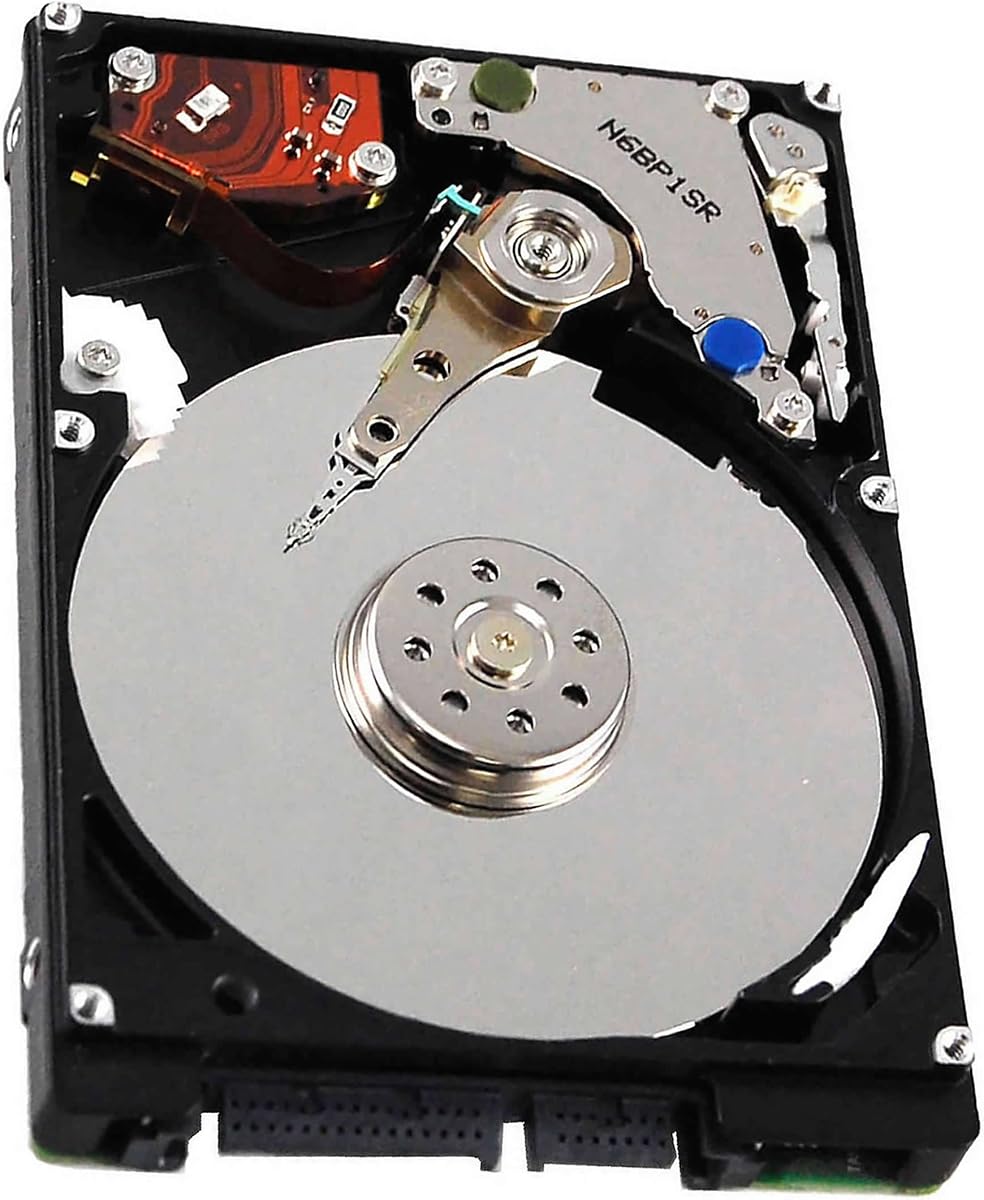
The Western Digital WD Blue 2TB is a renewed and factory recertified desktop drive that combines a 5,400 RPM class with a substantial 256MB cache. Its 4.5 rating indicates solid customer satisfaction, while the renewed condition distinguishes it from conventional new inventory.
We may earn a commission when you buy through this link, at no additional cost to you.
For secondary desktop storage, the specification mix is appealing. Two terabytes is useful for media, documents, backups, and less frequently accessed applications, while the 256MB cache exceeds that of several competing 2.5-inch BarraCuda listings. The standard SATA 6 Gb/s interface and 3.5-inch format suit conventional desktop cases.
Renewed condition deserves careful attention. Buyers should review the seller's description, warranty terms, return policy, and any indication of wear or prior use. The listing also mentions Zero Power on Hours, a feature that can help reduce unnecessary spin-up periods and energy use in appropriate systems.
This is a sensible budget-oriented choice for a builder who values capacity, a large cache, and a recognized desktop drive while accepting renewed condition. It works best for secondary storage rather than irreplaceable data, and a separate backup strategy remains essential.
Factory renewed and recertified status can make a capable desktop drive more economical. The condition is explicitly disclosed, allowing buyers to compare it with new alternatives while understanding the trade-offs.
The 256MB cache is a meaningful specification at this capacity and class. It can help smooth repeated desktop operations, though it does not transform random-access behavior into solid-state performance.
We may earn a commission when you buy through this link, at no additional cost to you.
The Seagate Momentus 5400 320GB is a compact notebook drive built around mobility and shock tolerance. It has a 5,400 RPM spindle, an 8MB cache, a SATA 3Gb/s interface with Native Command Queuing, and a 4.3 customer rating.
We may earn a commission when you buy through this link, at no additional cost to you.
Its standout feature is ruggedness. G-Force Protection is available, and the listed 1,000 Gs of nonoperating shock tolerance makes the drive suitable for notebook PCs and industrial applications where a drive may encounter movement outside operating conditions. The 2.5-inch bare-drive format also suits systems designed around legacy-style laptop storage.
The 320GB capacity is the decisive limitation. It may be enough for a small system, a focused data partition, or an older notebook, but it is tight for modern operating systems, high-resolution media, and growing application libraries. The 8MB cache is also modest relative to newer models in the list.
This drive makes most sense for a compatible legacy notebook or specialized compact installation where low capacity and shock resistance are acceptable. New buyers with ordinary storage needs should favor a higher-capacity model, while existing systems seeking a straightforward replacement may find this option appropriate.
G-Force Protection and the listed nonoperating shock tolerance offer reassurance for mobile and industrial deployments. These characteristics are particularly relevant when a notebook may be transported frequently.
The compact size and straightforward interface can suit older or specialized notebook platforms. Buyers should confirm the connector, mounting system, and available storage space before ordering.
We may earn a commission when you buy through this link, at no additional cost to you.
The Seagate IronWolf 4TB is a premium NAS-oriented model built for multi-user environments and RAID configurations. It combines a 5,400 RPM motor, 64MB cache, CMR recording, a 3.5-inch form factor, and a 4.5 rating, but its more important distinction lies in its workload-specific design.
We may earn a commission when you buy through this link, at no additional cost to you.
The drive is intended for NAS enclosures with up to eight bays, where reduced wear, low noise and vibration, reliable file sharing, and consistent operation are especially important. Integrated IronWolf Health Management allows drive health to be monitored, and the listing cites 1 million hours MTBF. These details make it more appropriate for a continuously involved storage role than a general desktop drive.
Its 64MB cache is smaller than the desktop models with 256MB caches, but NAS suitability depends on more than cache size. Record type, workload behavior, vibration management, firmware, health tools, and support terms matter substantially. Buyers should also verify enclosure compatibility, bay count, RAID configuration, and the requirement to use matching drive capacities.
This is the best premium choice for a home or small-business NAS serving several users. The three-year limited warranty and three years of Rescue Data Recovery Services add further value, but a sound backup plan remains necessary because RAID and recovery services are not substitutes for preserving independent copies.
IronWolf is optimized for NAS enclosures rather than general desktop duty. Its design emphasizes sustained workloads, file sharing, vibration control, and the consistent operation expected in multi-bay systems.
Integrated health management helps owners monitor important data, while the included warranty and Rescue services broaden after-sales support. Neither replaces a separate backup strategy.
We may earn a commission when you buy through this link, at no additional cost to you.
The Seagate BarraCuda 4TB delivers an especially balanced specification set for a general-purpose desktop drive. It combines 4TB of capacity, a 5,400 RPM spin speed, a 256MB cache, and SATA 6Gb/s connectivity, while its 4.7 rating ties for the highest in the roundup.
We may earn a commission when you buy through this link, at no additional cost to you.
It is well suited to music, video, photo editing, and gaming applications, covering the broad range identified by the manufacturer. The listing also states a maximum sustained transfer rate of 190 MB/s and mentions Seagate DiscWizard for migrating and cloning data from older drives, which simplifies upgrades when the software and environment support it.
The 4TB capacity provides enough room for meaningful active libraries without reaching the physical limits of the 6TB alternative. At the same time, the 256MB cache supports everyday desktop data flow. As a standard BarraCuda product, however, it does not offer the specialized health management, vibration focus, or workload guarantees associated with the featured NAS models.
For a desktop builder seeking a capable, well-reviewed 5,400 RPM drive without paying for NAS-only features, this is the strongest overall recommendation. It works especially well as secondary storage, and the included migration utility makes it easier to move an existing collection into the larger drive.
Four terabytes offers substantial room for active media and working archives, while the 256MB cache helps accommodate routine desktop operations. The balance makes the drive easier to recommend across many home and office systems.
Seagate DiscWizard is included for moving and cloning data from older drives. Buyers should still create a verified backup and confirm that their operating system supports the utility before beginning a migration.
We may earn a commission when you buy through this link, at no additional cost to you.
The Western Digital WD Red Plus 4TB is a 5,400 RPM NAS drive with CMR recording, a 128MB cache, SATA 6Gb/s connectivity, and a 3.5-inch format. Its 4.2 rating places it among the lower-rated options, but its workload focus and continuous-operation design make it a credible choice for compatible NAS systems.
We may earn a commission when you buy through this link, at no additional cost to you.
The listing identifies the WD Red Plus family as RAID optimized for NAS systems with up to eight bays. NASware tuning and a design intended for continuous operation distinguish it from general-purpose desktop drives. The 4TB capacity is also balanced enough for a multi-bay array, provided all drives within an array follow an appropriate matching strategy.
The 4.2 rating deserves consideration, especially for a system that will hold important data. Buyers should review the listing carefully, understand the warranty and support terms, and provide appropriate power, cooling, and vibration control. NAS suitability does not remove the need for backups, and a RAID array should never be treated as the only copy of a file.
This drive is best for owners of an existing eight-bay-or-smaller NAS who want a matching WD Red Plus unit and value CMR and continuous-operation design. It is less attractive for a desktop-only user because specialized NAS features do not benefit a simple single-drive setup.
CMR is a useful feature for modern RAID-oriented NAS configurations because it avoids some of the write constraints associated with SMR. It makes the drive more predictable when rebuildings and sustained mixed workloads are important.
NASware and the continuous-operation design target enclosures where drives run for long periods. Proper cooling and vibration management remain the installer's responsibility even with a purpose-built drive.
We may earn a commission when you buy through this link, at no additional cost to you.
Choosing a 5400 Rpm HDD Hard Drive requires matching capacity, physical format, cache, interface, and workload features to the device in which it will be installed. These factors determine fit, performance expectations, and long-term suitability.
The two most common sizes in this guide are 2.5-inch and 3.5-inch, and they are not interchangeable without suitable hardware. A 2.5-inch drive generally fits laptops, compact desktops, and some external enclosures, while a 3.5-inch drive is common in full-size desktop towers. Check the bay dimensions, mounting screw pattern, SATA data connector, and power connector before ordering.
The 9.5mm height specified for the Toshiba L200 is also important for slim notebooks. Confirm the exact laptop model and its supported drive thickness, and determine whether a caddy, adapter, or enclosure is included.
Capacity should reflect current storage plus expected growth. The list ranges from 320GB to 6TB, but more space does not make a drive appropriate for every system. Compact models may prioritize portability, whereas desktop and NAS selections benefit from larger libraries, snapshots, and multi-user file sharing.
As a practical rule, select enough room for operating data and a healthy amount of free space. Avoid treating capacity as a substitute for backups, particularly for irreplaceable photographs, videos, and documents.
Cache provides temporary storage for data moving between the platter and the host system. Larger caches can help with bursty desktop workloads, but they are not a guarantee of fast random access or equivalent solid-state responsiveness. The featured desktop drives include 256MB cache options, while the Momentus 320GB has a much smaller 8MB buffer.
Choose the drive by its overall workload rather than cache alone. Sequential transfers, file mixing, operating-system responsiveness, and NAS behavior all matter, and none should be judged from cache size in isolation.
A standard BarraCuda or WD Blue drive is appropriate for general desktop storage, media libraries, and secondary files. A NAS-oriented model is better when the drive will live in a multi-bay enclosure, run continuously, or serve several users. IronWolf and WD Red Plus include workload-specific features that should not be assumed to provide the same benefit in an ordinary desktop.
Operating-system and application installation are also different from bulk media storage. Many buyers achieve a better overall system by using a solid-state drive for active applications and a hard disk for archives, media, and backups.
Most current systems use SATA data connectors, but interface generations and cable support still deserve verification. SATA 6Gb/s drives may use a 3Gb/s interface internally, and older SATA 3Gb/s products can generally operate with compatible newer systems. The key is confirming that the host, cable, and connector arrangement are compatible.
For any upgrade, inspect the installed connector rather than relying only on the drive's label. A mismatched cable or adapter can prevent installation even when both components support SATA in principle.
NAS support is more than a list of compatible bay sizes. Consider the maximum number of bays, approved drive families, recording technology, minimum capacity, RAID configuration, and whether the enclosure provides the required power and cooling. The IronWolf and WD Red Plus models are designed for NAS use up to eight bays, but buyers should still verify their particular enclosure.
When adding a drive to an existing array, use a model with the same capacity as the current drives when the RAID scheme requires it. Plan each expansion carefully and retain independent backups throughout the process.
Condition is especially important for renewed products. The WD Blue 2TB in this guide is factory renewed and recertified, so buyers should review the seller's grading, included accessories, warranty coverage, and return terms. Other products carry stated limited warranties of two or three years depending on the model.
Longer warranty coverage does not guarantee that a drive will not fail, but it can provide a clearer remedy if a covered component fails. Keep the purchase record and use monitoring tools to identify early changes in health or performance.
A hard disk benefits from airflow, secure mounting, and a stable power connection. High-capacity 3.5-inch drives can produce noticeable heat and vibration, particularly when several are installed together. NAS owners should follow the enclosure's cooling guidance, avoid loosely mounting drives, and maintain adequate spacing where required.
No single drive should be the only copy of important data. Maintain at least one independent backup, periodically test restores, and use appropriate monitoring to identify a developing problem before it becomes a data-loss event.
Before installation, confirm the drive's form factor, connector type, thickness, and bay support. Back up the existing system, shut it down completely, disconnect power, and follow the computer or NAS manufacturer's guidance for removing and adding storage devices. Use the correct SATA data cable and power connection, and secure the drive without applying uneven pressure.
After installation, initialize and format the new drive using the operating system's disk management interface. Choose the file system required by the computer and intended use, and confirm that permissions are appropriate. For a NAS, install the drive according to the enclosure procedure, populate matching drives as required by the selected RAID scheme, and create the shared folders only after the array is healthy.
Give the drive a role that matches its capabilities. Use it for secondary storage, media, archives, or NAS data while keeping active applications and the operating system on faster storage where possible. Monitor health warnings, schedule regular backups, keep airflow unobstructed, and avoid abrupt system shutdowns during active writes. Test backup restores periodically rather than assuming that the presence of a backup guarantees its usefulness.
A 5400 Rpm hard drive is well suited to secondary storage, media libraries, documents, and backups. Its mechanical design means slower random access than a solid-state drive, so active applications and the operating system usually benefit from SSD storage. A hard disk can remain a valuable companion when the goal is inexpensive, high-capacity storage.
The primary benefits are spacious storage, lower power use than many faster mechanical alternatives, and quiet or cooler operation in suitable systems. Actual performance depends on capacity, cache, firmware, workload, and enclosure conditions. The speed rating alone does not determine whether a drive is good for a particular computer.
You can if the laptop supports a 2.5-inch SATA hard drive with the correct thickness and connector. The Toshiba L200 specifies a 9.5mm height, while the Seagate mobile and BarraCuda models are also 2.5-inch devices. Check the manufacturer's service manual and confirm whether a caddy or mounting hardware is needed.
A compatible 5400 Rpm drive can work in a NAS, but a NAS-optimized model is the better choice. The IronWolf and WD Red Plus options are designed for continuous operation and RAID-oriented NAS environments up to eight bays. Buyers must still verify bay support, recording technology, capacity matching, cooling, and backup requirements.
A larger cache can improve some burst and repeated-access workloads, but it cannot remove the mechanical limitations of a spinning platter. File size, transfer pattern, fragmentation, drive firmware, and system configuration all affect results. Capacity, reliability, fit, and intended workload should be considered alongside cache size.
Neither size is universally better. A 2.5-inch drive usually suits laptops and compact systems and can offer better power efficiency, while a 3.5-inch model often provides more capacity and can fit larger desktop bays. Some unusual combinations, such as the 5TB 2.5-inch BarraCuda, offer high capacity in a compact enclosure.
A renewed drive may work well for secondary data, but its history and condition require extra scrutiny. Review the seller's inspection details, warranty, and return policy, and verify the drive's health after installation. Important files should always have another independent backup, regardless of whether the drive is new or renewed.
Yes. RAID can improve availability or performance in some configurations, but it does not protect against accidental deletion, malware, controller failure, or every physical loss scenario. Maintain an independent backup and periodically test the restore process. The included warranty and recovery services offered by some NAS models are useful additions, not substitutes for backups.
The Western Digital WD Blue 2TB stands out as the budget pick, offering a 256MB cache, a standard 3.5-inch format, and factory-renewed condition. The Seagate BarraCuda 4TB is the strongest overall choice for general desktop use because it combines a highly rated 4.7 customer feedback, 4TB of capacity, and a large cache. For a premium network-storage role, the Seagate IronWolf 4TB provides NAS optimization, CMR recording, health monitoring, and extended support.
Prioritize compatibility before every other consideration. Confirm the physical dimensions, SATA connectors, target-device support, and required bay type. Then choose capacity based on current data and realistic growth, keeping in mind that a 5,400 RPM hard drive works best as dependable bulk storage when a faster drive handles the operating system and active applications.
Finally, verify the current listing, specifications, condition, warranty, and prices before purchasing because availability and pricing can change. Regardless of which model fits best, maintain a separate backup and monitor drive health. A suitable 5400 Rpm HDD Hard Drive can provide extensive, affordable storage when matched properly to the job.